
Tamang Heritage: Social Architecture and Rituals in Sikkim
Ethnohistory, Social Architecture, and Cultural Hermeneutics of the Tamang Community in Sikkim
Ethnohistorical Trajectory and Trans-Himalayan Migrations
Mythological and Etymological Genesis
The Tamang represent one of the oldest Tibeto-Mongoloid indigenous nationalities inhabiting the high valleys and mid-hill ridges of the Eastern Himalaya1. Within the disciplines of historical linguistics and ethnology, the etymological origins of the autonym “Tamang” reflect ancient trans-Himalayan pastoralism and military organization. The prevailing philological consensus derives the ethnonym from the Classical Tibetan roots Ta (signifying horse) and Mang or Mak (denoting cavalry, warriors, or a multitude), thereby designating the ancestral community as “horse warriors,” “equine soldiers,” or “cavalrymen”2. A complementary etymological school links the ethnonym to Ta-Marpo, referring to pastoral herdsmen pasturing equine herds within high-altitude trans-Himalayan plateaus before migrating southward through Himalayan passes2. Oral traditions conserved by community genealogists similarly interpret Ta as horse and Mang as trader or guardian, highlighting an ancient dual vocation as cavalrymen and equine merchants who linked the Tibetan plateau with sub-Himalayan trade routes2.
The earliest known epigraphic and archival appearance of the ethnonym occurs in a thirteenth-century Tibetan document documented by Tibetologist David Jackson1. This text records that King Bumlde Mgon established the Shrin fortress in Mustang to subjugate the autonomous Tamang populations of Lower Glo1. This archival baseline confirms that the Tamang existed as a distinct socio-ethnic collective long before modern administrative borders emerged in the Himalayan mid-hills. Within Tamang cosmogonic literature, as preserved in the oral recitation tradition of the Tamba Kaeeten, the ancestral cradle of the community is inextricably bound to Tamsaling—a vast historical and cultural territory spanning the mid-Himalayan belt from the Budhi Gandaki River in the west to the Dudhkoshi River in the east2. From this core highland region, expanding kin groups followed riverine trade arteries eastward into the Teesta and Rangeet watersheds3.
Archival Documentation and Sub-Himalayan Dislocations
The demographic movement of Tamang lineages across the Singalila Ridge into present-day Sikkim occurred across centuries of seasonal grazing, cross-border trade, and sociopolitical shifts3. Following the military expansion and centralization of the Gorkhali state under the Shah dynasty during the late eighteenth century, indigenous populations in the central and eastern Himalayas faced systemic agrarian displacement, high taxation, and forced corvée labor2. Under the resulting caste-based legal order, the royal administration prohibited the formal use of the self-designation “Tamang,” imposing pejorative exonyms such as “Murmi” (derived from the Tibetan root Mur, signifying borderland or frontier inhabitants) and “Bhote” (a generalized, low-status administrative classification applied to highland communities of Tibetan extraction)1. To navigate state-sanctioned discrimination and circumvent regional military recruitment bans, many Tamang men enlisted in the British Indian Army and colonial auxiliary forces under the occupational surname “Lama,” which was widely accepted by colonial recruiting officers2.
Despite state-enforced terminology, community members preserved their distinct identity within private kinship circles, maintaining traditional ancestral rites and language1. British exploratory surveys in the nineteenth century documented their long-established presence in the independent kingdom of Sikkim. In 1848, the botanist and geographer Joseph Dalton Hooker noted in his Himalayan Journals that the “Murmi” represented the only native hill community surviving in substantial numbers within Sikkim alongside the indigenous Lepchas and high-altitude Tibetans1. Hooker documented that these settlements were also termed “Nishung,” a designation derived from two ancestral branches originating from the Nimo and Shung districts along the trade route linking Lhasa and Sikkim, demonstrating established commercial and migratory ties1.
Colonial Demographic Enumeration in Sikkim
By the late nineteenth century, Tamang hamlets were distributed across the terraced mid-hills, forest tracts, and river valleys of western and southern Sikkim9. The establishment of British political oversight and the introduction of formal land-tenure regimes accelerated administrative documentation. The first comprehensive census of the Kingdom of Sikkim, conducted in 1891 and published in H.H. Risley’s The Gazetteer of Sikhim, systematically documented the ethnic composition of the realm1.
| Demographic Parameter (1891 Census) | Enumerated Figure | Sociological Significance |
| Total Murmi (Tamang) Population | 2,867 individuals | Positioned Tamangs as the 5th most populous ethnic group in Sikkim1. |
| Adult Male Inhabitants | 801 males | Indicates established agrarian settlement rather than seasonal migrant labor1. |
| Adult Female Inhabitants | 778 females | Near-equal sex ratio reflects permanent family-based homestead stability1. |
| Enumerated Children | 1,288 children | High proportion of juveniles (44.9%) demonstrated strong demographic vitality1. |
This census profile illustrates that rather than being transient migrants, the Tamangs constituted an established component of Sikkim’s late nineteenth-century demographic landscape, clearing forested slopes for terrace farming and integrating into local bartering systems while maintaining ancestral clan alliances across the wider region6.
Social Architecture, Clan Kinship, and Institutional Governance
The Dual-Moiety Structure: Baro Jat and Athara Jat
The social architecture of the Tamang community is founded upon an egalitarian, non-stratified clan framework that rejects hereditary hierarchical caste distinctions3. The fundamental organizing unit is the patrilineal, exogamous clan, termed Rui (alternatively written Rhrui) in the native language, although centuries of regional linguistic exchange led to the widespread adoption of the term Thar3. The broader society has historically recognized a dual-moiety division known as the Baro Jat (Twelve Clans) and the Athara Jat (Eighteen Clans)3.
The Baro Jat constitutes the primary lineages of Tamang society, tracing descent through unmixed agnatic pedigrees4. Prominent foundational clans within this division include Bal, Moktan, Ghising, Goley, Yonjan, Dong, Syangbo, Syangdan, Theeng, Blon, Titung, and Jimba4. Conversely, the Athara Jat division historically arose to incorporate lineages resulting from inter-ethnic marriages between Tamang men and women from neighboring communities such as the Newar, Gurung, and Magar4. While genealogical distinctions are remembered in oral narratives, both divisions function alongside one another within communal assemblies, observing common social obligations and participating in shared ritual activities4. Across the wider Himalayas, ethnographers have recorded as many as 196 distinct clan designations, though approximately 62 primary clans form the stable core of the community based on their documented ancestral homeland (Bapsa), titular protective deity (Phola), and customary communal landholding rights (Kesha or Kipat)3.
Clan Exogamy, Swangey Bhai, and Territorial Bapsa
Matrimonial alliances within the Tamang social structure are strictly governed by the law of clan exogamy4. Consanguineous marriage within one’s own patrilineal Rui is considered a serious transgression against ancestral purity, historically resulting in formal expulsion from the village community and loss of social support networks4.
This exogamous prohibition extends beyond the immediate clan through the institution of Swangey Bhai (fraternal or “brother clans”)4. Swangey Bhai groupings comprise separate clans that revere an identical ancestral titular deity (Phola) and trace their origins to common primordial ancestors1. Despite using different surnames, individuals belonging to Swangey Bhai clans consider one another agnatic siblings, creating an absolute incest taboo that prohibits intermarriage4. A well-documented example in Sikkim is the relationship between the Goley and Dong clans, whose shared spiritual lineage precludes marital unions4.
Complementing this genealogical framework is the concept of Bapsa, which denotes a clan’s ancestral territory3. Every Tamang clan maintains an oral record connecting its origins to a specific geographic valley, ridge, or plateau within the sacred geography of the eastern Himalayas3. Many clan surnames derive directly from these geographic toponyms, grounding lineage identity in the physical landscape and connecting dispersed families back to their shared ancestral origins3.
Traditional Decentralized Village Polity
Traditional Tamang governance avoids centralized autocratic authority, operating instead through a decentralized council of specialized elders and ceremonial practitioners1. Administrative, legal, cultural, and spiritual responsibilities are distributed among specific village functionaries based on demonstrated skill, hereditary tradition, and formal community appointment1.
| Institutional Title | Functional Domain | Primary Societal Responsibilities |
| Choho (Cho Ho) | Judiciary and Civic Administration | Serves as executive village headman; mediates land and domestic disputes, enforces customary law, levies fines, and represents the village externally1. |
| Tamba | Genealogy and Cultural Protocol | Functions as oral historian and master of ceremonies; recites the Kaeeten epics, directs the Char Dam marriage rites, and preserves clan memory1. |
| Gamba | Legislative and Advisory Council | Senior elder who convenes the village council, advises the Choho, preserves social decorum, and mediates interpersonal conflicts1. |
| Bonbo | Healing and Spirit Mediation | Shamanic priest who propitiates territorial spirits, neutralizes malevolent environmental forces, and treats physical and psychological ailments1. |
| La Bonbo (Lataba) | Lineage Ancestral Cult | Lineage specialist who conducts the propitiation of the clan-specific titular deity (Phola-Daala) and preserves secret family genealogies1. |
| Lama | Monastic and Funerary Liturgy | Ordained Buddhist officiant who reads sacred texts (Chhyoi), performs temple rituals, and guides the deceased’s soul during Ghewa rites1. |
Dual Spiritual Matrix: Bon Shamanism and Vajrayana Buddhism
Ancestral Veneration: Khepa-Soom and Phola-Daala
Tamang religious life is defined by a syncretic blend of animistic Bon shamanism and Tibetan Vajrayana Buddhism3. At the domestic level, this spiritual life centers on the veneration of household ancestors and clan guardian spirits9. The primary domestic ancestral rite is Khepa-Soom (literally, the “Three Forefathers”), an esoteric ritual conducted by the eldest male patriarch of the family during designated months of the agrarian calendar9. The ceremony invokes the three preceding generations of direct agnatic ancestors through grain offerings, incense purifications, and libations of fermented liquor, seeking ancestral protection for household fertility, agricultural productivity, and physical health.
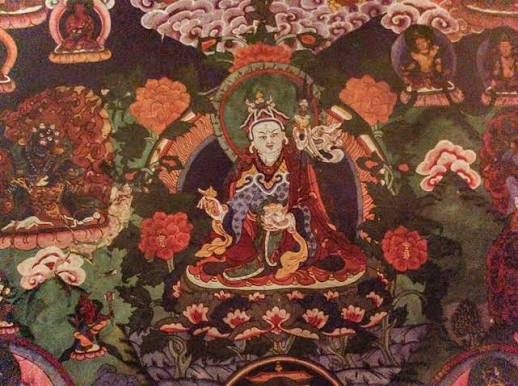
Simultaneously, every patrilineal clan is dedicated to its titular protective deity, known as the Phola-Daala9. The Phola serves as an ancestral warrior guardian bound to the lineage, requiring regular propitiation conducted exclusively by the La Bonbo1. The failure of a household to maintain Phola-Daala rituals is believed to withdraw protective ancestral blessings, leaving family members vulnerable to illness, sudden domestic misfortune, and poor harvests9.
Bonbo Shamanic Praxis and Cosmology
The traditional Tamang worldview envisions a landscape inhabited by nature spirits (Lha), subterranean water deities (Lu), forest guardians, and lingering spirits (Mang)5. The intermediary tasked with maintaining harmony between human communities and these spiritual entities is the Bonbo1. Operating independently of the formal Buddhist monastic hierarchy, the Bonbo acquires healing knowledge through apprenticeships, hereditary spiritual selection, and meditative trance work1.
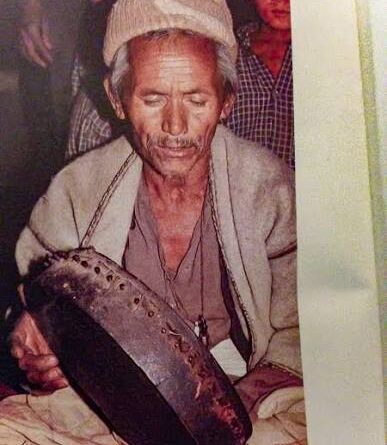
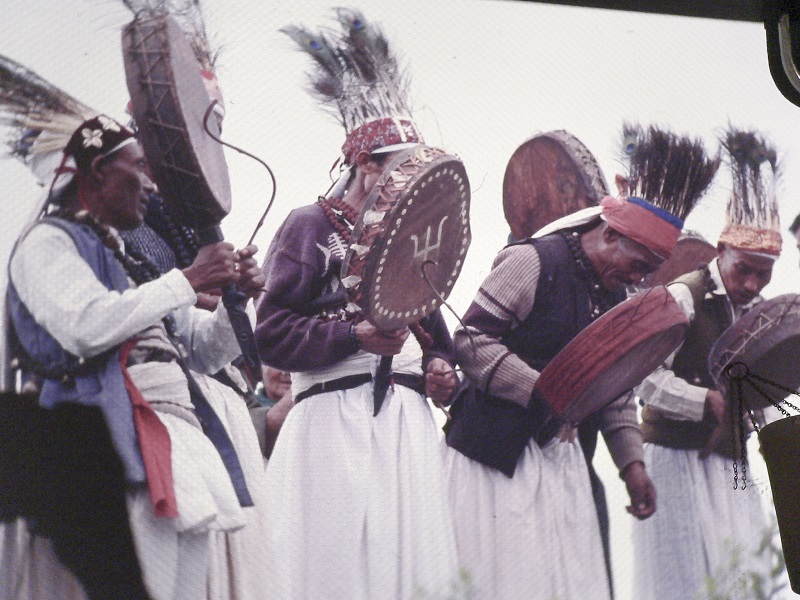
During complex therapeutic and protective rites, such as the Bonbo Sherab, the shaman wears traditional ceremonial vestments, including a headdress decorated with peacock and porcupine quills, protective necklaces of rudraksha seeds and animal bones, and a double-sided ritual drum known as the Dhyāngro9. The Dhyāngro features a distinct, hand-carved wooden handle representing protective deities, differing from secular musical instruments in its sacred construction11. Through rhythmic drumming and ritual chants, the Bonbo enters trance states to diagnose spiritual disharmony, retrieve wandering souls, counter witchcraft allegations (Boksi accusations), and negotiate with local spirits for healing3.
Tibetan Vajrayana Buddhism and Sacred Monastic Geography
Vajrayana Buddhism forms the primary soteriological foundation for approximately 87% of the Tamang community, with the majority adhering to the Nyingmapa (Red Hat) school alongside established Kagyu affiliations4. The community views Buddhist philosophy not as a replacement for Bon rituals, but as an overarching framework governing karma, moral conduct, and post-mortem salvation3.
The landscape of Tamang settlements across Sikkim is marked by Buddhist sacred architecture, including mountain prayer flags (Lungta), roadside prayer-walls (Mani Dang), and votive stupas (Chorten) inscribed with the mantra Om Mani Padme Hum4. A historical center of Tamang Buddhist practice in western Sikkim is the Singling Tamang Manilakhang (also known as the Singling Tamang Gumpa), situated near Soreng Bazaar14. Founded in 1920 A.D. on land donated by Passang Sherpa, this monastery serves the regional Tamang population by conducting monastic assemblies, preserving Nyingmapa liturgical rituals, and training resident monks who oversee community religious rites14.
Lifecycle Transitions and Ritual Milestones
Birth, Naming, and Early Childhood Rites
Lifecycle events within Tamang society follow a prescribed sequence of communal rituals designed to integrate the individual into the lineage and protect against spiritual harm9. Following childbirth, the family observes a customary period of ritual impurity (Sutak)9. On the third day for a female infant and the fourth or fifth day for a male child, the household undergoes formal purification using burning juniper (Shukpa), sacred water, and chants performed by a Lama or Bonbo9. The naming ceremony, termed Meen Thanba (or Thapsang), incorporates an astrological reading (Chetsi) to select an auspicious name that harmonizes with the infant’s birth element and lunar sign9.
The transition to solid foods occurs through the Kan Chwaba (or Kan Waba) ritual, conducted in the fifth month for girls and the sixth month for boys9. The maternal uncle (Mamik) presides over this ceremony, holding a position of high ceremonial honor9. He feeds the child an initial taste of rice cooked with milk and clarified butter while offering ancestral blessings9.
The primary childhood transition for boys is the first tonsure, known as Tap-Chey or Chewar, performed during the third, fifth, or seventh year of life9. The maternal uncle cuts the boy’s infant hair, leaving a small crown lock intact, and presents the child with formal traditional attire, ceremonial scarves (Khadas), and symbolic gifts such as livestock or money, marking his formal entry into his patrilineal clan9.
Brelsang: Matrimonial Customs and the Char Dam Contract
Traditional Tamang marriage, known as Brelsang, functions as a comprehensive social contract between two exogamous clans, directed by the Tamba and senior lineage elders1. The kinship system favors bilateral cross-cousin marriage, particularly unions with the mother’s brother’s daughter (Solti/Soltina relations), which reinforces inter-clan alliances and helps retain family resources within linked kinship groups4.
The central legal and ceremonial component of the wedding is the Char Dam ritual, conducted at the home of the bride’s family1. Custom dictates that the proceeding must be witnessed by twelve adult Tamang men representing distinct clans, ensuring that the union is recognized across the broader tribal community1. During the ceremony, the groom’s party presents four copper coins (Dam) alongside ceremonial flasks of liquor (Pong) to the bride’s agnatic elders1.
The presiding Tamba recites traditional oral verses that delineate the legal status of the bride: the husband’s family receives rights to her daily physical labor and domestic partnership, but her natal lineage retains eternal claim over her agnatic “bone” (Rui) and post-mortem spiritual liberation1. Consequently, a Tamang woman never surrenders her birth clan; a woman born into the Gyabak clan who marries into the Yonjan clan retains the right to write and claim Gyabak as her formal surname throughout her life1.
Widow remarriage is accepted within clear social parameters; a widow may marry her deceased husband’s younger brother through junior levirate custom, though marriage to an elder brother is strictly prohibited4. In situations where a married woman elopes with another man (Jari), customary law emphasizes financial restitution over physical punishment, requiring the new husband to pay a standard compensation fee (Jari-Kal) of sixty rupees to the former husband to dissolve the prior marriage4. Similarly, traditional adulterous disputes are resolved through the payment of a forty-rupee fine to the aggrieved husband, restoring community harmony4.
Thanatology and Post-Mortem Liberation: Rho, Rhruisal, and Ghewa
Funerary practices represent the most elaborate ceremonial cycle in Tamang culture, designed to guide the deceased person’s consciousness through the intermediate state (Bardo) toward liberation or favorable rebirth2. Following physical death, a Lama performs the transference of consciousness (Pho-wa), severing the spirit’s attachment to the physical body2. The corpse (Rho) is washed, dressed in formal attire, arranged in a meditative seated position, and placed within a wooden funerary box (Chhyam) draped with white cloth and prayer flags before being carried to a hilltop or river confluence for cremation3.
A distinctive element of the post-cremation process is the extraction of the Rhruisal3. After the pyre burns down, family members search the ashes to recover a small, unburned piece of bone from the frontal forehead of the skull3. Viewed as the material residue and spiritual anchor of the deceased, the Rhruisal is cleansed in saffron water and milk, wrapped in silk, and preserved for the concluding death rites3.
The funerary cycle concludes with the Ghewa (also known as Kuth Segu), a multi-day ceremony observed before or on the 49th day after death1. Officiating Lamas chant from the Tibetan funerary scriptures (Chhyoi), using the Rhruisal mounted upon an effigy dressed in the deceased’s clothing to guide the soul through the illusions of the Bardo2. At the ritual’s conclusion, the Rhruisal is ground into fine powder, combined with clay, and formed into miniature votive stupas (Tsa-Tsa), or cast into a sacred river, which completes the mourning obligations and severs worldly attachments3.
| Lifecycle Stage | Vernacular Term | Presiding Officiants | Key Ritual Implements | Primary Sociocultural Purpose |
| Purification & Naming | Meen Thanba (Thapsang) | Lama or Bonbo | Consecrated water, juniper (Shukpa), horoscope | Eliminates birth pollution and determines an astrologically auspicious name9. |
| First Solid Food | Kan Chwaba (Kan Waba) | Maternal Uncle (Mamik) | Consecrated rice, clarified butter, silver coins | Introduces the infant to grain food and reaffirms maternal clan ties9. |
| First Tonsure | Tap-Chey (Chewar) | Maternal Uncle (Mamik) | Shearing blades, white scarf (Khada), formal gifts | Removes childhood hair and formalizes the boy’s clan membership9. |
| Matrimony | Brelsang (Char Dam) | Tamba, Choho, Clan Council | Four copper coins (Char Dam), liquor flasks (Pong) | Validates the marriage contract before twelve witness clans and establishes lineage rights1. |
| Corpse Preparation | Rho Consecration | Lama | Funerary box (Chhyam), white silk, incense | Directs the soul’s exit and prepares the body for cremation9. |
| Funerary Liberation | Ghewa (Kuth Segu) | Conclave of Lamas, Tamba | Forehead relic (Rhruisal), clay effigies (Tsa-Tsa) | Guides the soul through the Bardo and brings mourning to a close1. |
Linguistic Identity, Script, and Literary Renaissance
Grammatical Structure and Dialectology of the Tamang Language
The Tamang language (Tamang Gyot) belongs to the Bodish sub-branch of the Sino-Tibetan language family3. It is an agglutinative, tonal language that uses four distinct pitch contours—high-level, high-falling, low-level, and low-falling—to distinguish lexical meaning across phonemically identical words19. The language strictly observes a Subject-Object-Verb (SOV) sentence order and employs postpositional markers alongside an ergative-absolutive case system19.
The grammatical structure of Tamang features a distinctive system of verbal negation: the single prefix a- is attached directly to the verb root across all tenses and aspects, contrasting with the independent negative particles found in neighboring Indo-Aryan languages19. Interrogative sentences are formed primarily through rising sentence-final intonation without requiring changes to word order or auxiliary verbs19.
Linguists identify seven major dialect clusters across the Himalayas: Khandoge, Paaljoge, Syarphante, Syardoge, Hyolmule, Khairi, and Kagate3. The Tamang spoken in Sikkim aligns most closely with the eastern Syarphante dialect, while incorporating regional loanwords through long-standing interactions with Lepcha, Bhutia, and Nepali communities6.
The Tam-Yig Script and Textual Evolution
The written tradition of the Tamang language utilizes the Tam-Yig script, an orthographic system adapted from the Classical Tibetan Uchen alphabet3. The script contains 30 basic consonant characters and 4 vowel diacritics, modified to represent specific phonemes, tones, and aspirated sounds in spoken Tamang3.
Prior to the mid-twentieth century, written Tamang was primarily preserved in sacred Buddhist manuscripts read by monastic Lamas and in clan genealogies (Rui-Chen) consulted during lineage disputes3. Broader cultural knowledge, village legal codes, and historical narratives were sustained orally through memorized recitations maintained by the Tamba2.
Official State Recognition and Literary Development
The modern revitalization of Tamang literature in Sikkim grew out of organized efforts to preserve indigenous heritage during the late twentieth century1. Following representations by community organizations, the State Legislative Assembly passed the Sikkim Official Languages Amendment Act of 1995, notified through State Gazette No. 76 of 1995, which granted Tamang official language status in Sikkim1. This led to the introduction of Tamang-language instruction in primary schools, state publications, and regional radio programming1.
The foundation for modern Tamang publishing was established in 1957 with the release of Jikten Tamchhyoee (Tamang Vanshavali) by Buddhiman Moktan and Tamba Kaeeten Rimthim by Santabir Lama, both of which documented clan genealogies, oral histories, and wedding traditions15. In 1975, the Sikkim Tamang Buddhist Association (STBA) published Sherab-Gno-Syepo (An Introduction to Alphabets) by G.D. Lama, standardizing early script education in the state7.
In 1977, Sikkimese linguist and author K.M. Tamang, a native of Passi-Ratey Pani in southern Sikkim, published Hyang Tamang Gyot Lokpe (“Let Us Learn Tamang Language”), which provided the first pedagogical grammar for schools in Sikkim7. Subsequent Sikkimese authors—including Kumar Yonzon, Lama Lhakpa Bomzon, and Pempa Tamang—expanded historical and literary writing through community periodicals such as Tsargyam, documenting oral songs and cultural history15.
Material Culture, Performance Traditions, and Festivities
The Damphu Drum and the Legend of King Peng Dorje
The cultural identity of the Tamang community is closely associated with the Damphu, a single-headed circular frame drum played during social celebrations, historical recitations, and seasonal festivals8.
Tamang oral history attributes the invention of the instrument to King Peng Dorje, an early cultural hero and legendary ruler, and his consort Queen Ruisang, who are often viewed within mountain traditions as local representations of Shiva and Parvati5. The legend recounts that during a journey, Queen Ruisang was deeply saddened by the death of a wild mountain deer11. To comfort his queen, King Peng Dorje crafted a musical instrument from materials found in the surrounding forest11. He bent a piece of seasoned hardwood (Ambira or Koirala Kath) into a circular frame (Aambu) and stretched the dried skin of a deer or mountain goat (Raladi) across one side5. To secure the skin and adjust its tension, he carved 32 small bamboo pegs (Pathhaksi or Phurba) and fitted them around the rim5.
These 32 bamboo pegs carry religious symbolism, representing the 32 physical marks (Lakshanas) of the Buddha, linking the drum to Buddhist iconography8. Upon testing the instrument, King Peng Dorje produced a rhythmic trak-dhin sound, singing songs in praise of the mountains, ancestors, and deities11. The music inspired the surrounding wildlife to dance, including the Himalayan Monal pheasant (Danphe), from which the instrument took its name, Damphu8.
Many traditional instruments feature a carved wooden or metal bird mounted on the top of the frame5. Connected to an internal rod and controlled by the musician’s fingers, the bird marionette moves and dances in time with the rhythm5. The Damphu is an instrument of secular life, used by the Tamba to accompany historical recitations and social gatherings, distinguishing it from the Dhyāngro, which is reserved exclusively for shamanic healing rites11.
Musical Forms: Whaee, Rhama, and Tamang Selo
Tamang vocal traditions are divided into three primary performance categories:
The first category, Whaee (or Damphu Whai), consists of traditional verses sung exclusively in the Tamang language to the rhythm of the Damphu9. Preserved by the Tamba, these songs describe the creation of the world, early human survival, the founding of clans, and the development of agriculture and metalworking9. The Tamba recites Whaee during marriage negotiations, post-mortuary assemblies, and communal gatherings to maintain oral history and social values9.
The second category, Rhama, consists of slow, melodic narratives that convey themes of grief, personal loss, the hardships of mountain life, and philosophical reflection9. Sung without fixed percussion, Rhama relies on vocal dynamics and subtle ornamentation to express emotional depth9.
The third and best-known genre is Tamang Selo, a rhythmic folk tradition played to the tempo of the Damphu and the Tungna, a four-stringed plucked lute made of carved wood11. Folk proverbs describe the Damphu and Tungna as being like “the nail and the flesh” on a finger, emphasizing their complementary musical roles11. Tamang Selo songs feature energetic question-and-answer verses exchanged between male and female choruses, accompanied by group dancing during community festivals2.
Material Heritage: Attire, Ornaments, and Food Practices
Traditional Tamang material culture is designed for the high altitudes and seasonal climates of the Eastern Himalaya:
The traditional male costume (Kwanba) consists of an overlapping cotton shirt (Gado) tied at the waist with a long cloth belt (Patuki), paired with loose trousers (Tamba Kwan) and a woolen vest (Bakkhu) lined with sheep fleece for warmth9. Headwear includes a peaked, embroidered cloth cap (Tamang Topi) or a wrapped white cotton turban9. Women wear an ankle-length wrapped skirt (Ghyo), traditionally woven from sheep wool or cotton in deep red, green, and black geometric patterns, secured at the waist with a broad Patuki9. Over an inner silk or cotton blouse (Cholo) with turned-back cuffs, women drape a woven cross-body wrap (Ghalek) across the torso9.
Tamang jewelry (Gyancha) incorporates gold, silver, and semi-precious stones9. Women wear large, circular flat gold earrings (Cheptey Soon), heavy silver necklaces set with turquoise (Firoza) and red coral (Muga), amber beads, and cylindrical gold pendants strung on red thread (Kantha)9. Nose ornaments include small gold floral studs (Phuli) and suspended septum rings (Bulaki)9.
Traditional food culture (Chaba Thungba) is based on cold-tolerant grains grown on mountain terraces, including finger millet (Kodo), buckwheat (Phapar), barley, maize, and highland rice9. A staple dish is Dhindo, a thick porridge prepared by stirring buckwheat or millet flour into boiling water, typically served with fermented leafy greens (Gundruk) and wild mushrooms9. Other preserved foods include fermented soybeans (Kinema), dried cured meats (Sukako Masu, Satchu), and seasoned blood sausages (Kargyong)17. Fermented beverages are central to Tamang hospitality and religious ritual, including cloudy millet beer served in wooden containers (Jaar or Tongba) and distilled spirits (Rakshi), fermented using traditional yeast starters (Marcha)17. Certain food customs reflect clan-specific rules; for example, members of the Blon clan abstain from eating buffalo meat, observing ancestral dietary prohibitions linked to their lineage history6.
| Material Category | Vernacular Designations | Material Construction & Usage |
| Male Garments | Gado, Bakkhu, Patuki, Tamang Topi | Layered cotton shirts, woolen outer vests, tied waist sashes, and bordered caps suited for cold mountain altitudes9. |
| Female Garments | Ghyo, Cholo, Ghalek, Patuki | Woven patterned wrap skirts, silk long-sleeved under-blouses, and diagonal torso drapery tied at the waist9. |
| Traditional Ornaments | Cheptey Soon, Firoza, Muga, Bulaki, Kantha | Flat gold disc earrings, turquoise and red coral bead strings, suspended nose rings, and hollow gold neck pieces9. |
| Staple Foods | Dhindo, Gundruk, Kinema, Kargyong | Boiled buckwheat or millet porridges, fermented leafy greens, fermented soybeans, and seasoned sausages9. |
| Fermented Drinks | Jaar, Tongba, Rakshi, Marcha | Fermented grain beers brewed in wooden vessels and distilled mountain spirits essential to ritual events17. |
The Lunar Calendar and the Observance of Sonam Lhochhar
The central annual festival of the community is Sonam Lhochhar, the Tamang New Year1. The term derives from Lo (year) and Chhar (new), marking the agricultural transition tracked through the lunar calendar1. Celebrated on the first day of the new moon during the lunar month of Magh (falling in late January or early February), the festival coincides with the renewal of nature and the start of spring field preparations1.
The calendar organizes time through a 12-year animal cycle (Loho), matching the broader Tibetan and East Asian lunar systems1. The twelve animal signs follow a fixed rotational order: Rat (Byi-Lo), Ox (Lang-Lo), Tiger (Takh-Lo), Hare (Hyoi-Lo), Dragon (Duk-Lo), Snake (Dull-Lo), Horse (Ta-Lo), Sheep (Lhuk-Lo), Monkey (Te-Lo), Bird (Chhya-Lo), Dog (Khi-Lo), and Pig (Phak-Lo)9. Each year is believed to reflect the characteristics of its governing animal sign, influencing astrological readings for individuals born within that period9.
During Sonam Lhochhar, families clean their houses, raise new prayer flags (Lungta) on roofs and ridge lines, and visit monasteries to receive blessings from senior Lamas1. Community members dress in traditional attire, prepare ceremonial fried pastries such as Khabzey and Babar, visit elders to pay respect, and gather in public squares for communal Damphu dancing while exchanging the traditional greeting Phyapulla1.
Contemporary Socio-Political Landscape and Institutional Developments
Demographic Profile and Settlement Concentrations
In contemporary Sikkim, the Tamang community constitutes roughly 6.8% of the total state population, living primarily in the temperate mid-hills and southern mountain tracts4. Prominent historical settlements include Singling village within Soreng District (formerly part of West Sikkim), Passi-Ratey Pani in Namchi District (South Sikkim), and Shyari near Gangtok9.
Singling village is a historically important center of Tamang settlement and cultural preservation9. Located at an elevation of approximately 6,850 feet near Soreng, the area has maintained a large Tamang population that practices terrace farming alongside neighboring communities25. The village houses traditional homesteads (Dhim Soba) and the historic Singling Tamang Manilakhang, which remains an active center for regional religious ceremonies9. Similarly, Passi-Ratey Pani in southern Sikkim has produced notable writers and teachers who have contributed to the standardization and preservation of the Tamang language9.
Scheduled Tribe Classification and the Assembly Representation Debate
The modern political concerns of the Tamang in Sikkim center on constitutional recognition and legislative representation26. Under the Scheduled Castes and Scheduled Tribes Orders (Amendment) Act of 2002, enacted by the Parliament of India and formally notified in January 2003, the Tamang community—alongside the Limboo community—was classified as a Scheduled Tribe (ST) in Sikkim1. Prior to this legislation, the community had been included in the state’s Other Backward Classes (OBC) category, an administrative designation that did not account for their distinct tribal culture, language, or traditional land practices9.
This classification led to ongoing discussions regarding political representation in the Sikkim Legislative Assembly26. Under Article 332 of the Constitution of India, Scheduled Tribes are entitled to reserved legislative seats in proportion to their share of the state population27. However, Sikkim’s 32-seat assembly operates under specific historical arrangements stemming from the 1973 Tripartite Agreement and the terms of its 1975 accession to India27.
| Category in Assembly | Current Assembly Structure (32 Seats) | Proposed Reform Structure (40 Seats) |
| Bhutia-Lepcha (BL) | 12 Seats reserved for indigenous Bhutia-Lepchas27. | 12 Seats maintained without alteration27. |
| Sangha Constituency | 1 Seat reserved for Buddhist monastic order27. | 1 Seat maintained for Buddhist monastic order27. |
| Scheduled Castes (SC) | 2 Seats reserved for Scheduled Castes27. | 2 Seats reserved for Scheduled Castes27. |
| Limboo and Tamang (LT) | 0 Reserved Seats (represented within general seats)26. | 5 Seats reserved specifically for Limboo and Tamang27. |
| General Category | 17 Unreserved General Seats27. | 20 Readjusted General Seats27. |
Following a 2016 directive from the Supreme Court of India instructing the central government to consider seat allocations for the Limboo and Tamang communities, the Ministry of Home Affairs proposed expanding the assembly from 32 to 40 seats27. Under this framework, five seats would be reserved for the Limboo and Tamang communities without altering the protected twelve seats reserved for the Bhutia-Lepcha population27. However, implementing this proposal involves complex legal requirements related to nationwide delimitation rules, keeping seat reservations a primary topic of community political advocacy26.
Community Organizations and Prominent Figures
Community cultural preservation is coordinated by formal civic associations, led by the Sikkim Tamang Buddhist Association (STBA, known locally as the Sikkim Tamang Baudha Sangha)1. Founded as an advocacy and cultural body, the STBA organizes annual Sonam Lhochhar celebrations, helps maintain local monasteries, prints language textbooks, and represents community concerns to state and central governments1. Working alongside it, the Sikkim Tamang Youth Society promotes educational access, supports youth employment initiatives, and encourages traditional performing arts21.
Members of the Tamang community have held prominent positions in Sikkim’s public, cultural, and political life:
Prem Singh Tamang (widely known as P.S. Golay) was born in Singling Busty, West Sikkim, and began his career as an educator before entering state politics29. He served in multiple cabinet ministries, founded the Sikkim Krantikari Morcha (SKM) in 2013, and was sworn in as the Chief Minister of Sikkim in May 2019, securing a second term in 202429.
K.M. Tamang, an educator and writer from Passi-Ratey Pani, wrote the 1977 text Hyang Tamang Gyot Lokpe, which established formal pedagogical foundations for the Tamang language in the state and supported its eventual recognition as an official language in 19951.
Captain Man Bahadur Tamang became the first Sikkimese commissioned officer in the British Imperial Army, establishing a record of high-ranking military service from the community9.
Jeewan Theeng was a social worker and community advocate whose public contributions are recognized through Jeewan Theeng Marg, a major municipal roadway named in his honor in Gangtok22.
Synthesis and Contemporary Outlook
The Tamang community of Sikkim preserves an ancient Himalayan cultural heritage that bridges indigenous animist traditions and Tibetan Vajrayana Buddhism3. Through periods of historical displacement, shifting administrative boundaries, and political changes, the community has maintained its identity through its exogamous clan structure (Rui), oral histories preserved by the Tamba, and syncretic spiritual practices that encompass both the shamanic healing of the Bonbo and the monastic rituals of the Lama1.
Material traditions such as the 32-peg Damphu, the legal protections of the Char Dam marriage contract, and the seasonal celebrations of Sonam Lhochhar highlight a resilient society that balances ancestral customs with modern public life1. Supported by the state recognition of their language in 1995 and their federal classification as a Scheduled Tribe in 2002/2003, the Tamangs continue to pursue proportional legislative representation while actively maintaining their linguistic, religious, and social institutions within the broader Himalayan region1.