Discover Dhondenling: Karnataka’s Hidden Tibetan settlement
The Socio-Economic and Cultural Tapestry of the Dhondenling Tibetan Settlement
A Comprehensive Analysis of Refugee Integration and Heritage Preservation in Karnataka
The Dhondenling Tibetan Settlement, situated in the Kollegal Taluk of Chamarajanagar District, Karnataka, represents a significant chapter in the history of the Tibetan diaspora and the broader humanitarian efforts of the Indian state. Established in 1974, this settlement serves as a critical repository of Tibetan culture, religion, and social organization, housing a population that has demonstrated remarkable resilience in the face of displacement. Spanning 3,121.14 acres of land near the borders of Karnataka and Tamil Nadu, Dhondenling—whose name translates to “The Land of Fulfillment”—symbolizes the transition of a people from temporary refugees to a settled, semi-autonomous community integrated into the ecological and administrative landscape of Southern India.
Historical Foundations and the Framework of Resettlement
The genesis of Dhondenling is inextricably linked to the geopolitical upheavals of 1959, when the forced occupation of Tibet by Chinese forces led to the exodus of approximately 80,000 Tibetans, including the 14th Dalai Lama. In the immediate aftermath, the Indian government, under Prime Minister Jawaharlal Nehru, sought to establish permanent rehabilitation sites. Karnataka emerged as a primary host state, eventually housing five major settlements: Bylakuppe, Mundgod, Hunsur, and Kollegal (Dhondenling).
The establishment of Dhondenling in 1974 was a collaborative effort involving the Government of India, the Karnataka State Government, and the Mysore Resettlement and Development Agency (MYRADA). MYRADA provided the critical technical support necessary for clearing forest land and constructing the initial infrastructure, which included living quarters, settlement offices, hospitals, school buildings, and internal road networks. The initial settlers, numbering 3,160, were organized into 22 distinct villages or refugee camps, a structure that persists today and facilitates local governance.
Historical Milestones of Dhondenling
| Event | Year |
| Tibetan National Uprising & Exodus | 1959 |
| Establishment of first Karnataka settlement (Bylakuppe) | 1961 |
| Founding of Dhondenling Tibetan Settlement | 1974 |
| Completion of Dzogchen Monastery construction | 1991 |
| Formal Inauguration of Dzogchen by the 14th Dalai Lama | January 1992 |
| Golden Jubilee Celebration of Dhondenling | 2024 |
The evolution of the settlement has been marked by a slow but steady formalization of land rights. For decades, the settlers lived with limited tenure security; however, recent legal documents such as land lease certificates have been signed between the Central Tibetan Relief Committee (CTRC) and the district administration, providing a more stable legal foundation for the residents.
Geographic and Environmental Context of the Deccan Plateau
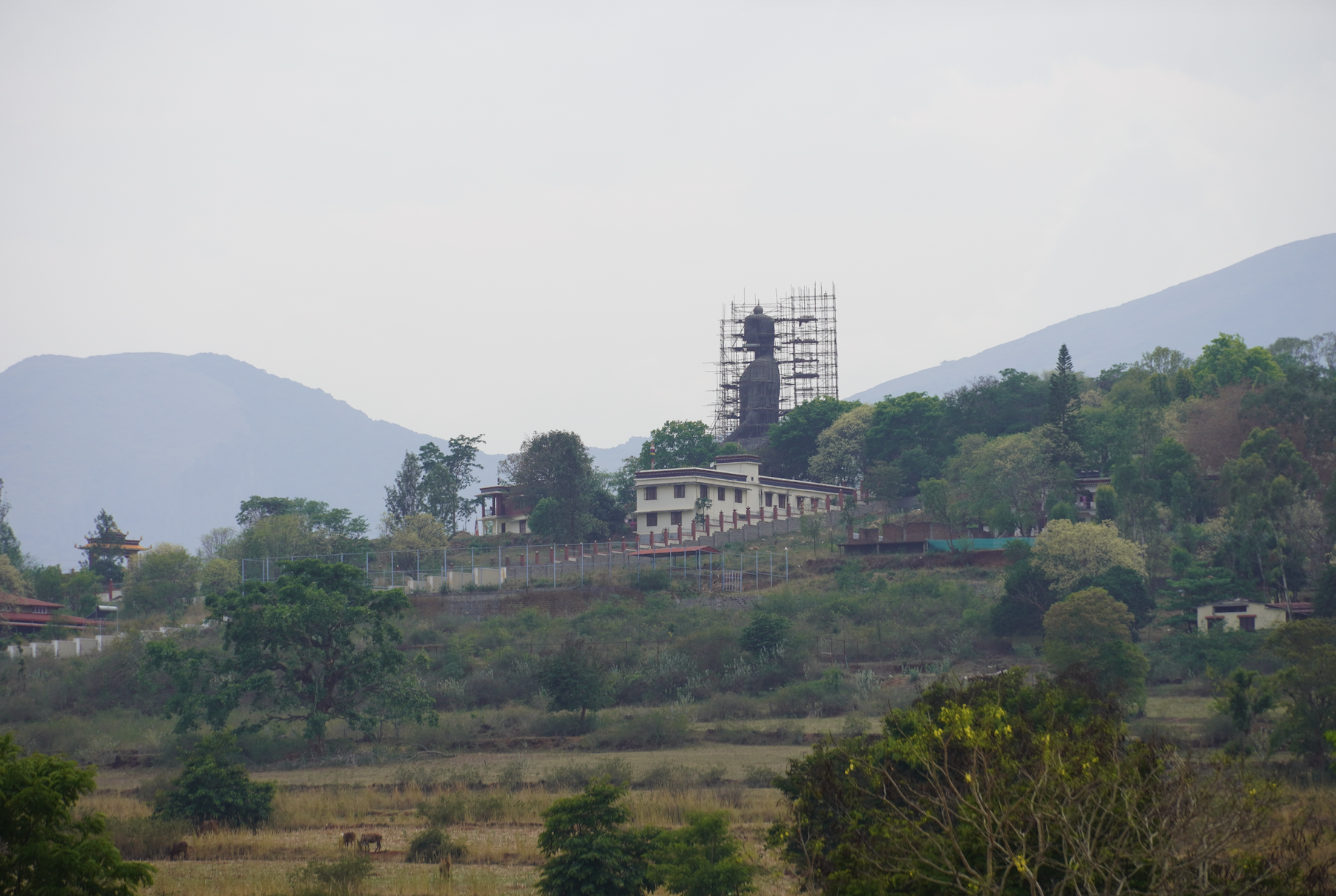
Dhondenling is uniquely situated at the foothills of the Biligiriranga Hills (BR Hills), a geographic bridge between the Western and Eastern Ghats. This location provides a moderate climate that distinguishes it from the surrounding plains. The settlement is characterized by a topography of uneven, sloppy hills that were painstakingly converted from dense forest into fertile agricultural fields over several decades.
The environmental conditions are defined by its position in a rain-shadow area. While the average annual rainfall is recorded between 140 and 170 cm, precipitation is often scanty and unpredictable. This climatic reality has profound implications for water security, impacting both agricultural irrigation and drinking water availability. The proximity to the Biligiri Rangaswamy Temple (BRT) Wildlife Sanctuary and the Satyamangalam Tiger Reserve integrates the settlement into a broader ecological zone home to endangered species such as tigers, leopards, and elephants.
Climatic and Geographic Profile
| Variable | Measurement / Detail |
| Elevation (Mean Sea Level) | 3,345 feet (approx. 1,020 meters) |
| Average Temperature | 20° Celsius |
| Annual Rainfall Range | 140 – 170 cm |
| Nearest Major Town | Kollegal (approx. 40-46 km) |
| Total Allocated Area | 3,121.14 acres |
| Primary Ecological Classification | Rain-shadow / Foothills |
The transition of the landscape from forest to agrarian land was a social adaptation as much as a physical one. Settlers had to adapt their high-altitude Himalayan farming techniques to the semi-arid conditions of the Deccan plateau. Today, the “uneven hills” of Dhondenling provide a picturesque backdrop that attracts offbeat travelers seeking a blend of spirituality and natural beauty.
Governance, Administration, and the CTA Paradigm
The governance of Dhondenling is a sophisticated hybrid model that integrates the requirements of the Indian state with the administrative structures of the Central Tibetan Administration (CTA), based in Dharamshala.
The Role of the Settlement Officer
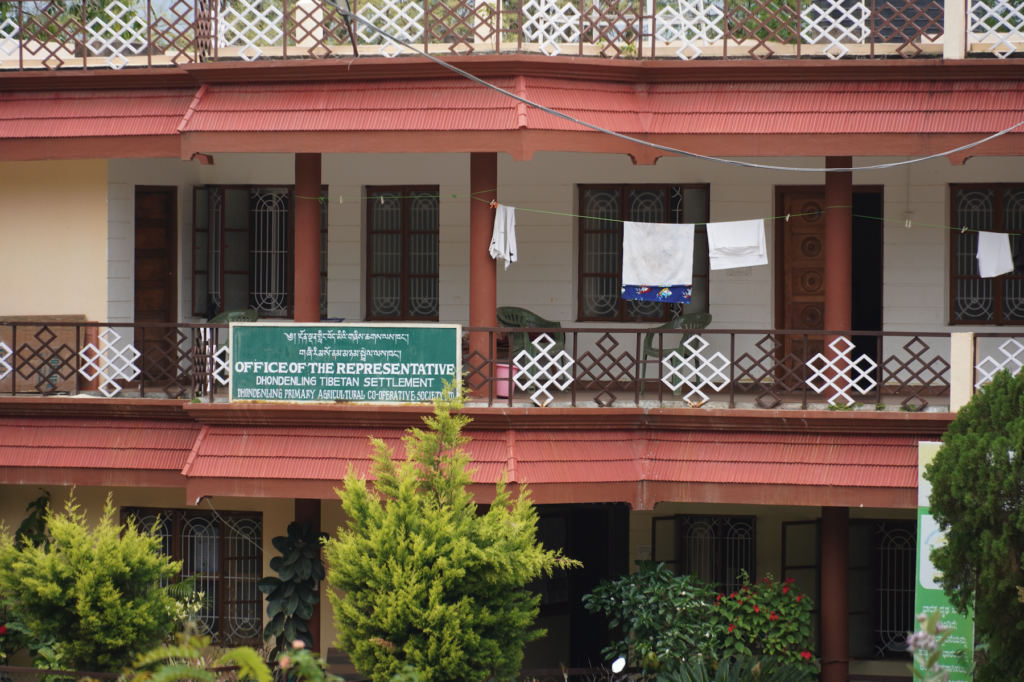
At the heart of the administration is the Settlement Officer, serving as the Representative of the Department of Home (CTA). This position is multifaceted, combining the duties of a chief executive, a diplomat, and a local magistrate. The Settlement Officer is responsible for overall control, adjudicating disputes, and acting as the primary liaison between the Tibetan residents and outside authorities.
Administrative Structure
| Figure / Post | Key Responsibilities |
| Settlement Officer | Principal authority; Liaison with CTA; Dispute resolution |
| CEO of the Co-operative Society | Economic management; Public services; Fair price shops |
| Workshop/Handicraft Manager | Oversight of artisanal production and vehicle maintenance |
| Village (Group) Leaders | Intermediaries for 22 villages; Information dissemination |
| Health Facility Coordinator | Oversight of hospital and clinic operations |
The Village Cluster and Grassroots Democracy
The 22 villages of Dhondenling operate under a system of elected Group Leaders, with each village comprising roughly 25 to 35 families. These leaders act as essential intermediaries, collecting community funds and settling minor disputes. They are chosen for their character and ability to serve as neutral arbiters, allowing the settlement to manage day-to-day affairs efficiently while preserving a sense of community.
Economic Systems: Agriculture, Trade, and Artisanal Survival
The economic landscape of Dhondenling is characterized by agrarian dependence, supplemented by seasonal commercial migration and artisanal production.
Agrarian Cycles and Crop Selection
Agriculture is the primary livelihood. Due to climatic constraints, farmers generally cultivate crops once a year, timed to the retreating monsoon in late July. The dominant crop is maize (corn), which thrives in the well-drained soil. Other crops include ragi (finger millet), rice, and potatoes. The Cooperative Society plays a crucial role by providing tractor rental and repair services, managing fair-price shops, and helping farmers navigate the rain-shadow environment.
The “Sweater Selling” Economy and Seasonal Migration
To supplement agricultural income, many residents participate in seasonal trade. The most prominent activity is “sweater selling,” where community members travel to major Indian cities during the winter months to sell woolen garments. This practice allows families to build financial reserves supporting their children’s education and providing a buffer against agricultural failure.
Handicrafts and Artisanal Preservation
Artisanal production is a vital form of cultural preservation. The Tibetan Handicraft Centre produces traditional items including thangkas, handwoven carpets, and incense. Organizations such as “Noryang” employ local monks and laypeople to produce sacred images and clothing. Profits are reinvested into community projects, specifically targeting health and education infrastructure.
Spiritual Geography: The Monastic Institutions of Dhondenling
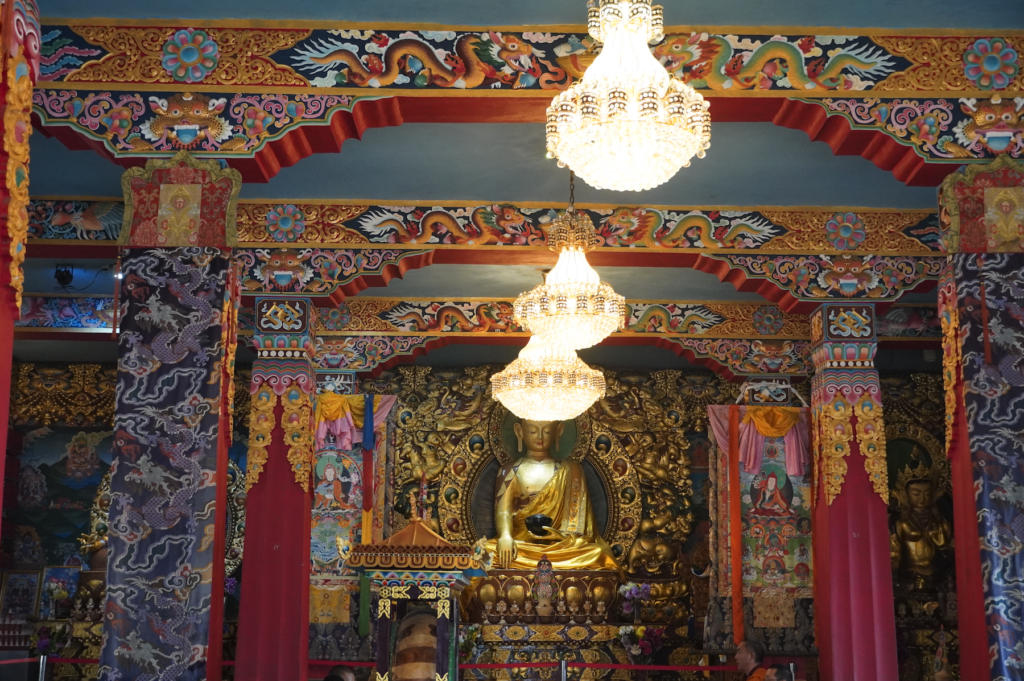
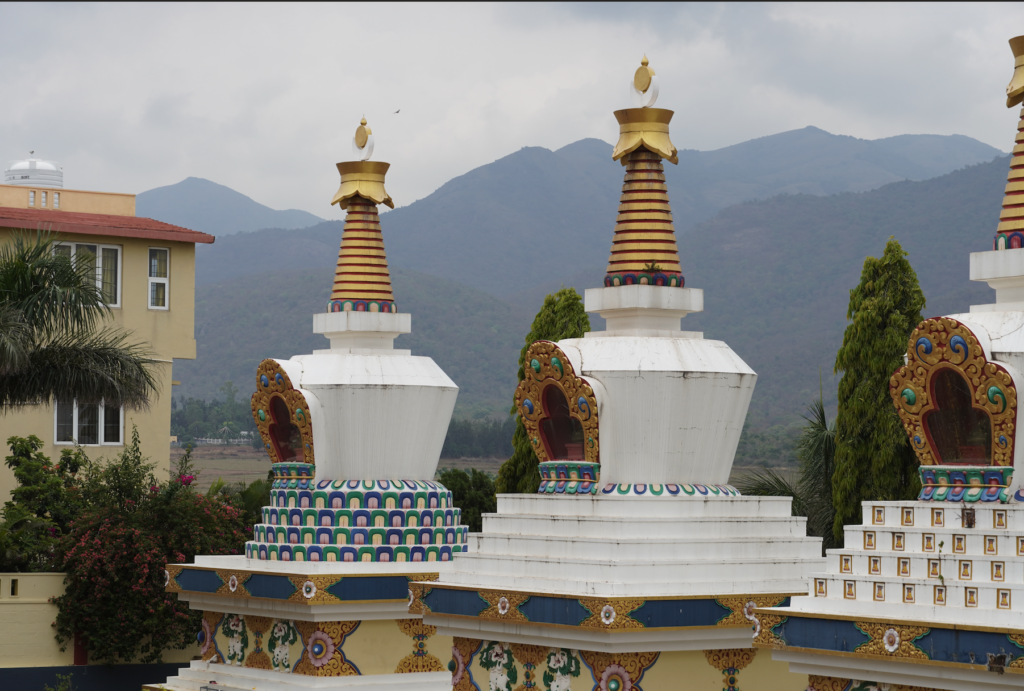
The religious infrastructure of Dhondenling is perhaps its most visible and culturally significant feature, home to five major monasteries representing distinct lineages of Tibetan Buddhism.
Major Monasteries of Dhondenling
| Monastery Name | Tradition | Key Features |
| Dzogchen Monastery | Nyingma | Largest in settlement; 52ft Guru Rinpoche statue |
| Tana Monastery | Yelpa Kagyu | Heart project of Tana Dungsey Rinpoche; houses 70 monks |
| Taksham Monastery | Tibetan Buddhist | Significant local center for spiritual practice |
| Dhargyal Monastery | Tibetan Buddhist | Known for intricate murals and ritual adherence |
| Bayoe Monastery | Tibetan Buddhist | Situated near scenic overlooks of the BR Hills |
Dzogchen Monastery: The Seat of the Nyingma Tradition
The Dzogchen Monastery is the largest and most influential religious institution in the settlement. It is one of the “Six Mother Monasteries” of the Nyingma tradition. Following its destruction in Tibet, the 14th Dalai Lama personally chose this site for its re-establishment. Completed in 1991, the complex features a stunning 52-foot statue of Guru Padmasambhava (Guru Rinpoche), consecrated in 1999.
Social Infrastructure: Healthcare, Education, and Welfare
The long-term success of Dhondenling is anchored in its robust social infrastructure.
Healthcare
Healthcare is a dual-system model. The settlement features a modern allopathic hospital for acute health needs and emergencies. Alongside this is the Men-Tsee-Khang (Tibetan Medical & Astro Institute), which provides access to traditional Tibetan medicine (Sowa-Rigpa). The settlement also operates a small care home for the elderly, supported by international humanitarian organizations.
Education
Educational needs are served by the Sambhota Tibetan Schools Society (STSS). The curriculum provides a standard Indian education while prioritizing the preservation of the Tibetan language and culture. The schools are often the site of major community events, and successful graduates frequently go on to study at larger institutions in Mysore, Hyderabad, and Bangalore.
Logistics, Connectivity, and the Protected Area Permit (PAP)
For those intending to visit or conduct research, it is essential to navigate specific legal and logistical requirements. All Tibetan settlements in India are classified as “Protected Areas.”
The Protected Area Permit (PAP) System
Any foreign national wishing to visit Dhondenling must possess a Protected Area Permit (PAP) enforced by the Ministry of Home Affairs (MHA). Indian citizens do not require a PAP but must carry valid government-issued ID.
| PAP Detail | Description |
| Application Portal | papvt.mha.gov.in |
| Processing Time | Approx. 3 months |
| Documents Required | Passport, Indian Visa, Photos, Application Form |
| Cost | Free of charge |
Reaching Dhondenling
Most visitors arrive via Bangalore or Mysore. From Bangalore (180-230 km), it is a 4.5 to 5-hour drive. KSRTC buses run frequently between Bangalore and Kollegal. From Kollegal, travelers take local buses or taxis to Odeyarpalya, the primary entrance to the settlement. Accommodation is modest, primarily limited to local guesthouses or nearby ecological resorts in the BR Hills.
Cultural Rhythms: The Festival Calendar
The social life of the community is structured around the Tibetan lunar calendar. During Losar (Tibetan New Year), the settlement transforms with ghost-expelling rituals, traditional foods, and fresh prayer flags. Other major events include the Monlam Prayer Festival, Saga Dawa (celebrating Buddha’s enlightenment), and the Shoton (Yogurt) Festival.
Synthesis and Future Outlook: A Fifty-Year Legacy
As Dhondenling celebrates its golden jubilee in 2024, it stands as a model of successful long-term refugee rehabilitation. Its future will depend on addressing emerging challenges: economic diversification beyond the seasonal sweater trade, full legal integration into the Indian property system, and environmental sustainability in a rain-shadow climate.
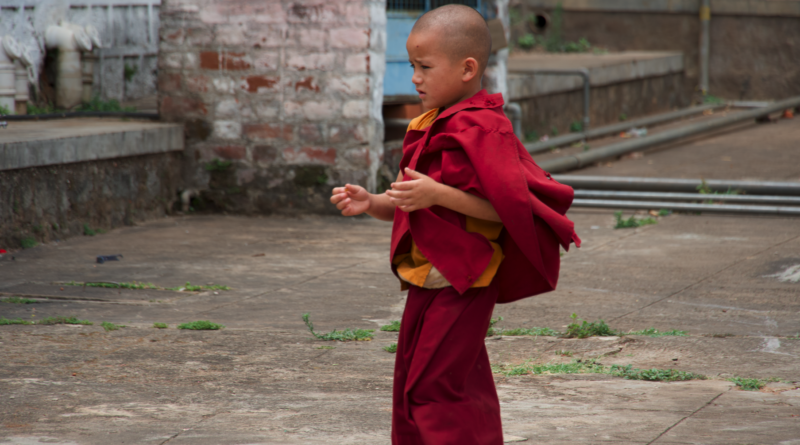
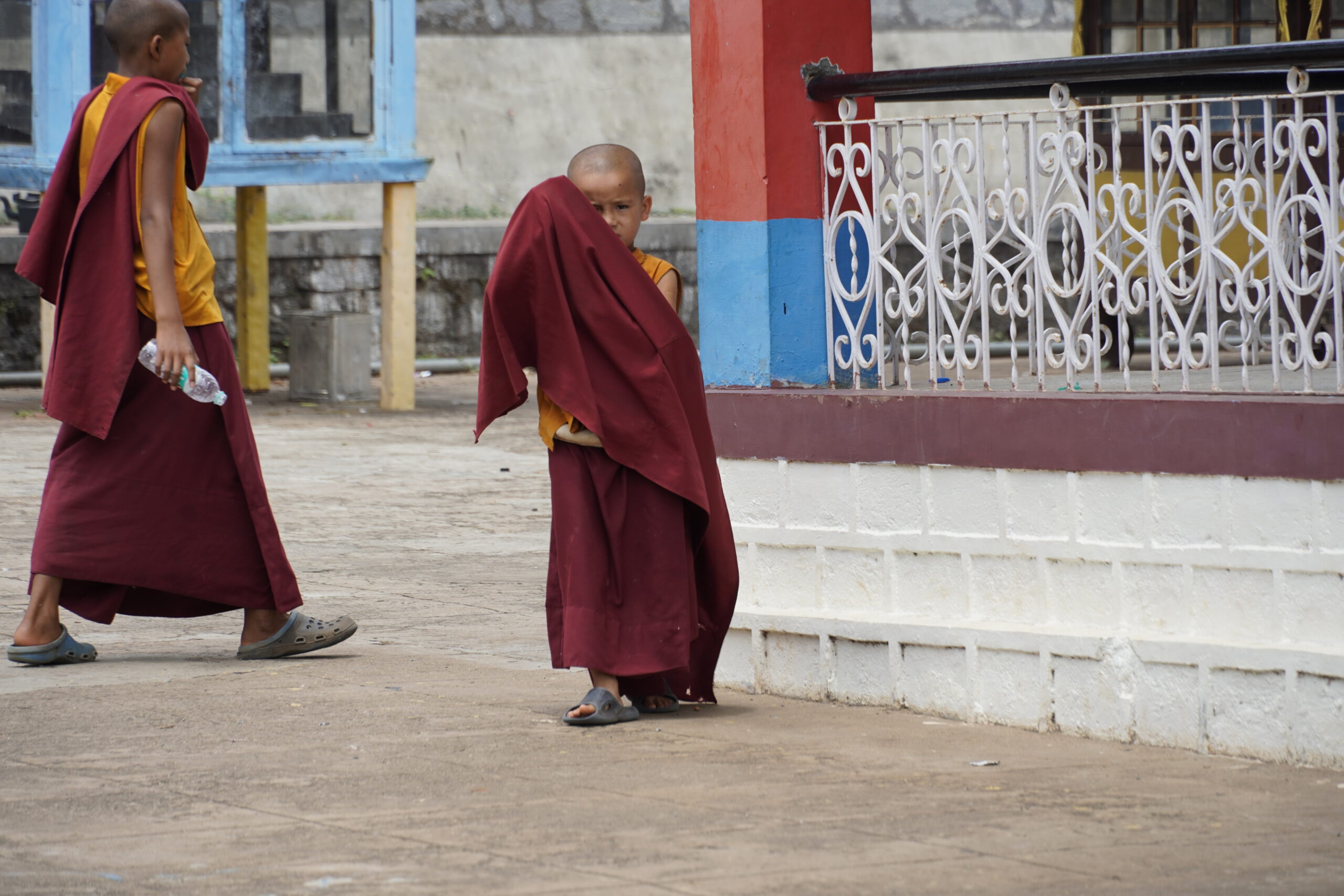
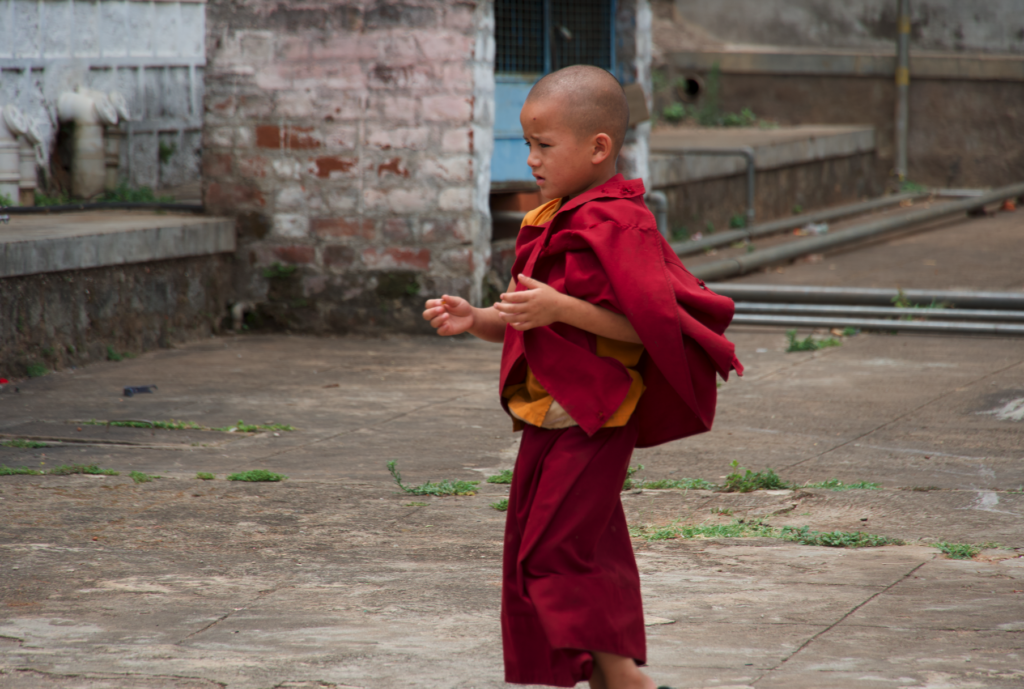
Most importantly, as the original generation of refugees passes away, cultural succession falls to the youth. Dhondenling remains one of Karnataka’s “best-kept secrets,” proving that even in the face of forced migration, a community can weave their ancient traditions into the fabric of a new geography to create a true “Land of Fulfillment.”