
The 1966 Aizawl Bombing and the History of the Mizo Insurgency
Sovereignty, Insurgency, and the Aerial Siege of Aizawl: A Comprehensive Geopolitical Analysis of the March 5, 1966 Uprising and its Aftermath
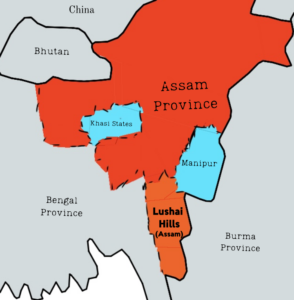
The events of March 5, 1966, in the Mizo District of Assam constitute a singular and deeply traumatic juncture in the history of post-independence India. On this date, the Indian Air Force (IAF) was deployed to conduct offensive kinetic operations, including strafing and the dropping of incendiary bombs, against its own civilian population—an event that remains the only instance of the Indian state employing air power against its own territory.1 The deployment was a response to “Operation Jericho,” a lightning insurgency launched by the Mizo National Front (MNF) that had effectively seized control of the district and declared independence from the Indian Union.4 The subsequent military response and the twenty-year conflict that followed were rooted in a complex tapestry of ecological catastrophe, perceived administrative neglect, and a burgeoning sense of ethnic distinctiveness that felt increasingly alienated within the broader Assamese and Indian political frameworks. 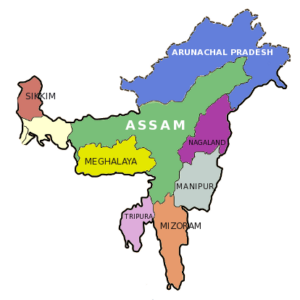
The Ecological Catalyst: The Mautam Famine and the Erosion of Legitimacy
The genesis of the 1966 uprising cannot be understood without an examination of the Mautam famine of 1959. In the Mizo language, Mautam refers to the “death of the bamboo,” a cyclical ecological phenomenon occurring approximately every 48 to 50 years.12 The trigger for this catastrophe is the gregarious flowering and subsequent fruiting of the Melocanna baccifera bamboo species, which covers vast tracts of the Lushai Hills.12 The fruit is highly nutritious and leads to a massive explosion in the population of black rats.9
As the rats consume the bamboo seeds, their population multiplies exponentially, leading to what is locally termed a “rat flood”.12 Once the seeds are exhausted, the rodents descend upon human settlements, devouring standing crops, granaries, and even clothing and household goods overnight.9 In 1959, this led to a near-total destruction of the district’s agricultural output, plunging the Mizo people into a state of acute starvation.9
| Ecological and Social Dynamics of the 1959 Mautam | Description of Impact and Resulting Social Shifts |
| Biological Mechanism | Mass flowering of Melocanna baccifera leading to rat plagues 12 |
| Scale of Devastation | Approximately 90% of the Mizo District population affected by crop loss 9 |
| Local Perception | Indifference and apathy from the Assam and Union governments 9 |
| Political Response | Transformation of cultural groups into the Mizo National Famine Front (MNFF) 9 |
| Long-term Result | Birth of a secessionist ideology under the leadership of Pu Laldenga 3 |
The failure of the state government in Shillong and the central government in New Delhi to provide timely and adequate relief was perceived by the Mizos not merely as an administrative lapse, but as evidence of systemic neglect and a fundamental lack of concern for their survival.8 In this vacuum of governance, the Mizo National Famine Front (MNFF) was formed in 1960, led by Laldenga, a former clerk in the district council.9 The MNFF successfully organized local relief efforts, gaining immense popularity and moral authority.9 By 1961, the organization dropped the word “Famine” from its name, becoming the Mizo National Front (MNF), and shifted its focus toward the objective of sovereign independence for a “Greater Mizoram”.
The Escalation to Insurrection: Operation Jericho and the Declaration of Independence
The years between 1961 and 1966 were marked by a steady militarization of Mizo society. Discontent was further fueled by the Assam Official Language Act of 1960, which sought to impose Assamese as the sole official language, a move the Mizo people viewed as an existential threat to their cultural identity.7 Under the guise of a social service organization, the MNF began recruiting ex-servicemen and disillusioned youth into its militant wing, the Mizo National Army (MNA).3
The Tactical Execution of Operation Jericho
In late February 1966, the MNF high command finalized a plan codenamed “Operation Jericho,” intended to systematically seize all power centers within the Mizo District.6 The objectives were clear: take over treasuries, neutralize the police, capture non-Mizo (“Vai”) officials, and hoard armaments from the 1st Assam Rifles and Border Security Force (BSF) garrisons.6
| Key Events of Operation Jericho (Feb 28 – March 2, 1966) | Operational Outcome and Impact on Administration |
| Feb 28, 10:30 PM | Launch of simultaneous attacks on security posts in Lunglei, Aizawl, and Champhai 5 |
| March 1, 2:00 AM | Sabotage of Aizawl telephone exchange, severing all district communications 6 |
| March 1, 3:00 AM | Plunder of the Aizawl District Treasury; seizure of arms and.303 ammunition 7 |
| March 1, Afternoon | Laldenga issues a formal Declaration of Independence from the “illegal Indian occupation” 5 |
| March 2, 1966 | Insurgents ambush a patrol of the 1st Assam Rifles, causing heavy casualties 6 |
The uprising achieved near-total surprise. Telephone lines were cut, and roadblocks were established to prevent reinforcements from Silchar.6 By the morning of March 1, the MNF had seized the treasuries in Lunglei and Aizawl, released prisoners from local jails, and occupied strategic high ground overlooking the Assam Rifles headquarters in the capital.4 Laldenga’s declaration of independence exhorted all Mizos to rise against the Indian state, and for several days, it appeared that the Union’s authority in the hills had collapsed entirely.6
The Siege of Aizawl and the Crisis of Reinforcement
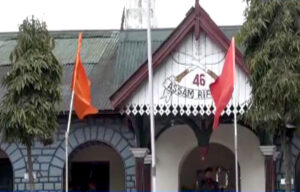
The 1st Assam Rifles (AR) battalion in Aizawl remained the final bastion of Indian authority in the city, but it was heavily besieged and isolated.1 The MNF issued repeated demands for surrender, which were refused by the AR commanding officers.6 On March 4, the MNF launched an all-out assault on the AR garrison, employing suicide squads to breach the perimeter.6
The Indian government’s initial attempts to break the siege using air-dropped reinforcements and supplies were largely unsuccessful.2 MNF snipers stationed on the ridges surrounding the AR camp maintained such a high volume of fire that transport helicopters were unable to land.2 In one notable mission, a Dakota transport aircraft received 21 bullet holes from ground fire, forcing it to limp back to the Kumbhirgram airbase.4 This failure of rotary-wing and transport aircraft to provide relief became the tactical justification for the transition to offensive fighter-jet operations.1
The Airstrikes of March 5: A Detailed Tactical Account
The decision to deploy jet fighters against the insurgents in Aizawl was made by the central government led by Prime Minister Indira Gandhi, who had assumed the premiership only six weeks prior.2 On the morning of March 5, 1966, the roar of jet engines signaled the commencement of an unprecedented aerial assault on an Indian city.
The Aircraft and Squadrons Involved
The Indian Air Force utilized two primary types of fighter aircraft during the missions over Aizawl and the surrounding districts. The logistical hub for these operations was Kumbhirgram near Silchar, which lacked basic facilities and required munitions and fuel to be ferried in by Caribou aircraft.22
- Dassault Ouragans (Toofanis): Six aircraft from the 29 “Toofani” Squadron were dispatched from Bagdogra to Kumbhirgram.1
- Hawker Hunters: Aircraft from the 17 “Hunter” Squadron, based in Jorhat, were also heavily involved in the strafing runs.1
The pilots who participated in these missions included individuals who would later become prominent political figures in India, such as Rajesh Pilot and Suresh Kalmadi—though the exact timing of their involvement has been a subject of intense modern political debate.7
Munitions and Target Identification
The strikes targeted MNF positions but resulted in extensive collateral damage to the civilian infrastructure of Aizawl.1 The fighters operated in pairs, conducting low-level passes to acquire targets identified by ground troops using smoke grenades or known MNF capture sites.
| Technical Specifications of the Aizawl Airstrikes | Details of Munitions and Operational Parameters |
| Machine Gun Calibers | 16mm, 20mm, 30mm, and 40mm cannons 1 |
| Rocket Munitions | 60mm T-10 Rocket Propelled (RP) bombs 1 |
| Incendiary Devices | High-explosive bombs purposed for detonation and fire ignition 1 |
| Primary Targets | Tuikhuahtlang reservoir, Circuit House, Armed Veng HQ 1 |
| Damage Extent | Republican Veng, Dawrpui, Khatla, and Chhinga Veng largely destroyed 1 |
Witness accounts describe the initial attack occurring at approximately 11:30 AM on March 5, with heavy machine-gun fire raining down on the town.2 The attack intensified on March 6, as the IAF began dropping incendiary bombs to smoke out the insurgents.2 The resulting fires, exacerbated by the dry March wind and the flammable construction materials of the homes, quickly engulfed the major residential and commercial areas.
The Human Toll and Civilian Evacuation
The population of Aizawl, caught between the ground war of the MNF and the aerial fire of the IAF, largely fled into the surrounding hills.1 Local survivors recalled the distinction between the “good planes” (transport) and “angry planes” (fighters), the latter of which appeared to “spit smoke and fire” before the sound of their engines even reached the town.2
While confirmed civilian deaths in the immediate bombing were relatively low—estimated at around 13 people—the sociological impact was devastating.1 Entire neighborhoods were reduced to ash, and cultural artifacts, records, and livelihoods were obliterated.1 The evacuation toward the Reiek and Sialsuk mountains marked the beginning of a period of displacement that would last for years.
Geographic Expansion of the Aerial Campaign: The Scorched Earth Phase
The air strikes were not limited to the capital. In an effort to break the back of the rebellion, the IAF and the Indian Army conducted a series of operations throughout March 1966 targeting various villages identified as MNF strongholds or those that had participated in the insurrection.1
Village-Specific Attacks
The pattern of these strikes often involved initial strafing runs to disperse armed groups, followed by the dropping of bombs to destroy dwellings and granaries.1 In some cases, the military herded villagers into open areas before setting their homes ablaze to ensure no shelter remained for the rebels.1
| Targeted Village/Location | Date of Operation | Estimated Damage and Casualties |
| Khawzawl | March 6, 1966 | Village devastated by strikes; later set on fire by ground troops 1 |
| Hnahlan | March 7, 1966 | 200 of 270 houses destroyed; food supplies and livestock lost 1 |
| Sangau | March 8, 1966 | Bombed following the siege of local security posts 16 |
| Tlabung (Demagiri) | March 9-13, 1966 | Sustained bombing to relieve the garrison and cut MNF supply lines 1 |
| Pukpui | March 13, 1966 | Home village of Laldenga; burned to the ground in front of villagers 1 |
| Bunghmun | March 23, 1966 | Reduced to ashes after MNF killed a Major during resistance 1 |
These missions succeeded in forcing the MNF to abandon their hold on inhabited areas and retreat into the dense jungles of Burma and East Pakistan.2 By the end of March 1966, the Indian military had re-established control over the primary towns and transit routes, but the insurgency had merely entered a new, more protracted phase of guerrilla warfare that would continue for twenty years.2
The Policy of Denial and the Revision of History
For nearly two decades, the official narrative of the Indian government was one of total denial regarding the aerial bombardment of Aizawl.2 This silence was maintained across multiple administrations and was only broken by the persistent testimonies of survivors and material evidence collected by local activists and international researchers.
The “Supply Drop” Narrative
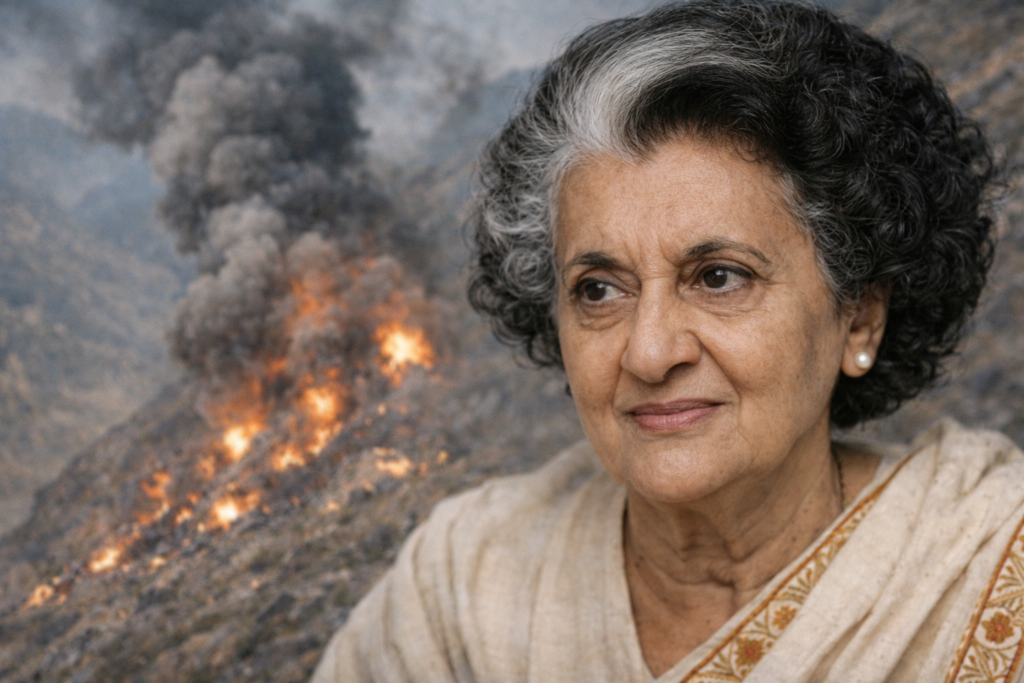
On March 9, 1966, Prime Minister Indira Gandhi, in response to queries from the Hindustan Standard, claimed that the IAF jets were only used to airdrop personnel and supplies to the besieged Assam Rifles.1 This explanation was widely questioned, as supersonic fighter aircraft like the Toofani and Hunter are technically ill-suited for the low-speed, high-precision maneuvers required for airdropping rations and medicines.5
The Government of Assam echoed this denial, suggesting that the fires in Aizawl were set by MNF insurgents who hoped the winds would carry the flames into the Assam Rifles headquarters.1 However, the physical evidence found at the sites—including 20mm and 30mm shell casings and unexploded 60mm rockets—directly contradicted the claim that only supply drops occurred.1
The Role of Independent Fact-Finding
In April 1966, Stanley Nichols-Roy, a Khasi leader and legislator, led a delegation to the Mizo Hills to investigate the reports of atrocities.1 He presented the Assam Legislative Assembly with eyewitness testimonies from over 100 individuals who described being strafed from the air.1 Nichols-Roy and his colleagues, Hoover Hynniewta and G.G. Swell, condemned the “excessive use of force” and became the first official voices to challenge the government’s denial.1 Despite their evidence, the state and central governments continued to officially refute the airstrikes until the late 1980s, when historians and former military officers finally began to acknowledge the operational reality of the 1966 campaign.1
The Societal Reorganization: Regrouping of Villages and the PPV System
In the wake of the 1966 bombing, the Indian military realized that the dense forests and hundreds of isolated hamlets provided a perfect support structure for the MNF.2 To address this, a strategy of “regrouping” was implemented starting in 1967, led by Lt. General Sam Manekshaw.2
Logistics and Scale of Displacement
The regrouping policy was a massive social engineering project that sought to cluster the Mizo population along the arterial road running from Silchar through Aizawl to Lunglei.2 This would allow the military to monitor all movement and deny the insurgents their base of food and information.2
| Metric of the Regrouping Policy (PPVs) | Statistical and Structural Impact on Mizoram |
| Targeted Population | Over 236,000 Mizos (approx. 80-95% of the rural population) 2 |
| Settlement Consolidation | 516 villages evacuated and squeezed into 110 Protected Villages 2 |
| Enforcement Mechanism | Evacuation at gunpoint; original villages and granaries torched 2 |
| Operational Timeline | 1967 through 1979; the last PPVs were only dismantled 12 years later 2 |
| Legal Framework | Armed Forces Special Powers Act (AFSPA) and Defence of India Rules 2 |
Life in the “Protected and Progressive Villages”
Although the government termed these centers “Protected and Progressive Villages” (PPVs), locals and subsequent historians have frequently likened them to concentration camps.2 The PPVs were surrounded by barbed wire and heavily guarded.2 Every resident was numbered and tagged, and movement was strictly regulated via a system of passes and curfews.2
The economic impact was devastating. Regrouping effectively ended the traditional practice of jhum (shifting cultivation), as the land surrounding the PPVs was insufficient to sustain the concentrated population.2 Agriculture plummeted, leading to widespread malnutrition and famine-like conditions for three years, which the military attempted to mitigate with meagre food rations.2 Socially, the confinement led to the breakdown of tribal conventions; theft, murder, and alcoholism became prevalent as communities struggled for scarce resources.
The Twenty-Year Stalemate and the Role of the Church
The conflict settled into a brutal stalemate between 1966 and 1986. The MNF operated from hideouts in the Arakan Hills and the Chittagong Hill Tracts, conducting ambushes and bank robberies while the Indian military maintained a heavy presence in the hills.2 However, the 1971 liberation of Bangladesh significantly weakened the MNF’s logistical base, as they lost the safe havens previously provided by East Pakistan.3
The Church as Peace Mediator
In a society where traditional political parties had become practically redundant due to the insurgency, the Mizo Church emerged as the primary voice of civil society and the only entity capable of mediating between the warring sides.8 By the early 1980s, the desire for peace had become overwhelming among the Mizo public.29
In 1982, Church leaders formed the Zoram Kohhran Hruaitute Committee (ZKHC) to reopen lines of communication.29 They faced immense danger, traveling to MNF hideouts in Bangladesh and meeting Laldenga during his exile in London in 1983.29 On May 31, 1983, the ZKHC facilitated a Joint Memorandum signed by all political parties in Mizoram, urging the Union government and the MNF to restart negotiations.14 This grassroots pressure, combined with Laldenga’s realization that total sovereignty was unachievable, paved the way for the historic settlement.3
The 1986 Peace Accord and the Restoration of Statehood
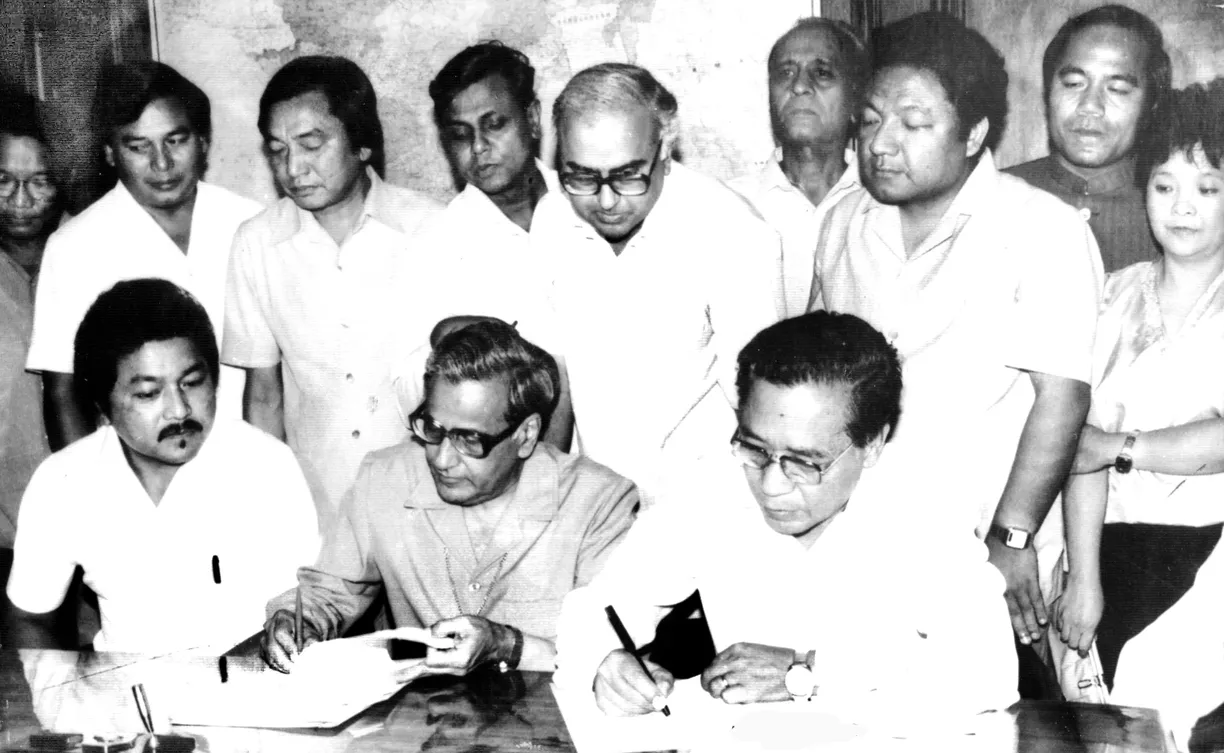
The Mizoram Peace Accord, signed on June 30, 1986, is widely cited by geopolitical analysts and historians as the most successful conflict resolution model in modern Indian history.11 The tripartite agreement between the Government of India, the MNF, and the local administration effectively ended the two-decade insurgency and integrated the Mizo rebels into the mainstream political process.
Constitutional and Legislative Outcomes
The Accord led to the passage of the 53rd Amendment to the Indian Constitution, which inserted Article 371G to protect Mizo customary laws and social practices.4 Mizoram transitioned from a Union Territory to India’s 23rd state on February 20, 1987.4
| Provision of the 1986 Accord | Specific Terms and Conditions |
| Disarmament | MNF to bring all personnel “overground” and surrender arms 14 |
| Statehood | Mizoram granted full statehood with a 40-member Assembly 34 |
| Article 371G | No Act of Parliament regarding Mizo custom/religion applies unless Assembly agrees 35 |
| Amnesty & Rehab | Underground personnel granted amnesty and financial resettlement 14 |
| Governance | Laldenga appointed first Chief Minister; Congress leader Lal Thanhawla as Deputy 15 |
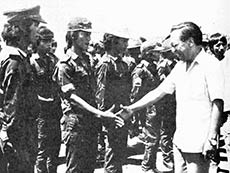
The signing of the Accord brought an immediate end to the violence. The Mizo National Army returned from their hideouts in Bangladesh and Myanmar, welcomed by crowds with drums and flowers, marking the transformation of a militant movement into a legitimate political party.34
Remembrance and Reconciliation: The Legacy of March 5
Despite the success of the 1986 Accord, the memory of the 1966 bombing remains a “deeply traumatic event” in the Mizo collective consciousness.1 Since 2008, the day of March 5 has been observed as Zoram Ni (Mizoram Day) by the Mizo Zirlai Pawl (MZP) and other civil society groups.1
The Meaning of Zoram Ni
The observance of Zoram Ni is intended to honor those who lost their lives or were injured during the bombing and the subsequent years of disturbance.39 Organizers emphasize that the day is not meant to incite rebellion or promote hatred toward the Indian Union, but rather to ensure that the “atrocities passed down from their parents and grandparents” are never forgotten.23
The modern political debate over the bombing, sparked by Prime Minister Modi’s 2023 remarks in Parliament, highlights a persistent desire for a formal state apology.4 Mizo leaders have expressed that while the issue has been used as a “political game” in national debates, a sincere recognition of the past by the Government of India remains essential for complete emotional integration.39
The Lessons of the Mizo Uprising
The events of March 5, 1966, provide a critical case study in the dynamics of sub-national insurgency and the limits of state power. The reliance on aerial bombardment was a tactical success that arguably prevented the complete secession of the district, but it was a strategic blunder that alienated a generation of Mizo citizens.3 The “othering” of the Mizos through air power and forced regrouping solidified a nationalist identity that had previously been fluid and fractured.8