
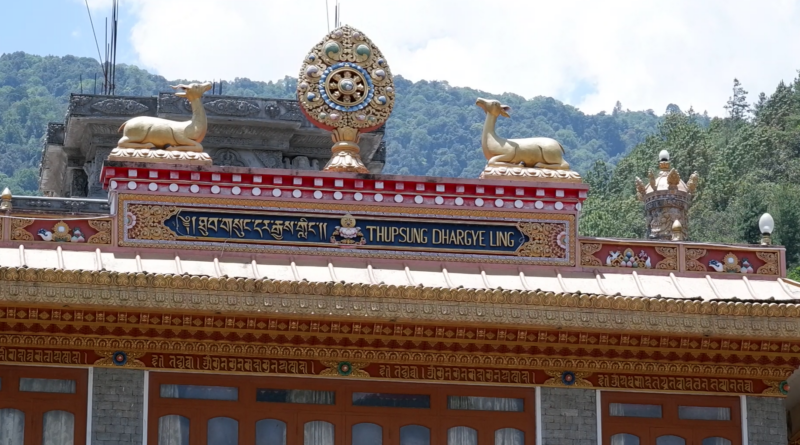
Discovering Dirang Valley: A Journey Through Himalayan Architecture, Monasteries, and Heritage
Tucked away in the rugged folds of the Eastern Himalayas in Arunachal Pradesh, the West Kameng district serves as a dramatic frontier of geography, culture, and history. At its heart lies the Dirang Valley, a riverine basin carved by the Kameng River (Dirang Chu) sitting at an elevation of 1,500 to 1,650 meters.
Historically, this valley was a strategic trade and cultural corridor linking the Tibetan Plateau to the Brahmaputra plains of Assam. Following geopolitical shifts in 1959, the region absorbed a large influx of Tibetan refugees, adding a distinct cultural layer to the indigenous Monpa communities who practice Gelug Mahayana Buddhism. Today, the easing of strict border travel restrictions has opened this previously isolated valley into a vibrant hub for cultural tourism.
The Crown Jewel: Thupsung Dhargye Ling (TDL) Monastery
Perched on a commanding ridge above Dirang town, Thupsung Dhargye Ling—locally known as the Dirang Monastery—is a dual-purpose religious sanctuary and academic institute. Its bright golden metal roofs stand in striking contrast to the deep green forests of the valley.
Vision and Pedagogy
TDL was born out of a critical socio-cultural need. Because local Indian schools teach primarily in English and Hindi, younger generations of Tibetan and Monpa descent faced a gradual detachment from their classical Tibetan language and scriptural roots. TDL was established to bridge this gap, offering structured programs in Buddhist philosophy for both monastics and laypeople. Uniquely, the monastery promotes inter-religious dialogue by hosting weekly classes on the teachings of the Bhagavad Gita and Lord Rama alongside traditional Gelug curricula.
A Decade of Construction (2007–2017)
The physical realization of the monastery was a massive undertaking guided by Venerable Thupten Rinpoche, a senior reincarnated tulku of the Gaden Jangtse Monastery. Applying logistical and engineering lessons from his previous projects in Karnataka, Rinpoche led the decadal construction phase:
-
2007–2008: An 11-acre hilltop site was acquired, graded, and blessed by a delegation of 29 monks through a Kalachakra self-initiation and White Tara long-life rituals.
-
2008–2009: Structural framing accelerated ahead of a site inspection and blessing by the 14th Dalai Lama in November 2009.
-
2010–2015: The primary envelope (three floors in front, four in the rear) was finalized, followed by the installation of intricate cement carvings, vibrant interior murals, and the flanking stupas.
-
2017: The complex was officially consecrated on April 5 by the 14th Dalai Lama in a deeply emotional ceremony.
Architectural Layout
Visitors ascending the wide stone steps to the central courtyard are greeted by colorful prayer flags, whitewashed stupas, and a heavy sacred bronze bell. Inside the main assembly hall (Du-khang), the focal point is a massive gilded statue of Shakyamuni Buddha. The ground floor features a detailed bhāvacakra (Wheel of Life) mural that visually explains the mechanics of karma, while rows of copper prayer wheels encircle the exterior walls, allowing visitors to generate spiritual merit by rotating them clockwise.
Ancient Monastic and Defensive Fortifications
While TDL represents modern Tibetan architectural interpretation, the older historical sites in the valley reveal a deep history of defensive and spiritual engineering.
Kalachakra Gompa
Located in the valley within Kalachakra village, this 500-year-old monastic structure is dedicated to tantric teachings of cosmic cycles and astrology. Featuring bright yellow walls, mosaic tilework, and stucco sculptures, the Gompa experienced a major revitalization following a Kalachakra initiation ceremony performed by the Dalai Lama in 1983.
Khastung Gompa
Dating between the 15th and 18th centuries, Khastung Gompa is one of the oldest standing monasteries in Arunachal Pradesh. Reached via a steep hike through local Monpa settlements, its stark, whitewashed stone walls offer panoramic views of the river and a quiet, isolated setting perfect for contemplative retreats.
Dirang Dzong
Constructed between the 15th and 17th centuries to protect the Monpa community and control trade routes, the Dirang Dzong is a historic 9th-century fortified village. The central four-story fortress was built entirely of heavy stone slabs and timber logs without modern mortar, relying on precise gravity masonry to withstand earthquakes and military incursions. The surrounding traditional double-story Monpa houses feature elevated living quarters and upper-level granaries to combat harsh winter cold.
Where to Stay: Monastic Guest Houses & Local Stays
As tourist interest has grown, Dirang has developed unique accommodations that respect the cultural fabric of the valley.
| Accommodation | Location | Key Features | Booking Method |
| TDL Monastery Guest House | Inside TDL Complex | Private balconies, mountain views, strict non-smoking/dry policy. Allows access to 6:00 AM mass prayers. | Direct phone to designated booking agents. |
| Pema Dekey Guest House | Dirang Village | Monastic-affiliated, private bathrooms, mountain views, pet-friendly. | Online booking engines. |
| Vista Valley View | Near Dirang Center | Family-run homestay, home-cooked local Monpa meals. | Online booking engines. |
| The Miyong River | Riverbank location | River views, traditional hospitality, local food options. | Direct contact & platforms. |
Travel Logistics and Permits
Reaching the isolated Dirang Valley requires careful multi-modal travel planning. Because of Arunachal Pradesh’s sensitive international borders, securing the correct permits is a strict requirement.
Understanding the Permit System
| Permit Type | Target Group | Cost & Validity | Key Conditions |
| eILP (Standard) | Indian Citizens | Rs. 300 (up to 3 days) | Apply via eilp.arunachal.gov.in. |
| eILP (Extended) | Indian Citizens | Rs. 500 (4 to 14 days) | Apply via eilp.arunachal.gov.in. |
| Legacy/Group eILP | Indian Citizens & Groups | Rs. 100 (up to 15-30 days) | Best for longer group stays (arunachalilp.com). |
| PAP | Foreign Nationals | USD 30 – 50 (up to 30 days) | Must travel in groups of 2+ with a registered guide. Requires 4-6 weeks processing. |
Important Note for Indian Citizens: To apply online, you must upload a recent passport-sized photograph and a valid government-issued photo ID (Aadhaar, Passport, Driving License, or Voter ID). PAN cards are strictly rejected. When applying, ensure you explicitly list both West Kameng and Tawang districts on your transit route and select Bhalukpong as your entry gate.
Routing to Dirang Valley
The primary gateway to the region is Guwahati, Assam, which offers robust air and rail connections from major metros like Bengaluru.
Travelers should be mindful of the rapid weather changes on NH13. Monsoons (June to September) bring landslides and delays, while winter months (November to February) offer clear skies but freezing temperatures. Whether you seek the spiritual quietude of Thupsung Dhargye Ling or the architectural marvels of the Dirang Dzong, the journey into the Kameng basin is a rewarding adventure into one of the Himalayas’ most culturally rich corridors.