3 Years of the Manipur Crisis: Displacement & Violence
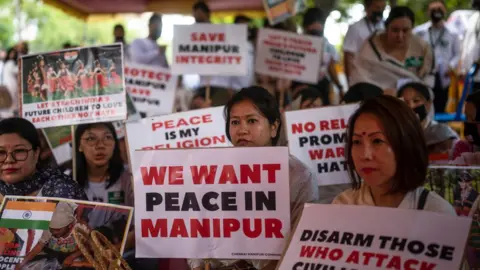
May 3, 2026, marks a grim and devastating milestone in India’s recent history: exactly three years since the state of Manipur was violently fractured along ethnic lines. What began in early May 2023 as localized protests against affirmative action policies rapidly devolved into an entrenched, state-wide ethnic conflict.
Three years later, the crisis remains an open wound. Despite heavy militarization and political maneuvering, a stable resolution remains painfully out of reach, leaving thousands of citizens in a seemingly permanent state of limbo.
From Protests to Armed Clashes: The Escalation of Violence
The trajectory of the Manipur crisis is a stark reminder of how quickly societal fault lines can rupture. The initial tensions between the valley-majority Meitei community and the hill-majority Kuki-Zo tribes transformed almost overnight into organized armed clashes.
Neighborhoods that once saw communities living side-by-side were segregated into heavily fortified buffer zones. The violence has been characterized by the burning of entire villages, the widespread looting of armories, and tragic loss of life. Over 7,000 homes have been destroyed, and the death toll, which officially stands in the hundreds, continues to climb with sporadic outbreaks of violence.
A Life Suspended: The Humanitarian Toll
The human cost of this prolonged conflict is staggering. Official data reveals that more than 58,000 individuals remain internally displaced. For three years, families have been confined to over 170 relief camps—living in pre-fabricated structures and makeshift shelters across the state.
-
Economic Paralysis: The state’s economy has been crippled. Agriculture, local trade, and daily wage labor have plummeted, pushing thousands of families into severe poverty.
-
A Lost Generation: Education has been severely disrupted. While some schools have attempted to reopen, frequent curfews and the trauma of displacement have severely impacted students’ psychological well-being and academic progress.
-
Healthcare in Crisis: Access to basic healthcare and life-saving treatments has been compromised due to blockades, restricted movement, and overburdened local clinics.
The Illusion of Control: Security and Governance
The state and central governments have responded with heavy-handed security measures, deploying thousands of Central Armed Police Forces (CAPF) and Assam Rifles personnel. The state has endured some of the longest and most frequent internet shutdowns in democratic history, alongside sweeping curfews under the Armed Forces Special Powers Act (AFSPA) framework in certain areas.
Yet, peace remains incredibly fragile. The security apparatus has repeatedly struggled to prevent sophisticated attacks. Recent escalations in early 2026, including cross-border mortar fire, rocket attacks in civilian areas like Tronglaobi, and tragic casualties involving young children, have reignited public anger. These incidents underscore a terrifying reality: the civilian population remains dangerously exposed, and the trust in state institutions to provide protection has been completely eroded.
The Deepening Divide: Why Reconciliation is Failing
The longevity of the Manipur crisis highlights profound systemic failures. The absolute breakdown of trust between the conflicting communities means that geographical segregation is now matched by a psychological divide.
-
Absence of Political Dialogue: There has been no successful, state-wide bipartisan dialogue between the apex civil society organizations of the warring factions.
-
Militarization of Youth: The prolonged conflict has led to the radicalization and arming of youth groups on both sides, making demilitarization an increasingly difficult task.
-
Governance Deficit: Public frustration is mounting against the state administration for its inability to enforce the rule of law uniformly, disarm militants, and outline a transparent roadmap for peace.
The Urgent Need for a Lasting Resolution
As Manipur enters its fourth year of conflict, the status quo of containment without resolution is unsustainable. A military holding pattern cannot substitute for a political solution.
True reconciliation will require immense political will, impartial justice for the victims of violence, the safe rehabilitation of all displaced families, and an inclusive dialogue that addresses the core insecurities regarding land, identity, and governance. Until the structural roots of the conflict are addressed, the people of Manipur will continue to bear the unbearable cost of a deeply fractured state.