
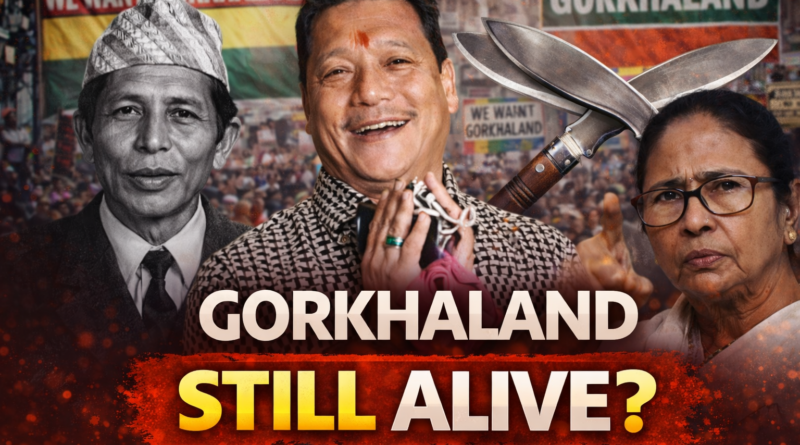
Will the 2026 West Bengal Elections Finally Decide Gorkhaland’s Fate?
The Gorkhaland Question: Geopolitical Stability, Identity Politics, and the 2026 West Bengal Assembly Elections
The quest for Gorkhaland, a proposed state within the Indian Union for the Nepali-speaking population of West Bengal, remains one of the most resilient and strategically sensitive ethno-political movements in South Asia. As the 2026 West Bengal Assembly elections approach, the relevance of this movement has moved beyond traditional agitational politics to encompass a complex interplay of development-centric governance, national security imperatives, and a generational shift in political consciousness. Centered in the Darjeeling hills, the Terai, and the Dooars region, the movement is rooted in a century-long struggle to resolve an identity crisis that pits a marginalized Himalayan community against the administrative and cultural hegemony of the Bengali-dominated plains.

Historical Foundations and the Construction of Administrative Isolation
The geographical and political boundaries of the Darjeeling-Dooars region were forged through a series of 19th-century colonial treaties that established the area as a strategic buffer zone. Before the late 18th century, the Chogyal dynasty of Sikkim governed Darjeeling. However, by 1780, the Gorkhas of Nepal had annexed the territory, holding it for thirty-five years. The resolution of the Anglo-Gorkha War of 1814-1816 led to the Treaty of Sugauli (ratified in 1816), in which Nepal ceded vast territories to the British East India Company, including Darjeeling, Siliguri, and the Terai.
The British subsequent administrative maneuvers laid the groundwork for future discontent. In 1817, under the Treaty of Titalia, the British returned these territories to the Chogyal of Sikkim to maintain a friendly northern neighbor. However, by 1835, the British sought Darjeeling as a health resort and strategic outpost, taking possession of the hills through a deed of grant. The region reached its modern administrative shape following the 1864 Treaty of Sinchula with Bhutan, which added the Bengal Dooars and Kalimpong to the Darjeeling district in 1866.
| Treaty / Agreement | Year | Territorial Change / Impact |
| Treaty of Sugauli | 1815/1816 | Nepal cedes Darjeeling, Siliguri, and Terai to the British East India Company. |
| Treaty of Titalia | 1817 | British return ceded territories to the Chogyal of Sikkim. |
| Deed of Grant | 1835 | British East India Company takes possession of Darjeeling hills from Sikkim. |
| Treaty of Sinchula | 1864/1865 | Bengal Dooars and Kalimpong annexed from Bhutan and added to Darjeeling in 1866. |
| Minto-Morley Reforms | 1907/1909 | First formal demand for a separate administrative unit by the Hillmen’s Association. |
The colonial administration treated Darjeeling as a “Non-Regulated Area” and later as an “Excluded Area,” deliberately isolating it from the mainstream socio-political developments of the Bengal Presidency. This isolation was driven by the region’s critical proximity to the borders of Nepal, Bhutan, Tibet (China), and the narrow Siliguri Corridor, often termed the “chicken’s neck,” which connects the Northeast to mainland India. Post-1947, the merger of Darjeeling into West Bengal without consulting the local populace is viewed by Gorkha intellectuals as a historical misstep that ignored the State Reorganization Commission’s (SRC) criteria regarding cultural and linguistic compatibility.
The Evolution of Agitational Politics: From GNLF to GJM
The transition from petitions to mass movements occurred in the 1980s under Subhash Ghising and the Gorkha National Liberation Front (GNLF). Ghising transformed a dormant administrative demand into a militant identity-based struggle, coining the term “Gorkhaland” in 1980. The resulting agitation from 1986 to 1988 was marked by extreme violence, leading to the deaths of approximately 1,200 people. The crisis was temporarily resolved with the 1988 establishment of the Darjeeling Gorkha Hill Council (DGHC), which administered the hills with limited autonomy for twenty-three years. 
However, the DGHC failed to address the root demand for statehood. By 2007, the movement saw a second resurgence led by Bimal Gurung and the Gorkha Janmukti Morcha (GJM). Gurung’s rise was facilitated by a unique cultural phenomenon: the mass mobilization of the hill population in support of Prashant Tamang, an Indian Idol contestant from Darjeeling. Gurung capitalized on this unified Gorkha sentiment to overthrow the aging Ghising, who was eventually forced into exile in Jalpaiguri. The GJM renewed the statehood demand through non-violent non-cooperation and strikes, eventually forcing the 2011 tripartite agreement that established the Gorkhaland Territorial Administration (GTA).
Demographic Dynamics and the Territorial Claim
The proposed state of Gorkhaland is envisioned to cover over 7,500 square kilometers, incorporating the districts of Darjeeling and Kalimpong, as well as parts of Siliguri, the Terai, and the Dooars. While the population of roughly four million is comparable to states like Manipur or Tripura, the ethnic composition of the proposed territory is highly heterogeneous.
| District / Region | Primary Language | Ethnic Composition |
| Darjeeling Hills | Nepali (40%) | Gorkha, Bhutia, Lepcha |
| Kalimpong District | Nepali (51%) | Gorkha, Lepcha |
| Siliguri / Terai | Bengali, Hindi | Bengali, Rajbongshi, Gorkha |
| Dooars | Nepali, Sadri | Adivasi, Gorkha, Rajbongshi |
| Proposed Gorkhaland | Nepali (35% total) | Gorkha (35%), Adivasi, Bengali |
The fact that Gorkhas constitute only 35 percent of the total population in the proposed state territory presents a significant administrative and political challenge. Successive West Bengal governments have utilized this demographic diversity to fragment the statehood movement. For instance, the All India Trinamool Congress (AITC) government, led by Mamata Banerjee, established numerous “Development and Cultural Boards” for specific sub-tribes like the Lepchas, Tamangs, Sherpas, and Bhutias. While these boards provide targeted financial assistance, they are criticized by statehood proponents as tools for “divide and rule” that erode the collective Gorkha identity.
The 2017 Crisis and the Fragmentation of Power
The most recent violent rupture in the hills occurred in 2017, triggered by the state government’s decision to make Bengali a compulsory language in schools from Class I to IX. The Gorkha community viewed this as cultural imposition and an attempt to “wipe out” their distinct identity, where Nepali is the official language under the 8th Schedule of the Constitution. The resulting 104-day indefinite strike—the longest in the region’s history—led to widespread rioting, destruction of government property, and at least ten deaths.
The 2017 agitation resulted in a decisive shift in hill leadership. Bimal Gurung, facing numerous charges including under the Unlawful Activities (Prevention) Act (UAPA), was forced into exile. During his absence, the West Bengal government engineered a split within the GJM, supporting a faction led by Binay Tamang and Anit Thapa. This strategy allowed the state government to regain administrative control through leaders who prioritized peace and development over immediate statehood agitations.
Electoral Performance and Shifting Mandates (2009–2024)
The Darjeeling Lok Sabha constituency has been a stronghold for the Bharatiya Janata Party (BJP) since 2009, largely because of the party’s recurring promises to find a “permanent political solution” (PPS) to the Gorkhaland issue.
| Election Year | Winning Candidate | Party | Vote Share (%) | Margin |
| 2009 (LS) | Jaswant Singh | BJP | 51.5% | 2.53 lakh |
| 2014 (LS) | S.S. Ahluwalia | BJP | 42.75% | 1.97 lakh |
| 2019 (LS) | Raju Bista | BJP | 59.19% | 4.13 lakh |
| 2024 (LS) | Raju Bista | BJP | 51.18% | 1.78 lakh |
While Raju Bista secured a second term in 2024, the significant reduction in his victory margin—from over four lakh votes in 2019 to 1.78 lakh in 2024—indicates a growing “PPS fatigue” among the electorate. The 2024 contest saw the AITC fielding former bureaucrat Gopal Lama, who garnered 37.7 percent of the vote, the highest share for the party in the hills since its inception in 1998. This electoral gain was facilitated by an alliance with Anit Thapa’s Bharatiya Gorkha Prajatantrik Morcha (BGPM), which currently administers the GTA.
In the 2021 Assembly elections, the BJP won the majority of seats in the Darjeeling district, including Darjeeling and Kurseong, but the Kalimpong seat was won by an independent, Ruden Sada Lepcha, who was supported by the BGPM.
| 2021 AC Name | Winner | Party | Margin |
| Darjeeling | Neeraj Zimba | BJP | 21,276 |
| Kurseong | Bishnu Prasad Sharma | BJP | 15,515 |
| Kalimpong | Ruden Sada Lepcha | Independent (BGPM Supp.) | 3,870 |
| Matigara-Naxalbari | Anandamay Barman | BJP | 70,848 |
| Siliguri | Shankar Ghosh | BJP | 35,586 |
| Phansidewa | Durga Murmu | BJP | 27,711 |
The 2021 results underscored the BJP’s dominance in the plains (Siliguri and Matigara-Naxalbari) while revealing a fractured mandate in the hills.
The 2026 Assembly Election: Strategic Realignments
As the 2026 elections loom, the political landscape of the Darjeeling hills is undergoing a multi-polar transformation. No longer is the region a mono-partisan stronghold; instead, it is a theater for competing narratives of “emotional identity” versus “practical governance”.
The BGPM-TMC Alliance: The Governance Narrative
Anit Thapa, as the Chief Executive of the GTA, has positioned the BGPM as the party of “practical politics”. Thapa’s rhetoric in 2025 and 2026 has consistently emphasized that statehood cannot be achieved through the “old politics” of strikes and bandhs, which he claims ruined the hill economy for forty years. Thapa argues that working in coordination with the West Bengal government is essential to provide basic amenities, livelihoods, and peace. The BGPM’s sweep of the 2022 GTA elections, winning 27 out of 45 seats, serves as the foundation for this claim.
The TMC, for its part, has used its state-level policies to make inroads. Under Mamata Banerjee’s leadership, the government claims that 80 percent of the people in the hills now have access to state welfare policies. Significant investments have been made in infrastructure, including the renovation of National Highway 31C and the construction of two Asian Highways (AH-1 and AH-48). The creation of the Kalimpong district and the Mirik sub-division are also marketed as administrative successes aimed at bringing governance closer to the people.
The BJP’s Counter-Strategy: The Interlocutor and PPS
To counter the development narrative of the TMC-BGPM alliance, the BJP has doubled down on its commitment to a “Permanent Political Solution”. In late 2025, the Union Home Ministry appointed Pankaj Kumar Singh, a former deputy National Security Adviser, as an official interlocutor for the Darjeeling hills, Terai, and Dooars. Singh’s mandate is to facilitate talks between hill leaders and the central government to resolve the long-pending autonomy issues.
However, the appointment of an interlocutor has become a new flashpoint. Anit Thapa and the BGPM have assailed this move as “interlocutor politics” timed for electoral gain, noting that similar appointments in 2009 yielded no concrete results. Furthermore, the BJP has faced internal rebellion. In February 2026, Bishnu Prasad Sharma, the BJP MLA from Kurseong, defected to the TMC, accusing the saffron party of “betraying” the Gorkhas by failing to define or implement the PPS despite holding the Darjeeling Lok Sabha seat for fifteen years.
The Third Front: IGJF and “Bridge Politics”
A significant disruption to the established order is the Indian Gorkha Janshakti Front (IGJF), launched in December 2024 by Ajoy Edwards. Edwards, who previously won the Darjeeling Municipality elections with his Hamro Party, has positioned the IGJF as a “Third Front” aimed at filling the “political vacuum” in the hills. The IGJF is the first hill party in years to explicitly include Gorkhaland statehood as a primary objective in its constitution.
The IGJF’s most potent electoral symbol is “Bridge Politics.” In 2025, Edwards and the IGJF facilitated the construction of a 60-foot bridge over a river in rural Darjeeling using “shramik daan” (voluntary labor) and private funds, after the state government failed to build a permanent structure. The bridge features a massive “Gorkhaland” nameplate and has become a viral symbol among the youth, representing the community’s capacity for self-reliance in the face of state neglect. The state government’s reaction—arresting the contractor and briefly shutting down Edwards’ business, Glenary’s—has only fueled the “anti-establishment” sentiment that the IGJF seeks to harness.
Socio-Economic Undercurrents: Tea, Land, and Labor
The 2026 elections will not be decided by statehood sentiment alone; socio-economic grievances among the tea garden and plantation workforce remain critical. The Darjeeling tea industry, once a global benchmark for quality, is currently plagued by declining production, plantation abandonment, and a cycle of unpaid wages.
The Minimum Wage and Living Conditions
The “low daily wage” remains a central grievance, impacting the living conditions of approximately five lakh families associated with the tea industry in West Bengal. In early 2026, the TMC government promised that tea wages would rise to ₹300 per day. However, persistent issues regarding provident fund arrears—allegedly totaling nearly ₹100 crore in North Bengal alone—continue to trigger industrial unrest and plantation closures.
The Land Rights Precedent: Assam vs. West Bengal
A major catalyst for political competition in 2026 is the issue of land rights for tea workers. In late 2025, the BJP government in Assam passed the “Assam Fixation of Ceiling on Land Holdings (Amendment) Bill,” which formally grants land ownership rights (pattas) to workers residing in “labor lines”. This landmark legislation has set a precedent that hill parties in West Bengal are now forced to follow.
The IGJF has made land rights a priority, demanding amendments to the West Bengal Land Reforms Act to grant similar ownership to Gorkha workers. The Darjeeling Improvement Fund (DI Fund), a colonial-era land corpus that governs many hill properties through 30-year non-transferable leases, is also a target for reform. The community’s “landlessness” is viewed as a form of indirect forced labor, and the promise of ownership is a potent tool for mobilizing the tea garden vote.
National Security and the Siliguri Corridor
The Gorkhaland movement is inseparable from India’s national security strategy. The Darjeeling hills and the Dooars region secure the “Siliguri Corridor,” the 22-kilometer-wide “chicken’s neck” that is the only land link to Northeast India.
| Security Factor | Strategic Impact |
| Siliguri Corridor | Vunerable to “strangulation” by forces inimical to India. |
| Border Proximity | Proximity to China (Jelep La), Nepal, Bhutan, and Bangladesh. |
| Gorkha Recruitment | Traditional and vital source of manpower for the Indian Army. |
| Agnipath Scheme | Short-term recruitment creates uncertainty for Nepali-origin Gorkhas. |
| Porous Borders | Issues of illegal immigration and demographic change. |
The Union Home Ministry’s focus on Darjeeling is driven by the need for a stable border region. Political observers argue that any recurring unrest, such as the 104-day strike in 2017, directly threatens India’s strategic interests. Furthermore, concerns have been raised regarding China’s potential interest in recruiting Gorkhas, making the community’s political integration and loyalty a paramount security concern for New Delhi. The appointment of an interlocutor with a background in national security (Pankaj Kumar Singh) reflects this preoccupation with border stability over purely administrative reform.
The Youth Perspective: Restlessness and Digital Identity
A defining feature of the upcoming 2026 election is the restlessness of the Gorkha youth. Fluent in social media and acutely aware of global opportunities, this demographic is increasingly alienated from the “agitational politics” of their elders but equally frustrated by the “identity crisis” of being an invisible minority.
The youth electorate is largely migration-driven; aspirations for education and jobs in cities or abroad are the norm. However, they view “political separation from Bengal” as the only way to achieve “dignity” and a distinct identity. The IGJF’s success in using platforms like Instagram, YouTube, and WhatsApp to project its “Gorkhaland Bridge” has resonated more with this group than traditional rallies or posters. Yet, there remains a pervasive “trust deficit” in politicians. Many young people refuse to speak openly about their political leanings for fear of being targeted by state machinery, often letting the “head of the family” decide their vote.
The ST Status Demand: 11 Gorkha Sub-Tribes
The demand for Scheduled Tribe (ST) status for eleven Gorkha sub-tribes—including the Rai, Limbu, Gurung, and Tamang—remains a core component of the “Permanent Political Solution”. Recognition would grant these communities access to reservation benefits in education and government jobs, as well as protection under constitutional safeguards for tribal lands.
Despite multiple assurances from the central government, the process remains stalled in the Ministry of Tribal Affairs and the Office of the Registrar General of India (RGI). The delay has deepened community frustration, with hill leaders accusing the BJP of using the ST issue as a “perennial election carrot” without intending to deliver on it. 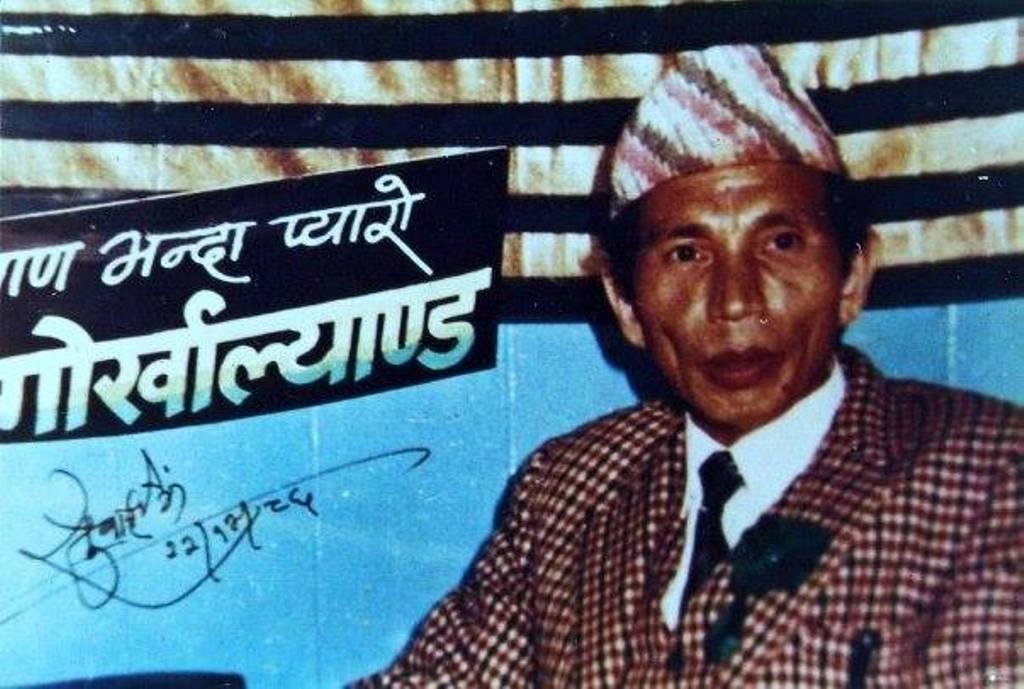
Conclusion: Synthesis and Outlook for 2026
The Gorkhaland movement is far from a dormant historical artifact; it is a dynamic political force that has successfully adapted to the constraints of the 21st-century Indian federal structure. As West Bengal moves toward the 2026 Assembly elections, the relevance of Gorkhaland is defined by a “Third Way” of politics that seeks to reconcile the emotional demand for a homeland with the immediate need for socio-economic transformation.
The 2026 mandate will likely hinge on which alliance can best navigate three critical contradictions:
- Identity vs. Development: Whether the “Bridge Politics” of the IGJF and the “Permanent Solution” rhetoric of the BJP can overcome the tangible infrastructural gains and welfare boards of the TMC-BGPM alliance.
- National vs. Regional: How the central government’s national security imperatives (through the interlocutor) will interact with the local demand for land rights and tea garden wage reforms.
- Stability vs. Agitation: Whether a youth electorate, tired of political violence but hungry for dignity, will choose the administrative peace of the GTA or risk a new movement for statehood.
In the final analysis, the Gorkhaland question remains a test of the Indian state’s ability to accommodate regional aspirations within a centralized governance structure. Regardless of the electoral outcome in 2026, the movement’s persistence ensures that the Himalayas will continue to be a theater for identity assertion, where the “chicken’s neck” remains a sensitive geopolitical fulcrum that no government in Kolkata or New Delhi can afford to ignore