
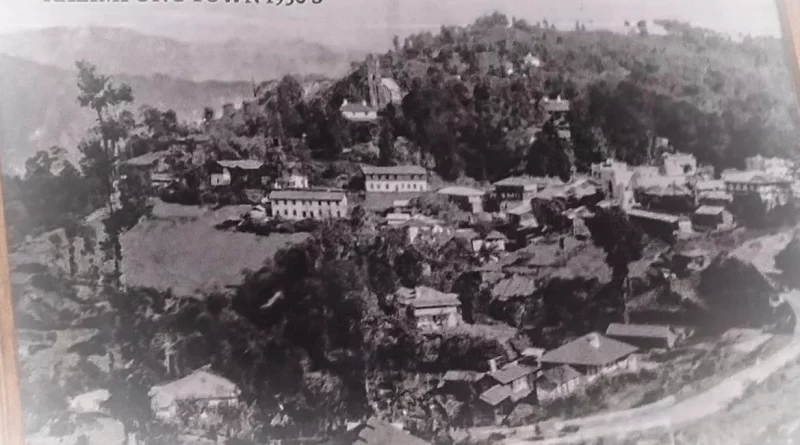
Kalimpong: The Forgotten ‘Harbour of Tibet’
The Palimpsest of the Hills – Why Kalimpong Matters
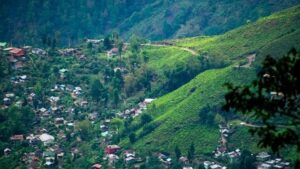
Today, the name Kalimpong evokes images of a serene hill station nestled in the Eastern Himalayas—a place of quiet cafés, renowned colonial-era schools, and panoramic views of the Kanchenjunga range. It exists in the popular imagination as a tranquil retreat, a quieter, less commercial alternative to its bustling neighbour, Darjeeling. Yet, this placid contemporary identity belies a dynamic, turbulent, and globally significant past. For a brief but brilliant period, Kalimpong was not a sleepy hollow but a bustling “gateway between British India and Tibet,” a vibrant nexus of international trade, a crucible of cultures, a hotbed of geopolitical intrigue, and a sanctuary for scholars, missionaries, mystics, and spies. Its story is one of dramatic ascent and equally precipitous decline, a history that has been largely forgotten, overshadowed by the dominant narratives of the nation-states that came to surround it.

This report seeks to uncover that forgotten history, treating the town not as a static place but as a historical palimpsest, a manuscript on which successive layers of Sikkimese, Bhutanese, British, Nepali, and Tibetan influence have been inscribed, erased, and overwritten. Each layer has left its traces, creating a complex and often contradictory text that challenges simplistic historical accounts. The very haziness of its earliest recorded history is the first layer of this palimpsest, a testament to its initial status as a marginal frontier before it was seized by the currents of global history.
The central argument of this report is that Kalimpong’s “forgotten” history is not an accident of poor record-keeping but a direct and inevitable consequence of its unique trajectory. It was a space largely invented by British colonial ambition, made prosperous by a fragile geopolitical arrangement that privileged open borders, and ultimately rendered peripheral by the hardening of post-colonial nationalisms and the violent reassertion of sovereign frontiers. Kalimpong’s history is a critical case study of what anthropologist Mary Louise Pratt termed a “contact zone”—a social space where disparate cultures meet, clash, and grapple with each other, often in highly asymmetrical relations of power. Its rise and fall demonstrate the profound vulnerability of such spaces to the seismic shifts of global politics. By excavating the layers of its past—as a contested borderland, an engineered colonial hub, a global marketplace, a cultural crucible, and a “nest of spies”—this analysis aims to restore Kalimpong to its rightful place as a key actor in the shaping of the modern Himalayan world, a town that both shaped, and was shaped by, the course of history.
A Contested Frontier: Kalimpong in the Shadow of Sikkim and Bhutan
The Hazy Origins
The story of Kalimpong’s marginalization begins with its origins. Unlike ancient capitals or established trade centers, Kalimpong’s pre-colonial history lacks a grand, cohesive narrative. The earliest records are described as “small and hazy,” filled with contradictions that are “almost impossible to authenticate”. This archival silence is not merely an absence of information; it is evidence of the region’s status. Before the mid-19th century, the area now known as Kalimpong was not a distinct entity but a sparsely populated frontier, a buffer zone whose strategic value was defined by the hill forts of Damsong and Daling (or Dalingkot) that guarded the mountain passes. The region itself was often referred to by the name of its primary fort, Dalingkot, signifying that its identity was administrative and military, an outpost of a larger power rather than a center in its own right. This foundational peripherality, this lack of a strong, independent identity or local power structure, rendered it a virtual blank slate upon which the ambitions of regional kingdoms, and later a global empire, could be projected.
The Indigenous Foundation
Before it became a piece on the chessboard of Himalayan power politics, the land was the ancestral domain of the Lepcha people, who consider themselves the original inhabitants of the region that spans modern-day Sikkim, Darjeeling, and Kalimpong. Known as the Rongkup or “children of the Róng,” their identity is deeply intertwined with the sacred landscape, originating from the snows of Mount Kanchenjunga. The Lepcha community of the area, the Dámsángmú, possessed a distinct identity long before the arrival of other groups. However, their history is one of
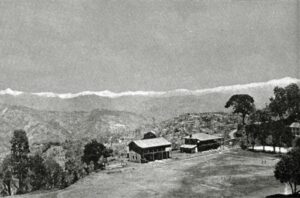
progressive marginalization, a story of displacement by successive waves of migrants and conquerors. Beginning in the 17th century, the arrival of Tibetan migrants, followed by the expansion of the Gorkha kingdom in the 18th century and culminating in the British colonial project, systematically uprooted the Lepchas, impacting their demography and pushing them to the margins of their own homeland.
The Sikkimese Kingdom and Bhutanese Encroachment
For much of its early history, the Dalingkot area was recognized as part of the Sikkimese kingdom, or ‘Donzong’. The first Chogyal (Divine Ruler) of Sikkim is believed to have consolidated rule over a territory that included this region. This Sikkimese sovereignty, however, proved fragile. The pivotal moment in Kalimpong’s pre-colonial history occurred around the turn of the 18th century, triggered by a succession dispute within the Sikkimese royal family.
Following the death of the second Chogyal, Tensung Namgyal, around 1700, a conflict arose between his son from a second marriage, Chador Namgyal, and his half-sister from the first wife, Pende Amo. Feeling her claim to the throne was unjustly denied, Pende Amo sought assistance from the neighboring kingdom of Bhutan. The Bhutanese, who had been making encroachments into Sikkimese territory for some two decades, seized the opportunity. In 1700, a Bhutanese force invaded Sikkim at Pende Amo’s request. Although Chador Namgyal, with Tibetan aid, eventually forced the Bhutanese to evacuate lands west of the Teesta River around 1706, Bhutan retained its hold on the territories to the east. This territory, controlled from the fort of Damsong, was essentially the area of present-day Kalimpong. For the next 160 years, the region remained under Bhutanese administration.
This transfer of power, however, did little to alter the area’s fundamental character. Even under Bhutanese rule, it remained a remote and undeveloped frontier. The village of Kalimpong itself was so insignificant that it consisted of merely “two or three families with 8-9 cows”. Its history was the history of a periphery—a taxable, militarily strategic, but ultimately marginal territory passed between larger kingdoms, with little intrinsic economic or cultural weight of its own. It was this very obscurity that made its complete reinvention by the British not only possible, but inevitable.
The British Imprint: From Insignificant Hamlet to Himalayan Hub
The transformation of Kalimpong from a forgotten frontier outpost into a bustling Himalayan hub was a direct consequence of British imperial expansion in the mid-19th century. Its modern identity was not an organic evolution but a deliberate act of geopolitical engineering, designed to serve the strategic and commercial interests of the British Empire in its quest to secure its northern frontier and penetrate the markets of Central Asia.
The Anglo-Bhutan (Duar) War (1864-65)
The catalyst for this transformation was the Anglo-Bhutan War of 1864-65, also known as the Duar War. The official British pretext for the conflict was a series of cross-border raids by Bhutanese forces into British-held territory and the “insulting treatment” of a British envoy, Ashley Eden, who had been sent to the Bhutanese capital in 1863 and was allegedly forced to sign a humiliating treaty. However, modern historical analysis reveals deeper, more pragmatic motivations. The British Empire had long coveted the fertile Duars region at the foothills of Bhutan for its immense potential for tea cultivation, a highly lucrative colonial enterprise. Furthermore, securing the passes leading from this territory into the mountains was a crucial step in the “Great Game,” the strategic rivalry with Russia for influence in Central Asia, and a key element in Britain’s long-standing ambition to establish a secure trade route into the closed kingdom of Tibet.
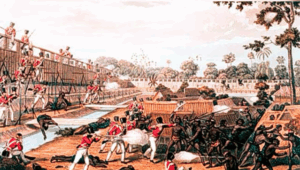
In November 1864, after Bhutan failed to meet British demands, the Governor-General of India declared war. The Duar Field Force, comprising four columns of British, Indian, and Gurkha troops, was dispatched into the Bhutanese foothills. Despite the difficult terrain and some initial setbacks, including a humiliating defeat at Dewangiri where Bhutanese forces captured two British howitzers, the superior equipment and organization of the British military prevailed. Key Bhutanese forts, including Dalimkote, which administered the Kalimpong area, were captured by British forces.
The Treaty of Sinchula (1865)
The war, which lasted only five months, concluded with a decisive British victory and the signing of the Treaty of Sinchula on November 11, 1865. This treaty was the pivotal legal instrument that transferred sovereignty of the region to British India. Under Article II of the treaty, Bhutan was forced to cede, in perpetuity, all of the Duars and, crucially, the “Hill territory on the left bank of the Teesta up to such points as may be laid down by the British Commissioner”. This vaguely defined tract of land, which had been administered by Bhutan from the Dalingkot fort, included the hitherto insignificant hamlet of Kalimpong. In return for this vast territorial concession, the British agreed to pay Bhutan an annual subsidy of 50,000 rupees. With this treaty, Kalimpong’s 160-year chapter under Bhutanese rule came to an end, and its new identity as a possession of the British Indian Empire began.
The Invention of Kalimpong
What followed the annexation was not a simple change of administration but a conscious and systematic project of creation. At the time of the treaty, Kalimpong was so minor that Ashley Eden, the very envoy whose mistreatment had served as a casus belli, gave it only a “fleeting reference” in his official report—the first recorded mention of the town in a government document. It was a village of no more than a few families.
The British, however, immediately recognized its latent potential. The process of its invention began with administrative reorganization. The newly acquired territory was initially administered as the Dalingkot tehsil within the Western Duars district. In 1866-67, this tehsil was formally merged with the existing district of Darjeeling, and an Anglo-Bhutanese commission demarcated the new boundaries, giving shape to what would become the Kalimpong subdivision.
This administrative act was coupled with a strategic vision for development. The British identified two key advantages of the location:
A Sanatorium and Hill Station: Its temperate climate made it an ideal location for an alternative hill station to the increasingly crowded and expensive Darjeeling, providing a place for British officials to escape the scorching summer heat of the plains.
A Gateway to Tibet: Most importantly, its strategic proximity to the Jelep La and Nathu La passes, which offered the most direct all-weather route to the Chumbi Valley and Central Tibet, was seen as a massive commercial and geopolitical advantage.
The British colonial government actively pursued a policy of developing Kalimpong to leverage these advantages. They opened up the area for settlers, attracting large numbers of Nepali migrants who provided the labor for agriculture and infrastructure development. This policy of deliberate development, driven by the dual imperial needs for leisure and commerce, transformed Kalimpong. The population exploded, growing from a mere handful of families in 1865 to an official count of 7,880 by 1911. The insignificant hamlet was rapidly remade into a thriving town, a crucial node in Britain’s Himalayan network, and a cornerstone of its Central Asian strategy. Its entire modern identity was thus constructed, not organically grown, to solve the specific imperial problems of health, administration, and access to the Tibetan frontier.
The Golden Age: A Crossroads of Commerce on the Roof of the World
For roughly half a century, from the forcible opening of Tibet in 1904 until the final closure of the border in 1962, Kalimpong experienced a period of unprecedented prosperity, often remembered nostalgically as its “golden era”.
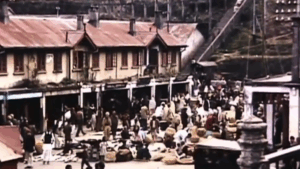
This boom was almost entirely fueled by its unique position as the southern terminus of the most vital trade route between India and Tibet. It became, in effect, the “Harbour of Tibet,” a bustling inland port where the goods and cultures of Central Asia and the global maritime economy met and mingled. This prosperity, however, was built on a fragile foundation: a single, politically sensitive mountain pass, whose existence depended on a delicate geopolitical equilibrium that could not last.
The Engine of Prosperity – The Wool Trade
The primary engine of Kalimpong’s economy was the lucrative trade in Tibetan wool. While some trade had always existed, the situation was revolutionized by the 1904 British military expedition to Lhasa led by Colonel Francis Younghusband. This expedition compelled the Tibetan government to sign a trade agreement with British India, effectively prying open the previously isolated market. Kalimpong, situated at the head of the all-weather route over the Jelep La pass, was perfectly positioned to become the main entrepôt for this new wave of commerce.
Vast caravans of mules and yaks, braving blizzards and treacherous mountain paths, would make the month-long journey from the Tibetan plateau, their backs laden with bales of raw wool. This wool, highly prized for its quality, was brought to warehouses in Kalimpong for sorting and baling before being dispatched by rail from the plains to the port of Calcutta. From there, it was shipped to factories across the globe, particularly to the United States where it was a key material for the carpet industry. The volume of this trade was immense, and its fluctuations dictated the economic pulse of the town. Local newspapers of the era celebrated the “caravans of wool making their way from Tibet through Kalimpong and on to India, the US, and beyond” as the source of the town’s high potential for development.
A Two-Way Street of Commodities
The trade route was a dynamic, two-way artery. While raw materials flowed south from Tibet, a torrent of manufactured and consumer goods flowed north from the industrializing world. The mule trains that returned to Lhasa were laden with a diverse array of products that reflected Tibet’s entry into the global economy. These included essentials like textiles, grains, and spices from India, as well as a surprising variety of modern goods and luxury items.
Traders in Kalimpong facilitated the import of everything from household items, pens, and toothbrushes to high-value commodities like petrol, liquor, and construction materials. Even Western luxury goods, such as Rolex watches, Parker fountain pens, and disassembled automobiles to be reassembled in Lhasa, made their way up the mountain trails. In addition to wool, the caravans from Tibet also brought down other valuable high-altitude products, including musk, animal furs, salt, medicinal herbs, and yak tails—the latter being used for ritual fly-whisks in India and, improbably, for Santa Claus beards in North America. This constant exchange of goods created immense wealth, with profits reported to be as high as three times the cost of production, and transformed Kalimpong into a bustling nerve center of trans-Himalayan commerce.
The Merchant Mosaic
This lucrative trade acted as a powerful magnet, attracting a diverse and competitive array of merchant communities who established their operations in Kalimpong, turning the town into a cosmopolitan commercial hub. The marketplace was a complex ecosystem of different ethnic and regional trading groups, each with its own networks and specializations. Prominent among them were:
- Marwari Traders: Hailing from Rajasthan, these powerful business families often acted as the primary financiers and wholesalers, controlling much of the capital that underwrote the trade caravans.
- Newari Traders: Merchants from the Kathmandu Valley in Nepal, the Newars brought with them centuries of experience in trans-Himalayan trade and established extensive networks connecting Kalimpong with Nepal and Tibet.
- Tibetan Traders: This was a diverse group, ranging from powerful aristocratic trading houses like the Pangdatsang syndicate, which operated on a global scale, to smaller independent merchants and Tibetan Muslims (Kachee) with historical trade links to Kashmir and Lhasa.
- Chinese Merchants: A significant community of Chinese shopkeepers and traders also thrived in Kalimpong, participating in the cross-border trade. One of the most prominent figures was Ma Zhucai, who ran one of the largest caravan companies headquartered in the town.
This co-presence of Marwari, Newar, Tibetan, and Chinese traders, alongside the local Lepcha, Bhutia, and Nepali populations, created a unique and vibrant social fabric. The weekly haat (market) was the physical embodiment of this cultural and commercial fusion—a cacophonous, multilingual space where deals were struck in Tibetan, Nepali, Hindi, and Lepcha, and where goods from the Tibetan plateau were exchanged for products from around the world.
This entire economic structure, however, was extraordinarily fragile. Kalimpong’s prosperity was not generated internally; it was a function of its role as a transit point. The town’s economy was a specialized, externally-dependent micro-economy plugged directly into global supply chains and entirely reliant on the political stability of the region and, most critically, on the continued openness of the Jelep La pass. The “golden era” was a product of a specific geopolitical moment—one defined by British imperial power that could enforce open trade and a relatively autonomous Tibet. As the sources show, the trade was subject to “extreme fluctuations” caused by political shifts, such as when Tibetan traders began negotiating directly with the newly assertive Chinese authorities in the 1950s, or when American buyers withdrew from the wool market. This dependency made Kalimpong’s economy profoundly vulnerable. Its boom was spectacular, but its bust, once the geopolitical ground shifted, was inevitable and absolute.
A Crucible of Cultures: Missionaries, Migrants, and the Making of a Cosmopolitan Society
Parallel to its rise as a commercial hub, Kalimpong was transformed into a remarkable crucible of cultures, a place where diverse communities converged, coexisted, and competed. This social dynamism was driven by two powerful forces of the colonial era: the civilizing mission of Christian missionaries and the mass migration of labor driven by economic opportunity. The result was a uniquely cosmopolitan society, but one whose vibrancy was underpinned by the inherent contradictions of colonial modernity—a framework that simultaneously fostered cultural exchange while entrenching social hierarchies and dispossessing indigenous populations.
The Missionary Imprint
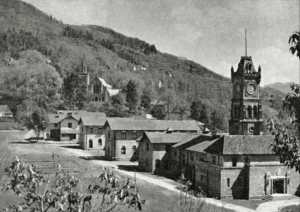
Scottish Presbyterian missionaries were among the earliest and most influential agents of change in Kalimpong. Viewing the town as a strategic threshold to the “closed lands” of Tibet, Bhutan, and Nepal, they established a formidable presence that profoundly shaped its social, educational, and cultural landscape.
Their most enduring legacy was in the field of education. The Reverend William Macfarlane of the Church of Scotland Mission established the first school in Kalimpong in 1873, laying the foundation for Western education in the region. This was followed by the establishment of several seminal institutions that would earn Kalimpong a reputation as a premier educational center in the Eastern Himalayas. The Scottish Universities’ Mission Institution (SUMI) was founded in 1886 to train local teachers and catechists, and the Kalimpong Girls High School was established shortly thereafter.

Perhaps the most ambitious of these projects was Dr. Graham’s Homes, founded in 1900 by the charismatic Reverend Dr. John Anderson Graham. Originally named St. Andrew’s Colonial Homes, it was established as a school and orphanage for the often-neglected Anglo-Indian children of British tea planters and administrators. The institution grew into a massive, self-sufficient complex spread over 400 acres, complete with its own cottages, hospital, farm, and workshops, becoming a veritable village in itself. These missionary-led institutions not only introduced modern education and healthcare but also transformed the town’s physical and social architecture, creating a new class of educated locals and attracting students from across India and neighboring countries.
Demographic Transformation and Social Stratification
The economic boom engineered by the British triggered a massive demographic shift. The demand for labor—for agriculture, road construction, and administrative services—was met by a huge influx of migrants from neighboring Nepal. Encouraged by the British administration, Nepali settlers arrived in such large numbers that they quickly became the dominant demographic group in the hills.
This migration fundamentally and permanently altered the social landscape. The indigenous Lepcha community, along with the Bhutias, were reduced to a minority in their ancestral lands. This demographic pressure led to significant social and economic consequences, most notably the alienation of land from Lepcha communities, who were often unable to compete with the “more thrifty Nepali communities” within the new cash-based colonial economy. Colonial reports from the period noted the potential for “inter-community conflicts” arising from this process of displacement.
The society that emerged was vibrant and multicultural, but also rigidly stratified. At the apex were the British colonial administrators, missionaries, and wealthy European and Bengali families who built summer homes in the newly established “Development Area”—a space created by resettling the original Lepcha, Bhutia, and Nepali tenants. Below them were the diverse merchant communities—Marwari, Newari, and Tibetan—who drove the town’s economy. At the base of the pyramid was the vast laboring class, composed primarily of Nepali migrants but also including local Lepchas and Bhutias, who worked the farms and built the infrastructure of the colonial town. This cosmopolitanism, therefore, was not a simple, harmonious blending of equals. It was a complex and often tense negotiation of power, status, and resources within a colonial framework that, while creating a dynamic “melting pot,” also institutionalized inequality and dispossession.
A Hub of Buddhist Learning
Long before the events of 1959, Kalimpong’s proximity to Tibet made it a natural center for Buddhist scholarship and religious exchange. It provided a safe refuge for Newar Buddhists from Nepal facing persecution and became a vital center for the creation and dissemination of Buddhist knowledge.
This role was profoundly amplified after the 1959 Tibetan Uprising and the subsequent flight of the Dalai Lama to India. Kalimpong became one of the primary destinations for thousands of Tibetan refugees, including a great number of high-ranking lamas, monks, and scholars. They brought with them not only their deep faith but also rare and precious Buddhist scriptures that had been rescued from monasteries in Tibet.
In the years that followed, these exiled masters established numerous monasteries and cultural institutions in and around Kalimpong. The Indo-Tibetan Buddhist Cultural Institute (ITBCI) School, founded by Dhardo Rimpoche as early as 1954, became the oldest Tibetan refugee school in India. Other major monastic centers, such as the Zang Dhok Palri Phodang monastery (consecrated by the Dalai Lama in 1976), the Sakya Tsechen Thinley Dargye Ling monastery, and the Karma Shedrup Ling Monastery, were established, representing various schools of Tibetan Buddhism. These institutions transformed Kalimpong into one of the most important centers for the preservation and propagation of Tibetan Buddhism in exile, a role it continues to play to this day.
The Nest of Spies: Espionage and Intrigue at the Gateway to Tibet
The very qualities that made Kalimpong a thriving center of commerce and culture—its strategic location, porous borders, and transient, international population—also destined it to become a theater of espionage and geopolitical intrigue. Perched on the threshold of British India, Tibet, China, Nepal, and Bhutan, it was a natural listening post for the final overtures of the 19th-century “Great Game” between Britain and Russia and, more consequentially, a frontline in the nascent Cold War in Asia. From the 1920s through the early 1960s, the town was, in the words of both Indian Prime Minister Jawaharlal Nehru and Chinese Premier Zhou Enlai, a veritable “nest of spies”.
The Geopolitical Cauldron
As political developments convulsed Asia in the 20th century—the collapse of the Qing Empire, the rise of Communist China, and the struggle for Tibetan independence—Kalimpong transformed from a commercial town into a prominent hub of information and clandestine activity. Its unique position allowed individuals and agencies to monitor events across the Himalayas, gather intelligence, and engage in covert operations away from the direct oversight of major capitals. British authorities, even in the early 20th century, used the town to observe Russian activities in Tibet and interrogated travelers arriving from the north. After the establishment of the People’s Republic of China in 1949, this activity intensified dramatically, with journalists and intelligence-gatherers flocking to Kalimpong, eager for firsthand news of developments on the tense Sino-Tibetan border.
A Cast of Characters
The town’s atmosphere of intrigue was fueled by a remarkable cast of characters, where the lines between scholar, explorer, diplomat, trader, and spy were often hopelessly blurred. This diverse population included:
- Scholars and Explorers: Kalimpong served as a base for numerous Westerners fascinated by Tibet. The iconoclastic Belgian-French explorer Alexandra David-Néel, the first European woman to enter Lhasa, used the region as a staging ground for her travels. In the 1950s, H.R.H. Prince Peter of Greece and Denmark led a Danish ethnographic expedition to Kalimpong. Stranded for seven years while waiting for permission to enter Tibet, he conducted extensive research among the Tibetan refugee community, all while being viewed with suspicion by Indian authorities and eventually expelled on charges of espionage.
- Intelligence Operatives: The town was crawling with agents from various powers. The British maintained an intelligence network, employing local assets like Dorjé Tharchin, a Tibetan Christian and publisher of the Tibet Mirror newspaper, who officially became a registered British spy in the 1940s. During World War II, a Japanese agent named Hisao Kimura, disguised as a Mongolian monk, arrived in Kalimpong after a mission to gather intelligence in Tibet and was subsequently recruited by British intelligence for another mission.
- Political Exiles and Resistance Leaders: Kalimpong’s most significant role was as a nerve center for the Tibetan government-in-exile and the resistance movement. The Dalai Lama’s elder brother, Gyalo Thondup, settled in Kalimpong in the 1950s and became the key intermediary for Tibet’s dealings with foreign powers. From his home, where he famously ran a noodle factory as a cover, he engaged in secret diplomacy with India, the United States, and Taiwan, and helped coordinate the CIA’s covert support for the Tibetan resistance. Other influential members of the Kashag (Tibetan cabinet) and anti-Chinese groups like Jenkhentsisum also used Kalimpong as their base of operations.
“The Nest of Spies”
The sheer concentration of such activities did not go unnoticed. The Chinese government, deeply suspicious of the town from the outset, established a trade agency there in 1954 and viewed it as a hub for subversion. Throughout the 1950s, Chinese official media, such as the People’s Daily, repeatedly branded Kalimpong as “the commanding center of the rebellion” and a stronghold of “Indian expansionists” and “American and British imperialists”. These public accusations became a major point of contention in Sino-Indian relations, forcing Prime Minister Nehru to address the issue in the Indian parliament. While denying it was a “command center,” Nehru acknowledged the town’s reputation, stating, “Kalimpong, Sir, has been often described as a nest of spies, spies of innumerable nationalities… red spies, white spies, blue spies, pink spies and so on”.
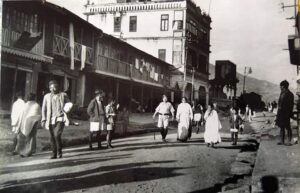
This international notoriety sealed Kalimpong’s fate. The very openness that had been the source of its economic vitality was now perceived as an intolerable security threat by the powerful, security-conscious nation-states emerging in the post-colonial era. The town’s economic function as a trade hub became irrevocably overshadowed by its geopolitical function as a center of espionage. The two identities were on a collision course. In a world of hardening borders and rising nationalist tensions, the security concerns of behemoths like India and China were destined to triumph over the economic interests of a small, peripheral border town. The “nest of spies” narrative provided the perfect justification for its eventual isolation. The closing of the pass was not merely a consequence of the 1962 war; it was the logical culmination of a decade in which Kalimpong’s primary export had shifted from wool to intrigue.
The Closing of the Pass: The Sino-Indian War and the End of an Era
The “golden age” of Kalimpong, built on the free flow of goods, people, and ideas across the Himalayas, came to an abrupt and catastrophic end in the early 1960s. The geopolitical tensions that had simmered for a decade, with Kalimpong at their epicenter, finally boiled over into open conflict. The Sino-Indian War of 1962 was the cataclysmic event that severed the town’s economic lifeline, extinguished its unique transnational identity, and precipitated its long slide into obscurity.
The Prelude – The Tibetan Uprising (1959)
The process of decline began even before the war. The Chinese annexation of Tibet in the early 1950s had already introduced significant friction into the centuries-old trade relationship, creating what traders described as “extreme fluctuations” in the market. The situation escalated dramatically with the 1959 Tibetan Uprising against Chinese rule. The brutal suppression of the revolt and the subsequent flight of the 14th Dalai Lama to asylum in India triggered a mass exodus of Tibetan refugees.
Thousands of Tibetans made the perilous journey across the Himalayas, and Kalimpong, due to its proximity and existing Tibetan community, became a primary destination and settlement area. The Kalimpong Tibetan Settlement Office was established in 1959 to manage an initial
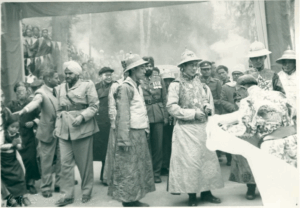
population of nearly 2,000 refugees. While this influx reinforced the town’s status as a center of Tibetan culture in exile, it also dangerously intensified Chinese suspicions. Beijing viewed the refugee community and the political activities of Tibetan exiles in Kalimpong as direct proof of Indian complicity in the rebellion, further poisoning the diplomatic atmosphere.
The Final Blow – The 1962 War
The Sino-Indian War of October-November 1962 was the final, decisive blow. The conflict, fought over disputed border territories in Ladakh and the North-East Frontier Agency (present-day Arunachal Pradesh), shattered the post-colonial dream of Sino-Indian friendship and fundamentally reconfigured the geopolitical landscape of the Himalayas. One of its most immediate and lasting consequences was the complete sealing of the border between the two nations.
For Kalimpong, this meant the permanent closure of the Jelep La pass—the town’s economic heart and its very reason for being. The artery that had pumped wealth and vitality into the town for over half a century was severed, suddenly and irrevocably. The “gateway between Tibet and India” was slammed shut.
Socio-Economic Collapse
The impact of the border closure was immediate, devastating, and total. The town’s economy, built almost entirely on its function as a trade entrepôt, disintegrated.
- Cessation of Trade: The “complete cessation of trade” along the Lhasa-Kalimpong routes meant that the town lost its “significance and relevance in the trading landscape” almost overnight. The caravans of wool, salt, and musk ceased to arrive, and the warehouses that once bustled with activity fell silent.
- Economic Stagnation and Exodus: The economic ecosystem that had supported thousands collapsed. Affluent Marwari, Newari, and Tibetan merchant families, who possessed the capital and international connections to do so, swiftly relocated their businesses to Kathmandu, redirecting their trade with Tibet through the newly opened routes in Nepal. However, the vast majority of the town’s residents—the smaller traders, shopkeepers, mule drivers, porters, and laborers whose livelihoods were directly tied to the trade—were left with no resources and no employment. Kalimpong entered a period of profound and lasting economic stagnation.
- Social Tensions: The war and its aftermath also exacerbated social tensions within the town. The local Chinese community, many of whom had lived in Kalimpong for generations as traders and artisans, were now viewed with deep suspicion by both the Indian authorities and other local communities. They were often suspected of being spies for the People’s Republic of China, leading to mistrust and instances of aggression.
The Shift to Obscurity
With its economic raison d’être obliterated and its geopolitical notoriety now a dangerous liability, Kalimpong rapidly faded from the international and even national consciousness. Its unique role as a global crossroads was over. It was no longer the “Harbour of Tibet” or the “nest of spies”; it was just another hill station, but one lacking the robust tea-based economy of Darjeeling or the political status of Gangtok. Its vibrant, cosmopolitan past became a forgotten memory, a story of a lost world that seemed increasingly distant and irrelevant in the new era of hard borders and national rivalries. This was not a gradual decline but a geopolitical death. The town’s core function as an interface between nations and empires had been surgically removed by the war. Its subsequent history is the story of its struggle to find a new purpose in the wake of this foundational loss, a struggle that continues to define it to this day.
Echoes of the Past: Identity, Politics, and Memory in Modern Kalimpong
The closure of the Jelep La pass in 1962 did not just end an era of economic prosperity for Kalimpong; it precipitated a prolonged identity crisis. Stripped of its unique transnational function, the town was forced to find a new place for itself within the political and economic framework of the Indian nation-state. This process has been fraught with challenges, marked by economic hardship, political agitation, and a continuous struggle for recognition. The “forgotten history” of Kalimpong is not merely an academic curiosity; it is a living force that echoes through the town’s contemporary politics, fueling a deep-seated sense of marginalization and a persistent quest for a stable, post-colonial identity.
The Post-1962 Afterlife
In the decades following the Sino-Indian War, Kalimpong’s economy was forced to reorient itself. It came to rely on a tripod of much more modest pillars: its well-regarded educational institutions, a small-scale tourism industry, and local agriculture. However, these sectors could never replace the immense wealth and dynamism generated by the trans-Himalayan trade. The town entered a period of relative economic stagnation and underdevelopment. This economic distress contributed to significant social problems, including the proliferation of slums, as Kalimpong, despite its small size, came to have the highest number of slum pockets among the urban centers in the Darjeeling Himalayas. The once-thriving global hub became a town grappling with poverty and inadequate infrastructure.
The Gorkhaland Movement
This potent combination of economic decline and a sense of political marginalization within the state of West Bengal created fertile ground for ethnic politics. In the 1980s, Kalimpong emerged as a major center of the Gorkhaland movement, a political agitation demanding the creation of a separate state for India’s Nepali-speaking population. Led by the Gorkha National Liberation Front (GNLF), the movement was marked by intense and often violent conflict, including a forty-day strike that brought the region to a standstill and prompted the state government to call in the Indian army to maintain order.
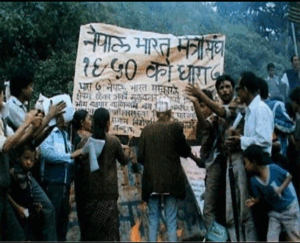
The agitation of 1986-88 culminated in the formation of the Darjeeling Gorkha Hill Council (DGHC), a semi-autonomous body granted powers to govern the hill districts. This marked a new chapter of political contestation, but it did not resolve the underlying demand for statehood. The struggle for a distinct political identity has continued in the decades since, with new political actors like the Gorkha Janmukti Morcha (GJM) reviving the demand and leading to the creation of the Gorkhaland Territorial Administration (GTA) to replace the DGHC. This long and arduous struggle is, in essence, an attempt to forge a new, stable identity based on ethnicity and territory to replace the cosmopolitan, trade-based identity that was geopolitically erased in 1962.
The Search for Recognition
Within this broader movement, Kalimpong also nurtured a more specific aspiration: to be recognized as an entity distinct from Darjeeling. For decades, as a subdivision of the Darjeeling district, many in Kalimpong felt their unique history and needs were overlooked, dominated by the politics and resources of the larger town. This long-standing demand for administrative autonomy finally bore fruit on February 14, 2017, when the West Bengal government officially carved Kalimpong out as the state’s 21st district. The creation of Kalimpong district was a significant milestone in the town’s post-1962 journey, a tangible achievement in its quest for recognition and a degree of self-determination.
Contested Memory
Today, Kalimpong’s complex past is a subject of active memory work and narrative contestation. The town’s history is being reconstructed through various lenses. Oral history projects are underway to capture the forgotten narratives of its multicultural past, seeking to document the legacy of cultural pluralism that defined its “golden age” by recording the stories of its diverse trading communities. At the same time, the town’s turbulent history has entered the realm of literature. Kiran Desai’s Booker Prize-winning novel, The Inheritance of Loss, uses the backdrop of the 1980s Gorkhaland movement in Kalimpong to explore themes of identity, globalization, and belonging. While internationally acclaimed, the novel has also been a source of local controversy, highlighting the sensitivities surrounding the representation of the region’s history and political struggles.
This entire post-1962 history can be understood as a legacy of what has been termed “anxious belonging”. Having lost its unique place in the world, the town and its people have been engaged in a continuous, often painful, effort to define their place within the Indian nation. The political movements and the recent administrative changes are manifestations of this search for a new identity, one that acknowledges the town’s unique past while securing its future. The “forgotten history” is therefore not a closed chapter; it is a living presence that continues to shape the anxieties and aspirations of modern Kalimpong.
Why Kalimpong Was Forgotten, and Why It Must Be Remembered
The history of Kalimpong has been largely forgotten by the wider world for a confluence of reasons, each tied to the unique and volatile trajectory of its existence. Its story does not fit neatly into the triumphant, linear narratives of post-colonial nation-building that have dominated the historiography of both India and China. Instead, it is a story of a place that existed in the interstices, a borderland whose very identity was contingent on the forces that flowed through it. Its marginalization in historical memory is a direct reflection of its geopolitical marginalization in the present.
Yet, it is precisely for these reasons that Kalimpong’s history must be remembered. Its story is not a nostalgic relic of a bygone era but a vital and profoundly relevant cautionary tale for our contemporary world. It serves as a powerful case study on the fragility of globalized economies that are dependent on single, vulnerable corridors. It reveals the devastating impact that the hardening of national borders can have on the communities that live along them, transforming zones of exchange into zones of conflict and stagnation. Furthermore, it uncovers the long-term, often unforeseen, consequences of imperial strategies, demonstrating how colonial projects of development can create dependencies that lead to collapse once the imperial framework is removed.
Uncovering the forgotten history of Kalimpong is therefore essential for understanding the deep roots of contemporary political conflicts, ethnic tensions, and identity struggles in the Eastern Himalayas. It offers a crucial lens through which to view the perennial interplay of local lives and global forces, reminding us that even the most remote mountain towns can be, for a time, at the very center of the world—and that their stories, far from being forgotten, hold enduring lessons about the forces that continue to shape our own.