
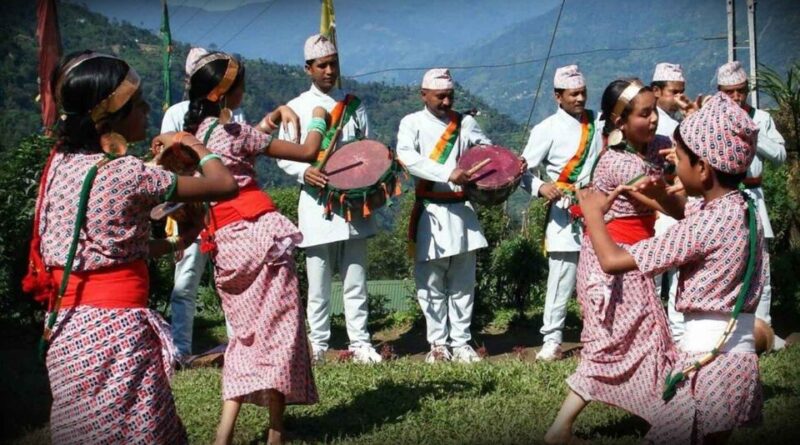
Secrets of Sikkim – Ancient Kirat Identity of the Rai Community
Introduction: Decoding the “Rai” Identity
The Rai community constitutes the single largest ethnic group within the Nepali-speaking population of Sikkim. To understand them, one must first deconstruct their nomenclature. The term “Rai” is not their original ethnic autonym; it is a title of nobility (meaning “King” or “Chief”) conferred by the Gorkha Shah kings of Nepal on local headmen (Jimmawals) who acted as tax collectors and land administrators. Over centuries, this administrative title replaced their original clan names and became a collective surname.
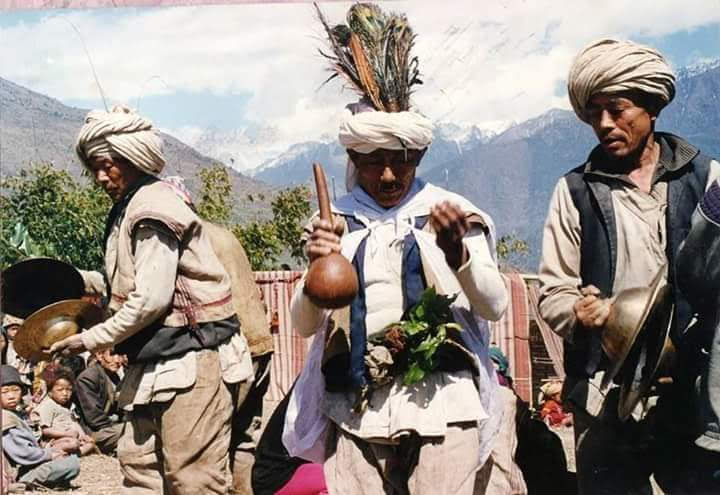
Their true ethnic endonym is Khambu or Kirawa. They belong to the Kirat civilization, an ancient Mongoloid race of the Himalayas. Therefore, the answer to “If they are Kirat, how?” is that “Rai” is merely the political label they wear, while “Kirat” is the genetic, linguistic, and spiritual civilization they belong to. They are Kirat because they are the direct descendants of the Khambu branch of the ancient Kirat people.
Ancient Origins: The Kirat Lineage
The claim to Kirat identity is not a modern invention but is supported by ancient texts, dynastic history, and migration patterns that predate the modern state of Sikkim.
The Mahabharata and Vedic Connection
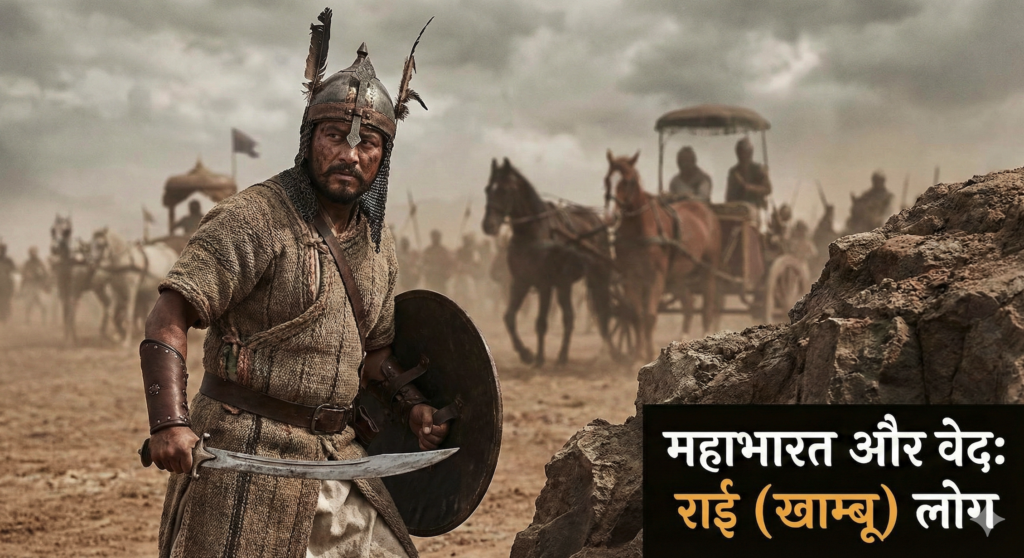
The Rai (Khambu) trace their ancestry to the Kiratas mentioned in classical Sanskrit literature, establishing them as one of the oldest inhabitants of the Himalayas.
Vedic References: The Yajurveda and Atharvaveda describe the Kiratas as cave-dwelling mountain people (Guha) distinct from the Aryans.
The Mahabharata: The most cited proof of their antiquity is the Kiratarjuniya episode in the Vana Parva of the Mahabharata. Lord Shiva takes the form of a Kirat hunter (Kirateshwar) to test Prince Arjuna’s archery skills. This text establishes the Kirat as the original, martial inhabitants of the Himalayas long before Indo-Aryan migration.
The Khambuwan Migration (Majh Kirat)
Geographically, the Rai trace their roots to the Majh Kirat (Middle Kirat) region of eastern Nepal, traditionally known as Khambuwan (Land of the Khambu). According to oral history (Mundhum), the Kirat people migrated into the Himalayan foothills and split along river valleys:
Wallo Kirat (Near Kirat): Settled by the Sunuwar (Koits) people. Majh Kirat (Middle Kirat): Settled by the Khambu (Rai) people between the Dudh Koshi and Arun rivers. Pallo Kirat (Far Kirat): Settled by the Limbu (Yakthung) people east of the Arun River.
Settlement in Sikkim: Indigenous or Immigrant?
The history of Rai settlement in Sikkim is a complex narrative involving both ancient presence and colonial-era migration.
Pre-1642 Presence and the “Tsong” Connection
There is a strong historical debate regarding the Rai’s indigenous status in Sikkim. The Lhomentsongsum was a tripartite agreement between the Bhutia (Lho), Lepcha (Men), and Limbu (Tsong).
Fluid Borders: Prior to the drawing of modern borders by the British and Gorkhas, the territory of Limbuwan and Khambuwan had fluid interactions with West Sikkim. Oral histories suggest that Khambu clans were present in the lower valleys of Sikkim long before the recorded 19th-century migrations, often sharing space with the Lepchas and Limbus.
The Exclusion: Historically, while the Limbus (Tsong) were recognized as indigenous to Sikkim, the Rais were often grouped with them or later classified purely as “Nepalese” immigrants, a classification they are currently fighting to change.
19th Century Colonial Migration
The bulk of the current Rai population in Sikkim arrived during the British protectorate era (late 1800s). The British administration encouraged migration from eastern Nepal to Sikkim for two primary reasons:
Infrastructure: To build the road networks (like the Old Silk Route). Agriculture: To introduce terraced agriculture (maize and millet) to the fertile hills of South and West Sikkim, which were previously dense forests used only for shifting cultivation.
Key Settlement Areas: Today, they are heavily concentrated in South Sikkim (Namchi, Ravangla) and West Sikkim (Gyalshing, Soreng), as well as specific villages in East Sikkim like Rolep, Assam Lingzey, and Ranka.
Social Structure: Clans (Thars) and Kinship
The Rai community in Sikkim is not a monolith; it is a federation of distinct clans (thars), each often having its own language or dialect. In Sikkim, these boundaries have softened, but clan identity remains vital for marriage and lineage.
Major Clans found in Sikkim: Bantawa: The largest and most dominant group in Sikkim. Chamling: Concentrated in South and West Sikkim. Thulung: Known for a distinct and archaic dialect. Others: Kulung, Khaling, Puma, Sampang, Dungmali, Mewahang, and Lohorung.
The Social Rule (Samet & Pacha): Rai society is strictly exogamous regarding lineage. A Rai cannot marry someone from the same Pacha (lineage) or Samet (ancestral spirit). Marrying within the clan is considered incestuous (kagali). However, marriage between different Rai clans (e.g., a Bantawa marrying a Chamling) is permitted and is common in Sikkim.
Language: The “Tower of Babel”
Language is a critical marker of Kirat identity, but it is also a challenge due to extreme diversity.
Diversity: The Rai community speaks over 20 distinct languages (e.g., Bantawa, Chamling, Thulung, Khaling), which belong to the Mahakiranti branch of the Tibeto-Burman family. These are often mutually unintelligible.
Sikkim’s Solution (The Bantawa Factor): To teach “Rai” in schools, the Sikkim government had to standardize one dialect. Bantawa was chosen as the medium of instruction because it has the largest number of speakers and serves as a lingua franca among Rais in Sikkim.
Official Status: The language is written in the Kirat Rai script (also known as Kripasalyan Lipi) or Devanagari. It is recognized as an official state language of Sikkim and is taught in schools and colleges.
Religion: The “How” of Kirat Identity
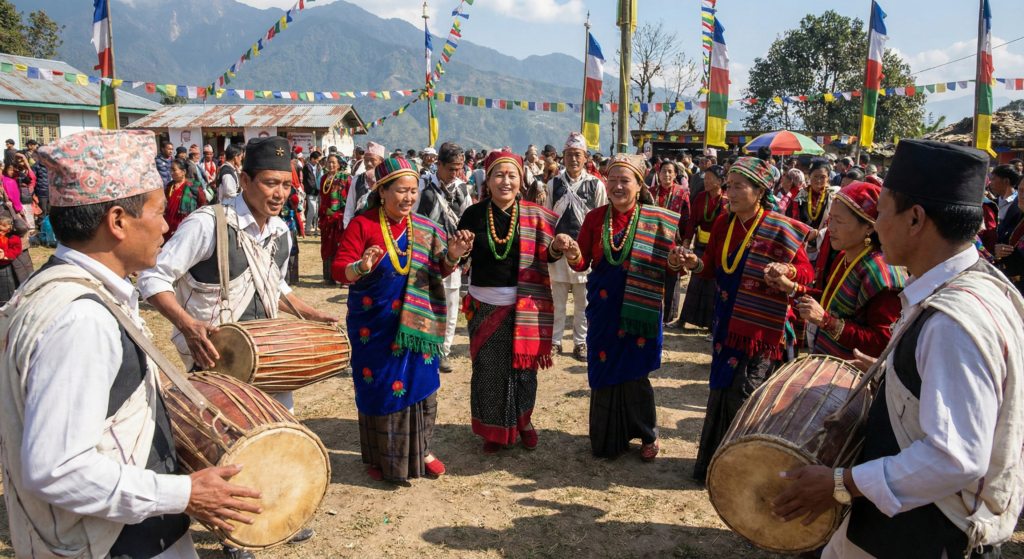
The most definitive proof of “Kirat” identity lies in their religion, known as Kiratism, Yumaism, or Mundhum. It is fundamentally an animist, nature-worshipping faith, distinct from Hinduism or Buddhism.
Mundhum: The Oral Scripture
Unlike religions with written texts, Kirat religion relies on the Mundhum (or Mundum). It is an oral tradition passed down by shamans (Mangpa or Nakchhong) that contains the cosmology, rituals, and history of the tribe.
The Suptulung (Three Hearth Stones)
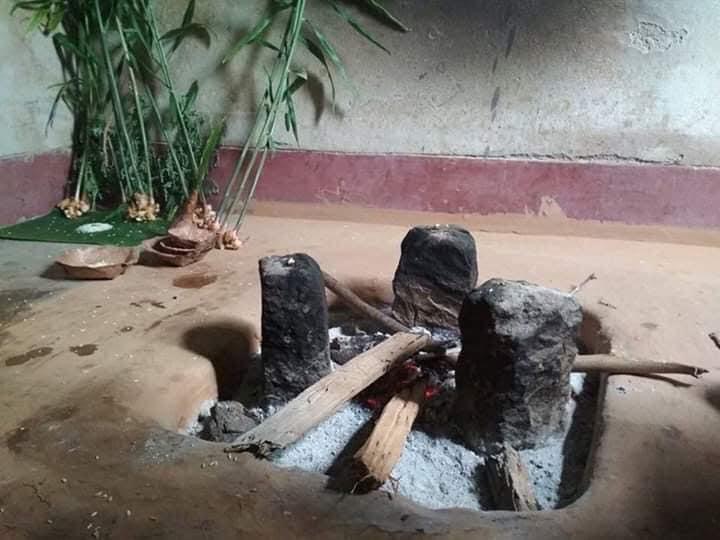
The central proof of a Rai’s identity is the Suptulung found in the kitchen of every traditional household. These three stones form a sacred hearth and represent: Papalu: Male ancestors. Mamalu: Female ancestors. Rame/Samkhalung: The society/witness.
Worship is performed inside the house at this hearth. A Rai who abandons the Suptulung is often considered to have lost their Kirat identity.
Sumnima and Paruhang
The Rai worship Sumnima (Mother Earth) and Paruhang (Father Sky/Sky God) as their primordial parents.
Distinction from Hinduism: While some syncretic practices equate them with Parvati and Shiva, Kirat scholars assert that Paruhang is an indigenous nature deity, not the Vedic Shiva.
Mangkhim: The Institutionalization of Faith
Traditionally, Rais worshipped at home or in nature (Than). In Sikkim, to organize and protect their faith, they have started building temples called Mangkhims.
Notable Sites: The Mankhim at Aritar (East Sikkim) and the grand Paruhang Sapten Mangkhim at Ranka (inaugurated in 2022) are major cultural centers.
Culture and Festivals: Sakela
The most visible cultural expression is the Sakela festival (also called Sakewa or Chandi Naach), celebrated twice a year based on the agricultural and migratory cycle:
Ubhauli and Udhauli
Ubhauli (April/May): Marks the planting season and the migration of birds upwards to cooler hills. Udhauli (Nov/Dec): Marks the harvest and the migration of birds downwards to warmer valleys.
The Sili Dance
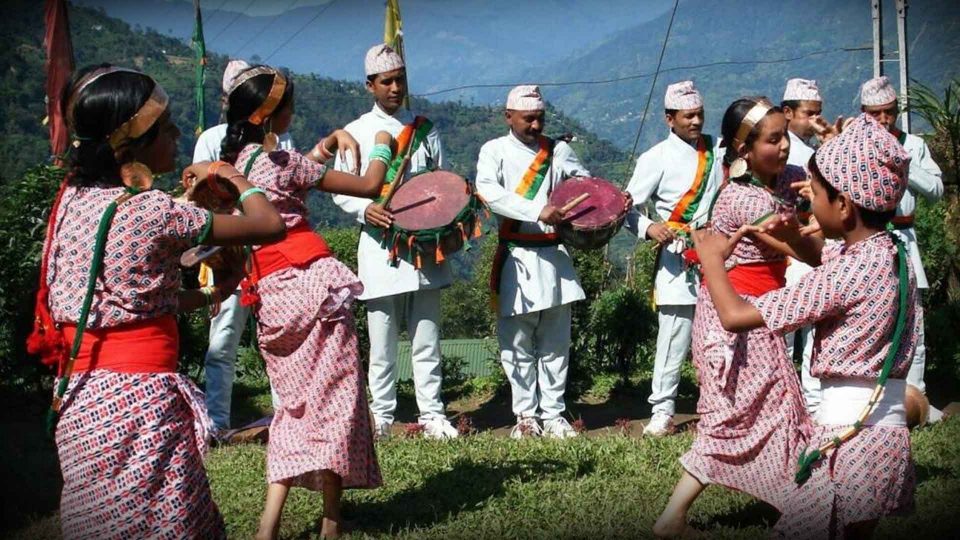
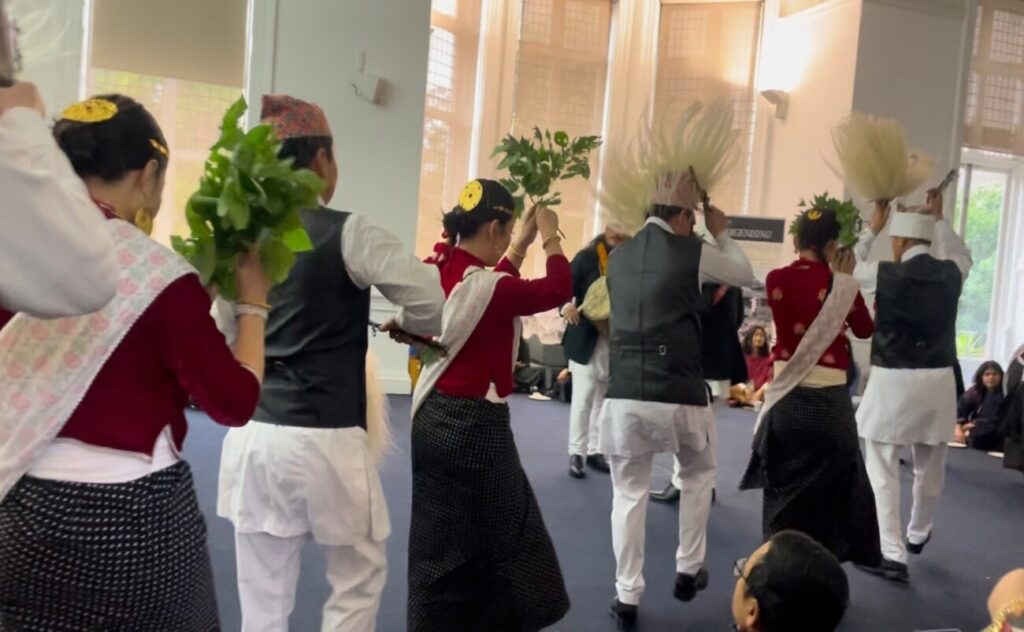
The dance performed during Sakela is called Sili. It is not random; the steps mimic the movements of nature: Agricultural Sili: Mimics planting rice, harvesting, and husking. Nature Sili: Mimics the movements of the Hornbill bird, deer, or fish. This dance connects the modern Rai to their hunter-gatherer and agrarian roots.
Socio-Political Status: The Struggle for ST Status
The “Left-Out” Communities
Currently, the Rai in Sikkim are classified as OBC (Other Backward Classes). However, they are fighting for Scheduled Tribe (ST) status.
The Argument: They argue that they are excluded from the rights granted to Bhutias, Lepchas, and (since 2002) Limbus/Tamangs, despite being equally indigenous and having a distinct animist culture.
The “11 Left-Out” Group: The Rai are part of a coalition of 11 (now 12) communities (including Gurung, Mangar, Sunuwar) demanding tribal recognition.
Ethnographic Justification (EIECOS)
The Sikkim government has commissioned reports (EIECOS) to prove to the Central Government that the Rai possess “tribal characteristics”: Primitive Traits: Nature worship, shamanism (Mangpa). Distinct Culture: Mundhum, Sakela. Geographical Isolation: Historical habitation in remote hills. The Sikkim Assembly has passed resolutions supporting this demand, which is currently pending with the Registrar General of India.
Akhil Kirat Rai Sangh (AKRS)
The AKRS (est. 1990) is the primary social organization unifying the Rai in Sikkim. They organize Sakela festivals, build Mangkhims, and lobby for political rights, playing a crucial role in the “Kiratization” (revival of indigenous identity) of the community.
Key Personalities
Pawan Kumar Chamling: The former Chief Minister of Sikkim (serving for 24+ years) belongs to the Kirat Rai community. His tenure was instrumental in the cultural revival of the community, including the recognition of the Rai language and the construction of the Paruhang Sapten Mangkhim.

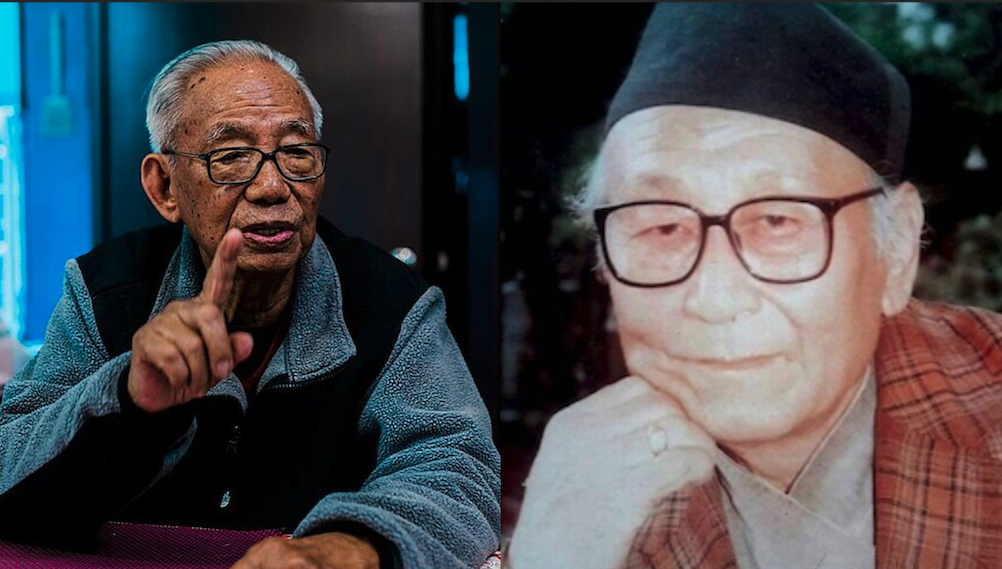
C.D. Rai: A veteran politician and writer who played a key role in Sikkim’s democratic movement.
Shiva Kumar Rai: A renowned literary figure (Sahitya Akademi awardee) who contributed significantly to Nepali literature from the region.
The Rai community of Sikkim acts as a bridge between the ancient and the modern Himalayas. Origins: They are the descendants of the Kirat Khambu of the Majh Kirat dynasties. Settlement: Their presence in Sikkim is a mix of ancient fluidity and 19th-century agricultural settlement. Identity: They maintain their Kirat identity through the Mundhum, the Suptulung hearth, and the Sakela dance. Future: Their primary focus today is the political recognition of this identity through the demand for Scheduled Tribe status.