
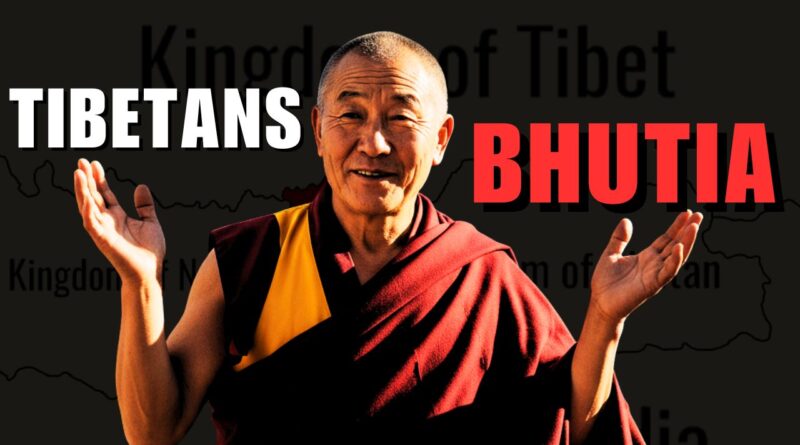
Who Are the Bhutias? Exploring the Founding Community of the Sikkim Kingdom
Have you ever wondered about the people who built the ancient monasteries and shaped the spiritual identity of Sikkim? Meet the Bhutia community, also known as Lhopo or Denzongpa, a people whose history is as majestic and enduring as the Himalayan peaks they call home.
Their story is a fascinating journey from the snow-capped lands of Tibet to the lush valleys of Sikkim, where they established a kingdom and wove their culture into the very fabric of the state. Let’s explore the rich legacy of the Bhutias, a community that continues to thrive while honoring its ancient roots.
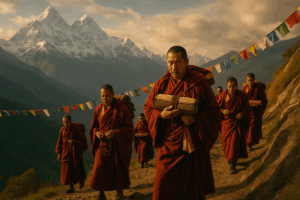
Ancient Roots and a Journey from Tibet
The story of the Bhutias begins in the frigid, high-altitude regions of Tibet. While some scattered Tibetan settlements might have existed as early as the 8th century, the most significant migration occurred in the 13th century. This era saw a nobleman named Khye Bumsa descend from the Kham region in eastern Tibet, seeking new lands and a new beginning.
According to oral traditions of both the Bhutia and Lepcha communities, Khye Bumsa forged a sacred alliance with the native Lepcha chief Thekong Tek at a place called Kabi Lungchok. This historic pact, sealed with a ritualistic oath, laid the foundation for a peaceful co-existence and a blood brotherhood that would define the relationship between the two communities for centuries. This alliance is considered the true foundation of Sikkim’s unique multi-ethnic society.
Later, in the 16th and 17th centuries, new waves of Tibetan settlers—monks, warriors, and farmers—sought refuge in Sikkim to escape religious strife between the powerful Red Hat (Nyingma) and Yellow Hat (Gelugpa) sects in Tibet. These migrants consolidated the Bhutia presence and brought with them the traditions that would soon blossom into a full-fledged kingdom.
The Founding of a Kingdom: The Namgyal Dynasty
The culmination of the Bhutia journey came in 1642 with the consecration of Phuntsog Namgyal, a fifth-generation descendant of Khye Bumsa. At Yuksom, the first capital of the kingdom, he was anointed as the first Chogyal (meaning “righteous ruler” or “religious king”) of Sikkim. His coronation was not a solitary event; it was endorsed by the spiritual heads of the Lepcha and Limbu communities, symbolizing the unity of purpose among the ethnic groups.
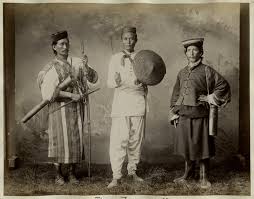
For over three centuries, the Namgyal dynasty ruled Sikkim, turning it into a Buddhist kingdom deeply rooted in Tibetan governance and spirituality. The Chogyals actively promoted the Gelugpa sect of Tibetan Buddhism, built revered monasteries, and codified religious and social practices that survive to this day. This lineage of monarchs continued to rule until Sikkim’s integration with India in 1975, but their legacy remains a defining part of the state’s identity.
A Deep Spiritual Connection: Buddhism and Festivals
The Bhutias are profound followers of Vajrayana Buddhism, a spiritual path deeply focused on rituals and meditative practices. Their lives are centered around their monasteries, which serve as spiritual hubs, cultural centers, and community schools. The Rumtek Monastery, built in the 1960s, is not just a religious site but the very seat of the Karmapa, making it a global symbol of Tibetan Buddhism. Other ancient monasteries like Pemayangtse, Tashiding, and Enchey are equally vital in guiding the community’s spiritual life.
The Bhutias celebrate numerous Buddhist festivals with great fervor, with two standing out:
- Losar: The Tibetan New Year, celebrated with prayers, elaborate family feasts, and traditional dances. The highlight is the Gutor Chaam, a mesmerizing masked dance performed by monks to symbolically ward off evil spirits and welcome the new year with blessings.
- Pang Lhabsol: This unique festival, celebrated in late summer, is a testament to the Bhutia-Lepcha brotherhood. It honors Mount Kanchenjunga, the guardian deity of Sikkim, and features the Sutuk Shyabda dance, which symbolizes the harmony between the people and their sacred land.
In a unique blend, the Bhutias also incorporate animistic traditions into their practices, venerating local deities, guardian spirits, and the gods of the mountains, showcasing a deep connection to their natural environment.
Beyond the Monastery: Culture and Way of Life
Traditionally, the Bhutia community led a semi-nomadic lifestyle, living in sturdy wooden houses designed for the mountainous terrain. Their livelihoods were centered on yak and sheep herding, barley cultivation, and the lucrative wool trade across the Himalayan passes.
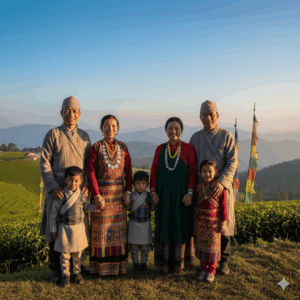
Their traditional attire is one of their most iconic cultural expressions. Men wear the Kho, a long, cloak-like robe fastened with a silk belt, while women drape the elegant Bakhu over a blouse. Married women wear a striped apron known as the Pangden, a beautiful symbol of their pride and status. This dress is often complemented by intricate silver jewelry and turquoise-studded amulets during festivals.
Bhutia cuisine, born from their high-altitude roots, is hearty and flavorful. Staples include Phagshapa (pork stewed with dried radishes), Thukpa (a nourishing noodle soup), and of course, Momo (steamed dumplings with savory fillings). Chhaang, a traditional fermented millet drink, is an integral part of their communal gatherings and rituals.
In the world of art, thangka painting, intricate wood carving, and monastic murals hold a sacred space. This artistic legacy is being preserved and passed on through centers like the Khanchenzodnga Handicrafts Centre, which trains hundreds of youths in these traditional techniques, ensuring the continuity of Bhutia artistry.
Language and Legacy: The Power of Denjongke
The Bhutia people speak Sikkimese Bhutia, locally known as Denjongke. This Tibeto-Burman language is closely related to Dzongkha (the official language of Bhutan) and Lhasa Tibetan. It is written using the Classical Tibetan script and is used extensively in religious texts, monastic education, and traditional ceremonies.
While most Bhutias are now multilingual—fluent in Nepali, Hindi, and English—the use of Denjongke persists strongly within monasteries, family rituals, and cultural gatherings. Though challenges like language attrition exist, modern Bhutia literature, poetry, and music have begun to emerge through community publications and local radio, revitalizing the language for a new generation.
A Modern Identity: Social and Political Role in Sikkim
As the founding community of the Sikkimese kingdom, the Bhutias once held significant administrative and political control. Following Sikkim’s integration with India in 1975, their influence was redefined under constitutional provisions.
The Bhutias are now recognized as a Scheduled Tribe (ST), which entitles them to affirmative action in education, government jobs, and politics. Under Article 371(F) of the Indian Constitution, Sikkim’s political system guarantees them:
- 12 reserved seats in the 32-member Legislative Assembly under the Bhutia–Lepcha (B-L) category.
- A special Sangha seat specifically for Buddhist monastic representation.
Despite becoming a numerical minority—especially with the arrival of the Nepali community during the British colonial period—Bhutias maintain their political representation and spiritual authority. A 1998 government survey illustrated the distribution of government posts at the time: Nepalis held approximately 74%, Bhutias held 17%, and Lepchas held 9%. Organizations like the Sikkim Bhutia-Lepcha Apex Committee continue to champion Bhutia rights and cultural preservation in modern Sikkim.
A Symphony of Traditions: Bhutias, Lepchas, and Nepalis
The historical alliance between the Bhutia and Lepcha communities laid the foundation for Sikkim’s peaceful multi-ethnic society. Their shared reverence for Mount Kanchenjunga, celebrated through the Pang Lhabsol festival, continues to reinforce this profound bond.
With the arrival of the Nepali community during the British colonial period (19th century), Sikkim’s demography began to shift. The Bhutias—once the ruling class—found themselves adapting to a more competitive socio-political environment. Yet, despite these historical shifts, the three communities have largely built a shared identity over centuries. Inter-marriages, bilingualism, and joint festivals illustrate a living harmony that makes Sikkim a truly unique and diverse state.
The journey of the Bhutia community is one of faith, resilience, and cultural brilliance. From their ancient migration to their modern role in Sikkim, their legacy continues to inspire, reminding us of the enduring power of tradition in a changing world.