

HNLC: From Insurgency to Peace Talks in Meghalaya
The Hynniewtrep National Liberation Council (HNLC): A Historical Overview
The Hynniewtrep National Liberation Council (HNLC) was born out of the ethnic unrest and identity assertion in Meghalaya during the late 1980s and early 1990s. Its roots trace back to the Hynniewtrep Achik Liberation Council (HALC), a group formed in 1987 by tribal youth from the Khasi, Jaintia, and Garo communities to protect their collective rights. However, internal divisions emerged, leading to the split of HALC into two separate entities: the Achik Matgrik Liberation Army (AMLA) representing Garo interests, and the HNLC in 1992–93 focusing on the Khasi–Jaintia region.
HNLC’s formation was driven by deep-seated grievances. The group viewed the Indian state’s policies as insufficient in protecting the rights, land, language, and identity of the Khasi and Jaintia people. The organization also saw the increasing presence of “Dkhars”—non-tribal outsiders—as a threat to the indigenous way of life. With increasing unemployment, loss of tribal control over commerce, especially in sectors like coal mining, and a growing sense of marginalization, the HNLC declared its goal: the creation of a sovereign Khasi homeland free from outsider influence.

HNLC’s early years were marked by militant activity in Meghalaya’s Khasi Hills. The group launched attacks, extortion drives, and threats targeting non-tribal businesses, government offices, and rival groups. Many non-tribals fled Shillong due to the fear generated by the insurgency. Security forces launched operations, leading to HNLC cadres seeking refuge in the forests and eventually across the border in Bangladesh, where they set up bases in the Chittagong Hill Tracts and Dhaka. Here, they established links with other Northeast Indian insurgent groups such as ULFA and NSCN-IM, and procured arms through black market networks.
In November 2000, the Indian government officially declared HNLC a banned organization under the Unlawful Activities Prevention Act (UAPA). This marked a major shift in how authorities dealt with the group. The ban pushed the top leadership further underground, forcing them to set up permanent bases across the border in Bangladesh. These bases were not only strategic shelters but also served as training grounds and arms stockpiles, aided by sympathetic groups. Despite the proscription, the HNLC managed to continue low-intensity operations, including extortion, bandhs, and propaganda through underground networks.
One of the most defining moments came in July 2007 when HNLC chairman Julius K. Dorphang surrendered to authorities. His surrender was a significant blow to the outfit’s morale and credibility. Dorphang later joined mainstream politics and won a seat in the Meghalaya Legislative Assembly in 2013. His shift from militancy to governance was symbolic of the possibilities for insurgents to be rehabilitated. Dorphang’s statement in 2010, that “HNLC is nothing now,” reflected the dwindling strength of the group, which was estimated to have fewer than 60 cadres at the time, many of whom were in hiding in Bangladesh.
Following this, in August 2010, the HNLC signaled its willingness to engage in dialogue with the government. The group reached out through the Shillong Khasi-Jaintia Church Leaders Forum to explore the possibility of peace talks. However, due to the lack of a formal ceasefire agreement and continued suspicion from state and central agencies, the negotiations never took off. The group remained outlawed, and its activities, although reduced, never fully stopped. The absence of trust and lack of institutional frameworks for engagement prevented any meaningful progress.
On November 13, 2015, a sudden low-intensity blast at Them Mawbah locality in Shillong brought HNLC back into the headlines. An RDX-based improvised explosive device exploded late at night in a secluded area, creating a crater but causing no casualties. The HNLC later claimed responsibility for the blast, calling it a “message bomb” and a deliberate act to signal its continued presence. The group stated that it could have targeted a busy market area like Police Bazar in the daytime but chose not to, to avoid casualties. The public statement made by HNLC’s publicity secretary, Sainkupar Nongtraw, mentioned that the group was frustrated by the government’s indifference to its earlier offers of ceasefire and peace dialogue. This incident heightened public fear and reminded authorities that HNLC was far from defunct.
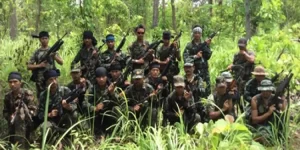
In December 2020, the group escalated again with a targeted IED blast at the premises of Star Cement Factory in East Jaintia Hills. The explosion occurred at night, damaging property but causing no casualties. Investigations revealed the attack was linked to the factory’s refusal to comply with extortion demands. The National Investigation Agency (NIA) took over the case soon after, launching a complex transnational probe. Intelligence inputs from Assam and Tripura, combined with digital forensics and call record analyses, led to the identification of key suspects operating from safe havens in Bangladesh. NIA filed a charge sheet in July 2021 against four individuals, including top HNLC leaders who coordinated the attack from across the border. This legal step signaled India’s first formal move against HNLC’s overseas leadership and sent a strong message about international accountability for terror financing.
The blast had broader repercussions beyond legal action. It disrupted the operations of Star Cement—one of the largest private sector employers in East Jaintia Hills—for several days, resulting in financial losses and delaying supply chains. Local workers expressed fears of future reprisals, while nearby residents began demanding tighter security and permanent surveillance setups around industrial areas. Civil society groups condemned the attack, emphasizing that violence against economic infrastructure only deepens local hardship. Trust between business entities and local communities was strained, and law enforcement agencies had to double their outreach efforts to rebuild public confidence. The incident underscored how insurgent actions—even non-lethal ones—can destabilize economic growth and civilian morale in already fragile border regions.
August 2021 witnessed a chilling resurgence of violence. On the 10th of that month, a powerful IED detonated in the heart of Shillong’s Laitumkhrah market, injuring several civilians. The blast, carried out in broad daylight, shook the city and revealed the group’s ability to strike high-profile locations despite surveillance. Within hours, HNLC claimed responsibility, asserting that the attack was a response to the public and media’s disregard for their bandh calls. This was widely interpreted as the group trying to reassert authority through terror. A few days earlier, a similar blast occurred at a police reserve in East Jaintia Hills, which officials had downplayed. HNLC used the Laitumkhrah attack to prove their operational strength and issue a stern warning.
Three days later, in the early hours of August 13, 2021, Meghalaya Police raided the residence of Cheristerfield Thangkhiew in Shillong. Thangkhiew, a founding HNLC leader who had surrendered and retired from the group in 2018, was suspected of coordinating the recent blasts. During the raid, police claimed Thangkhiew attacked them with a knife, prompting them to shoot him dead. His death sparked outrage across Shillong. Locals accused the police of staging a fake encounter. Protests erupted in various parts of the city with slogans like “We want justice!” and “Stop fake encounters!” heard across key protest sites. Curfews were imposed as tensions escalated, and a cloud of public distrust settled over the state’s law enforcement apparatus.
Under growing pressure from civil society groups and opposition leaders, the Meghalaya government eventually ordered a judicial inquiry into the incident, led by Justice (Retd) T. Vaiphei. The inquiry examined police procedure, the timing of the raid, and the authenticity of the self-defense claim. In its findings released months later, the panel stated that while the police had reasons to investigate Thangkhiew, the use of lethal force was disproportionate and could have been avoided. The report emphasized the lack of non-lethal alternatives during the operation and questioned why the raid was conducted in the dead of night without prior warning or an attempt to apprehend him peacefully.
For HNLC, this was a massive emotional and symbolic blow. Thangkhiew had remained an ideological pillar for the group even after retirement, often perceived as a bridge between a militant past and a potential political future. The outfit mourned him and claimed that his death derailed their renewed hopes for peace talks. In the weeks that followed, sympathy for Thangkhiew’s family and scrutiny of police practices became a larger conversation in Meghalaya’s public discourse, intertwining issues of justice, security, and human rights.
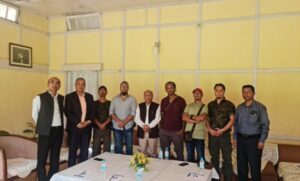
In February 2022, HNLC made a dramatic shift by publicly declaring its intention to engage in peace talks within the framework of the Indian Constitution. This was seen as a major softening of stance, especially given their earlier separatist rhetoric. Civil society groups, church leaders, and intellectuals welcomed the move and urged the government to respond constructively. By March 2022, tripartite peace talks were initiated between the HNLC, the Government of Meghalaya, and the Union Government. Former Intelligence Bureau official A.K. Mishra was appointed as an interlocutor. Safe passage was granted to the outfit’s negotiators, and a formal ceasefire was declared.
The early rounds of the dialogue appeared promising. HNLC submitted a list of demands which, contrary to fears, did not focus on sovereignty but on local development, protection of tribal land rights, and social justice. However, progress stalled in late 2023. The group demanded the withdrawal of pending criminal cases and a formal ceasefire agreement before continuing further. The government, bound by legal obligations and wary of setting precedents, could not agree to these terms without a final settlement. HNLC leaders, operating from abroad, also resisted traveling to India, preferring to appoint a vice-chairman as their representative. The mistrust widened.
In January 2024, after nearly two years of dialogue, HNLC officially withdrew from the peace talks. They accused the government of negotiating in bad faith and failing to provide assurances. In their statement, the group declared the resumption of their “armed struggle.” This announcement shattered the already fragile peace process and once again placed Meghalaya’s security apparatus on alert.
The political fallout was immediate. Several regional leaders criticized the government for failing to sustain the peace dialogue, calling it a missed opportunity for lasting stability in the region. Civil society organizations expressed disappointment but urged both parties to keep channels of communication open. “We have come too far to return to conflict,” said one senior church leader in Shillong.
Public sentiment was mixed—some voiced fears of returning to the dark days of unrest, while others viewed the breakdown as inevitable given the trust deficit. Meanwhile, security forces intensified monitoring in sensitive districts and increased visibility in urban centers like Shillong to deter any retaliatory violence.
The withdrawal also changed the operational landscape for counter-insurgency. Authorities reactivated dormant surveillance protocols, expanded de-radicalization programs targeting at-risk youth, and began reviewing rehabilitation schemes for surrendered militants. While large-scale violence did not follow immediately, the specter of renewed insurgency prompted a cautious tightening of security and deeper scrutiny of fringe activities across the Khasi-Jaintia Hills. It also underlined the challenges of reconciling with insurgent outfits that have both militant wings and ideological foundations.
In November 2024, the Ministry of Home Affairs renewed the ban on HNLC for another five-year period, lasting until November 2029. The government cited continued secessionist intentions, extortion activities, and unresolved security concerns. This move was upheld by the Unlawful Activities (Prevention) Tribunal on May 10, 2025, which confirmed that HNLC’s activities posed a “clear threat to India’s sovereignty.”
By mid-2025, the HNLC was at its weakest point in decades. Intelligence sources estimated fewer than 20 active cadres remained, mostly sheltered in border areas of Bangladesh. The group’s recruitment efforts had failed to draw new members, with recent surrenders highlighting the disillusionment among some cadres who found themselves engaged in activities with “no ideological value.” The government has offered rehabilitation packages and vocational training to those who surrender.
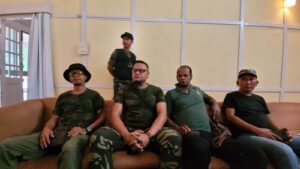
The group’s leadership, including Chairman Bobby R. Marwein and Publicity Secretary Sainkupar Nongtraw, continued to operate from abroad. There were also signs of internal discord. The HNLC has shifted its tactics, with authorities now concerned about its reliance on online radicalization and extortion. The Meghalaya Police have reiterated that while the HNLC’s activities in Khasi Hills remain subdued, they are “not being taken lightly.”
Overall, the HNLC’s journey is a reflection of the larger insurgency landscape of Northeast India. From aggressive militancy to peace overtures and back to marginal relevance, its trajectory mirrors the changing political and social environment. Today, the group remains banned, its top leaders fugitives, its support base fractured. But the issues it once raised—identity, land, culture, and economic marginalization—continue to simmer. Whether HNLC reinvents itself politically or fades into history remains to be seen.
What began as a fiery resistance has now become a quiet reminder of an unresolved past. Meghalaya, like the rest of the Northeast, must balance justice with reconciliation, firmness with compassion, and security with inclusion if it hopes to close this chapter permanently.