
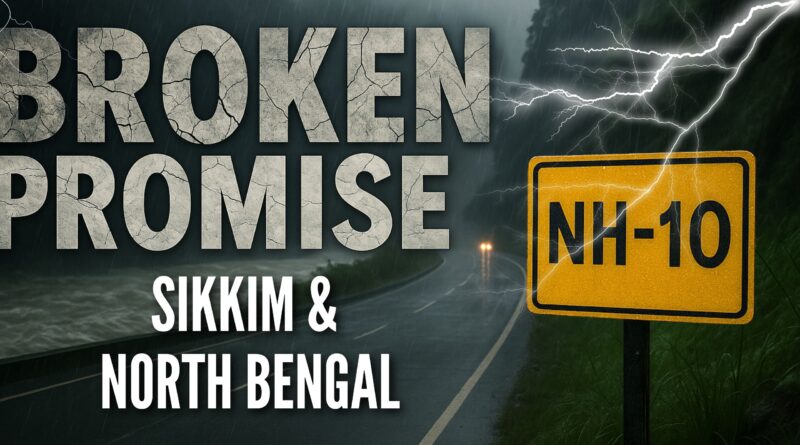
Sikkim’s Cry of the Clouds: When Rains Turn into a Flood of Despair on NH-10
The incessant torrential rain since the night of July 28th is no longer just weather; it has become the shriek of a flood. The clouds refuse to relent, and every drop seems to be screaming – “Save yourselves now, if you can.” The valleys of Sikkim and North Bengal, once symbols of peace and greenery, are now submerged under a deluge. Roads have turned into rivers, rivers are raging like monsters, and the mountains – they are crumbling down as rocks, wreaking havoc on the ground.
National Highway-10 (NH-10), the very lifeline of Sikkim, lies incapacitated today – buried under mud, debris, and landslides. NH-10 has been cut off at multiple points between Rangpo, Majitar, Singtam, and Kalimpong. BRO (Border Roads Organisation) and administrative teams are active, but the sky’s wrath continues.
And the biggest question – is this the first time this is happening? No.
In 2023, the same season ravaged Sikkim. The Lhonak Lake burst, the Teesta River took on a fierce form, claiming dozens of lives. Promises were made then that NH-10 would never again be allowed to become a “weak link.” But today, the 2025 rains are narrating the same story – only the date has changed, not the tragedy.
NH-10 in Crisis: The Lifeline Snapping Again
NH-10, connecting Gangtok to Siliguri, is not just a road; it’s the lifeline, trade route, and a part of the daily existence for millions. But today, this route is gripped by landslides, waterlogging, and debris. Long queues of heavy vehicles are stranded, tourists are stuck, and floodwaters have entered homes in villages.
BRO teams are on the job, but intermittent heavy rain continuously obstructs their work.
The Swollen Warning of Rivers: Waters of Calamity
The Teesta and Rangpo rivers are in spate – their water levels have crossed the danger mark. Several villages are being evacuated, and primary schools in East and South Sikkim have been closed. SDRF (State Disaster Response Force) has been put on alert, and the administration is relocating people to temporary relief camps.
Impact on Commute & Supply: The Crisis Deepens
With NH-10 stalled, essential supplies for Sikkim such as petrol, diesel, gas cylinders, medicines, and food provisions have been completely disrupted. Long queues are being seen at petrol pumps in Gangtok, Namchi, and surrounding towns. Hoteliers and shopkeepers are worried that if conditions persist for another two days, a complete standstill could occur.
Local Anguish: “Must We Suffer This Every Year?”
Cheten Bhutia, a 62-year-old resident of Rangpo, says: “After witnessing the devastation in 2023, we thought the government would wake up. But today, we stand at the same point – bogged down in mud, cut off from roads, and relying on government promises.”
Deven Gurung, a taxi driver, states: “NH-10 is not just a road; it’s our breath. If it’s cut off, how will we live? And it gets cut off every year.”
The Irony of NH-10: The Weevil in the Ghee
The greatest tragedy of NH-10 is that despite being Sikkim’s lifeline, the road geographically lies on Bengal’s land. This means Sikkim’s needs depend on West Bengal’s will. This is why, when a crisis strikes, both states pass the buck to each other.
“The weevil in the ghee” – this proverb perfectly fits NH-10. This route doesn’t fully belong to anyone, yet it’s essential for everyone. And when disaster strikes, this “weevil” is the first to be crushed.
Meteorological Department Warning: Danger Still Lurks
The India Meteorological Department (IMD) has issued an Orange Alert for Sikkim and North Bengal. Heavy rainfall and landslides are predicted for the next 48 hours. The administration has strictly advised all citizens to avoid non-essential travel and stay away from vulnerable areas.
Conclusion: When Will There Be a Permanent Solution?
Every year, the same script – rain, destruction, promises, and then forgetting. Has sacrificing sensitive routes like NH-10 every monsoon become our destiny? Or is this a symbol of political inaction and administrative failure?
It’s time that NH-10 is seen not merely as a road, but as a strategic priority – a priority linked to the security, stability, and sustainable development of the Himalayan states.
Otherwise, next year, we will read the same article – only the date will be new, the tears will be the same.