
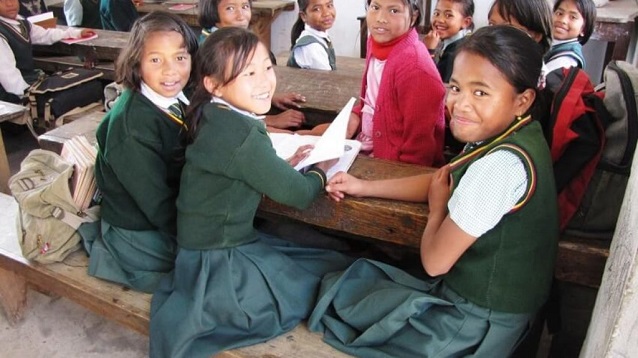
Illiteracy to Literacy: Mizoram’s Inspiring Journey
Mizoram, a small state in Northeast India, has transformed itself from an almost entirely illiterate society in the 19th century into India’s first fully literate state in the 21st century. With a current literacy rate of approximately 98.2%—well above the 95% threshold set by the Ministry of Education for full literacy—Mizoram now leads the nation in literacy. This remarkable accomplishment is the outcome of a long and dedicated historical journey that involved early missionary education, post-independence policy reforms, proactive community and church engagement, and a culture that has always placed a high value on learning. This report chronicles the history of Mizoram’s literacy, tracing key milestones and influences from the colonial era to contemporary achievements.
Colonial Era: Laying the Foundation (1890s–1940s) In the late 19th century, the region now known as Mizoram—then referred to as the Lushai Hills had no script and minimal formal education. After the British annexation in 1891–92, Christian missionaries quickly moved in to establish schools and introduce a Romanized script for the Mizo language. Pioneers like F.W. Savidge and J.H. Lorrain played a crucial role in crafting the Mizo alphabet and opening the first school in Aizawl in 1894. By the early 1900s, mission-run schools had spread across villages, focusing on teaching basic literacy, primarily so people could read the Bible. The missionaries also introduced adult education initiatives, such as Sunday schools and rest houses that doubled as night schools. Importantly, these early education efforts were inclusive of women—an extraordinary step at the time. By 1951, just a few years after India’s independence, the literacy rate in Mizoram had already reached an impressive 31%, far ahead of the national average of 18%. The synergy between missionary zeal and the Mizo people’s thirst for knowledge laid the groundwork for future success.
Post-Independence Period (1947–1971): Early Growth Through Community Effort Post-independence, Mizoram was part of Assam as the Mizo District. The education system expanded under joint efforts of the Assam government, the Mizo District Council, and local churches. Organizations like the Young Mizo Association (YMA), founded in 1935, played a significant role by encouraging school attendance and organizing informal education for those in need. By 1971, Mizoram’s literacy had climbed to 54%, well above the national average of 34%. Even during the political unrest of the 1960s—including the 1966 Mizo National Front uprising—basic education efforts continued, often facilitated by church volunteers and local leaders in makeshift classrooms.
Union Territory and Statehood (1972–1980s): Institutional Reforms In 1972, Mizoram became a Union Territory, gaining greater administrative control. This period saw the establishment of the Mizoram Board of School Education (MBSE) in 1975, which helped tailor the curriculum to local needs. The government opened new schools, introduced scholarships, and implemented the Mid-Day Meal Scheme to boost attendance. Despite continued insurgency, the 1980s witnessed a sharp rise in literacy. By 1991—after the 1986 peace accord and statehood in 1987—the literacy rate had soared to 82.3%, making Mizoram the second most literate state in India.
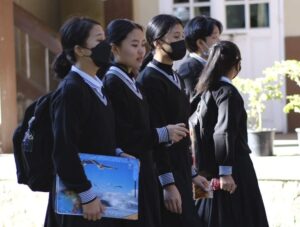
1990s: Literacy Campaigns and Systemic Expansion The 1990s were transformative. Mizoram actively participated in the National Literacy Mission and launched its Total Literacy Campaign. Community volunteers, known as “animators,” taught adults to read and write. Around 360 Continuing Education Centres provided follow-up support. Meanwhile, the Sarva Shiksha Abhiyan (SSA) laid the groundwork for universal primary education. The Mid-Day Meal Scheme ensured that education was accessible and appealing, particularly to the underprivileged. New high schools and colleges were established, and in 2001, Mizoram University was founded. By then, the literacy rate had reached 88.8%, and the gender gap had nearly disappeared.
21st Century Achievements: The Path to Full Literacy (2000s–2020s) In the 21st century, Mizoram continued to build on its educational base. Programs like RMSA and RUSA strengthened secondary and higher education. The 2009 Right to Education Act and the 2020 National Education Policy were effectively implemented, including multilingual education and foundational literacy. Digital learning was also introduced, bridging geographic divides. IGNOU and Mizoram University offered remote learning options, and ICT@Schools programs brought basic internet access to classrooms. The state also continued its focus on adult education through Saakshar Bharat, ensuring that elderly and isolated individuals weren’t left behind.
By 2023–24, Mizoram’s literacy rate for those aged 15 and above had reached 98.2%. A targeted door-to-door campaign identified the remaining 3,000 illiterate adults, all of whom were taught under the ULLAS (Understanding Lifelong Learning for All in Society) initiative. On May 20, 2025, Mizoram was officially declared India’s first fully literate state.
Role of Churches and Community Organizations Churches, especially Presbyterian and Baptist denominations, have long been the backbone of education in Mizoram. Sunday schools and evening adult classes were crucial in raising literacy across generations. The YMA mobilized volunteers for mass literacy drives and ensured every child was enrolled in school. Student unions like Mizo Zirlai Pawl advocated for educational reforms and also volunteered as teachers. Village councils passed resolutions mandating universal schooling and facilitated outreach during literacy campaigns.
Cultural and Social Drivers Several cultural factors set Mizoram apart. Mizo society traditionally does not have the rigid class or caste hierarchy seen in many parts of India. This equality enabled more inclusive education. A cultural value known as Tlawmngaihna, meaning selflessness and service to the community, encouraged literate individuals to teach others. Respect for education is deeply embedded in society, with literacy seen as a mark of personal dignity. Mizo women have historically enjoyed educational parity with men, and their leadership in teaching roles has reinforced community learning. The state’s small, cohesive population allowed for easier monitoring and outreach. Literacy is also a daily habit, integrated into religious, cultural, and media life.
Comparative Perspective with Other Regions Kerala was the first Indian state to achieve near-universal literacy, but Mizoram’s progress has been faster in recent decades. It has surpassed states like Tripura, Nagaland, and Meghalaya, and stands far ahead of the BIMARU states like Bihar, where literacy levels remain low. Mizoram’s journey proves that even geographically remote and economically modest regions can lead in social indicators when communities unite behind a goal.

Conclusion Mizoram’s rise to the status of a fully literate state is a chronicle of vision, perseverance, and collaboration spanning over a century. From the first primers printed by Welsh missionaries in the 1890s to high-tech digital classrooms in the 2020s, the state’s educational landscape has undergone a profound transformation. Major milestones mark this journey: the introduction of a written script and schooling by missionaries, the steady expansion of primary education, the post-1980s literacy crusade that slashed adult illiteracy, and the recent community-driven push that eradicated the last traces of illiteracy by 2023. At each stage, a combination of enabling policies and grassroots initiative proved decisive. The government established institutions like MBSE and implemented supportive schemes (from scholarships and mid-day meals to SSA and ULLAS) that provided structure and resources. Equally, if not more important, the churches, NGOs, and villagers provided the human touch – teaching, motivating, and bringing every individual into the fold of literacy. Today, Mizoram not only prides itself on a 98%+ literacy rate but also faces the new challenge of leveraging this human capital for development. The focus is shifting to the quality of education and lifelong learning. The state recognizes the need for better school infrastructure, more trained teachers, and enhanced curriculum (including vocational and digital skills) to ensure that being literate truly empowers its citizens in a modern economy. The government, in partnership with communities, is working on these fronts even as it guards the gains made in basic literacy. Mizoram’s accomplishment stands as a beacon of hope and a model. It underscores that geography and history are not insurmountable barriers – a remote hill state that once had no written language is now leading the nation in literacy. The keys to this success have been cultural acceptance, community involvement, and sustained political commitment. In a diverse country like India, different states have taken different paths to improve literacy, but Mizoram’s path highlights the power of collective will. As one Mizo leader aptly said during the full literacy declaration, this achievement is not just a statistic, but a transformational milestone—one that speaks to the collective will, discipline, and vision of our people. In the story of Mizoram, we see how education became everyone’s business – and how an educated society built on egalitarian values can flourish. Mizoram’s journey to full literacy will be remembered as a triumph of inclusion and unity, with lessons that extend far beyond its borders.