
Ita Fort: An Ancient Legacy in Modern Itanagar
Historical Background and Origin
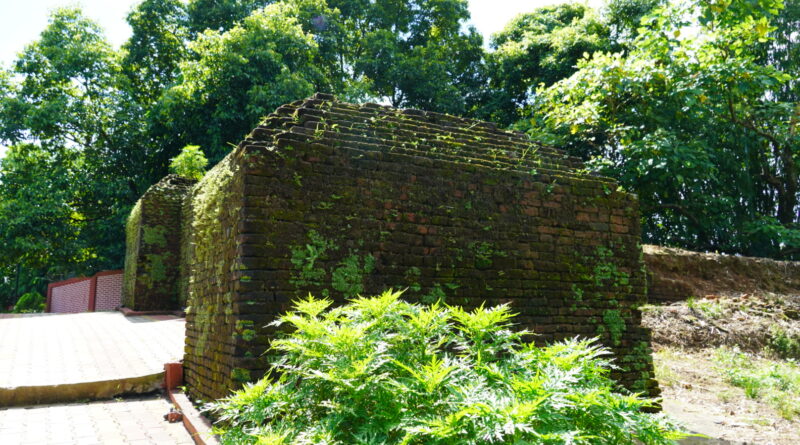
Itanagar Fort, locally known as Ita Fort (literally “Fort of Bricks”), is a medieval fortification that gives Itanagar, the capital of Arunachal Pradesh, its name. The term “Ita” means brick in Assamese, reflecting the primary material used. Historical studies generally date the fort’s construction to the 14th–15th century, attributing it to the kings of the Chutiya (Sutiya) dynasty who ruled the region during that era. This was a tumultuous period marked by repeated invasions – Muslim forces pressing eastward into Assam and the rising Ahom kingdom expanding from the east. In this context, Ita Fort is believed to have been built as a frontier stronghold between 1350 and 1450 A.D., likely under a king named Ramachandra of Mayapur, to defend against these incursions. For centuries, the fort served as a military bastion, guarding the surrounding hill country with its robust walls and strategic hilltop position.
There is some historical debate about the fort’s exact origin. Traditionally, local chronicles (and colonial-era writers like L.N. Chakravarty and E.A. Gait) credit King Ramachandra (also referred to as Mayamatta in legend) of the “Jitari” or Mayapur lineage with building Ita Fort in the mid-14th century. However, recent scholarship has challenged this narrative. One perspective, notably suggested by historian Lila Gogoi, posits that the fort may not predate the late 17th century – arguing it could have been erected around 1688 A.D. by the Ahom king Chakradhwaj Singha as part of Ahom expansion. Despite these differing theories, archaeological evidence and stylistic links (such as brickwork similar to other Chutiya sites) strongly support the view that Ita Fort was part of the Chutiya kingdom’s domain in the 14th–15th centuries. In any case, the fort stands as a rare remnant of medieval history in this far-eastern region of India, bridging the historical narratives of Arunachal and Assam.
Architectural Features and Construction Style
The fort’s architecture is remarkable for its extensive use of brick in a hilly rainforest terrain. It was constructed from roughly 8 million bricks, bonded with traditional lime mortar and supplemented by dressed granite stone in places. The total brickwork volume is estimated at an astounding 16,200 cubic meters, and historical analysis suggests about 45,000 man-days of labor were invested in building this fortress – a testament to the skill and organization of its builders. The fort’s layout is irregular to conform with the hilltop contours: instead of a neat rectangle, its walls twist along the ridges, even using steep natural slopes as defensive barriers. This adaptive design gave Ita Fort a robust defence-in-depth, typical of a hill fort. Notably, builders employed iron clamps in the masonry, indicating a level of technological sophistication and durability rarely seen in contemporary regional structures. Decorative touches once existed as well – early accounts noted floral and animated designs on the gate facades, though these carvings have weathered away over time.
Originally, Ita Fort had a double-layered rampart enclosing an area on a hillock in central Itanagar. The fortifications stretched impressively: the eastern wall ran over 500 meters, and the western side extended about 1.4 kilometers, taking advantage of terrain. Three entrances or gateways pierced these fort walls at strategically chosen locations:
- Eastern Gate: Situated at the highest point near today’s Raj Bhavan, this gate was built of stone masonry. It overlooks the Dikrong Valley (toward Doimukh) and guarded the approach from Harmuti in the east. Due to age and neglect, the Eastern Gate is now largely in ruins, but its vantage position made it an ideal watchpost.
- Western Gate: This was the main entrance of Ita Fort, facing west toward the Senkhi River and the plains. In fact, the Western Gate is visible from the modern highway (NH-52A) near Bank Tinali. Uniquely, the western rampart had two successive gate openings, forming a fortified entry corridor. The Western Gate would have been the grandest portal, controlling access from the river side; today its remains indicate comparatively lighter defensive works on that side, likely relying on steep slopes and the river as natural deterrents.
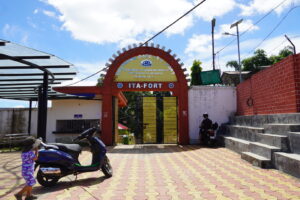
- Southern Gate: Located on the fort’s southern flank, this gate is the best-preserved of the three. It was constructed primarily with brick (the same baked bricks as the walls) along with stone slabs. The Southern Gate defended the route from Gohpur and Ramghat areas to the south. Its relatively intact condition and easier access make it the most frequented part of the ruins for visitors.
These gateways were not merely entries; they were integrated defensive works. Contemporary descriptions suggest they functioned as checkpoints and kill-zones against attackers, complementing the fort’s high ramparts. The fort’s design cleverly leverages the topography – for example, on the western and southern sides, steep ridgelines (over a kilometer long) form a natural fortification in addition to man-made walls. All these features underscore an advanced architectural knowledge and strategic acumen. Ita Fort’s blend of massive brick walls, stone-buttressed gates, and terrain-aware layout make it a unique example of medieval military architecture in Northeast India.
Cultural and Archaeological Significance
Ita Fort holds immense cultural and historical significance for Arunachal Pradesh. It is one of the most important archaeological monuments in the state, representing a “forgotten chapter” of the region’s history before modern times. Indeed, the very name “Itanagar” honors this fort – a reminder that the capital city’s identity is anchored in its ancient brick fortress. The fort’s existence highlights the spread of sub-Himalayan civilizations (like the Chutiya kingdom) into present-day Arunachal, linking the state’s heritage to the broader tapestry of medieval Assam. In recognition of its importance, the Government of Arunachal Pradesh has declared Ita Fort a protected State Heritage Site, intended to preserve it for posterity.
Archaeologically, Ita Fort has been illuminating. Although the ruins were noted in British gazetteers as early as 1901, formal exploration took place much later. The fort was excavated in 1975–1977 by the state’s Research Department, which unearthed its foundations, outline, and various artifacts. The findings – including medieval pottery, brick samples, and sculpted stones – have provided valuable insight into construction techniques and the material culture of the fort builders. Many of these artifacts are now displayed for public viewing at the Jawaharlal Nehru State Museum (an archaeological museum near the fort’s western gate). One particularly striking find is a granite stone carving of a lion, recovered from the site. The lion was the royal emblem of the Chutiya kingdom, and its presence at Ita Fort reinforces the fort’s attribution to that dynasty. Such relics not only confirm historical links but also enhance the fort’s cultural value, connecting present-day audiences with the art and symbolism of a 600-year-old kingdom.
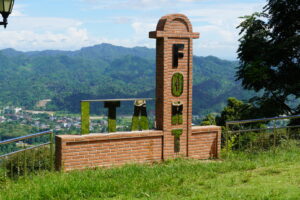
Beyond academia, Ita Fort has played a role in the modern cultural consciousness of Arunachal Pradesh. Notably, when Itanagar was being proposed as the new administrative capital in 1972, local leader Nabam Runghi famously carried a brick from Ita Fort to meetings in Shillong (then regional headquarters) to demonstrate the area’s rich historical heritage. This symbolic act underscored how the fort – though in ruins – was a powerful emblem of cultural identity and historical continuity for the indigenous people. To this day, Ita Fort continues to attract historians, archaeologists, and heritage enthusiasts. Scholarly research on the site is ongoing, as experts attempt to piece together its past and even debate alternative hypotheses (for instance, exploring possible Ahom influences). The fort’s enduring legacy lies not just in its bricks and stones, but in its capacity to inspire curiosity and pride in the region’s history.
Current State of the Fort and Preservation Status
Today, Ita Fort survives only in fragmentary ruins. Over centuries, and especially in recent decades, large portions of its once-formidable walls have been lost. In fact, the construction of modern Itanagar in the late 20th century took a heavy toll: many stretches of the brick ramparts were cleared or built over during urban development of the capital. What remains visible now are essentially the three main gate areas and adjoining wall segments, while the rest of the fort’s perimeter exists only in archaeological traces. The Eastern Gate is barely discernible amid rubble; the Western Gate’s outline can be seen, though much degraded; the Southern Gate stands relatively intact, giving a glimpse of the fort’s original appearance. The site, perched on a hill amid light forest and urban neighborhoods, has an air of neglect – with weathered bricks and undergrowth reclaiming many sections of the ruin.
Preservation efforts have faced challenges. Ita Fort is under the care of the State Archaeology authorities, but officials acknowledge that “nothing much has been done to preserve it” due to limited resources. The state government’s designation of the fort as a heritage monument unfortunately has not been matched by adequate funding for conservation. The local Archaeology unit does what it can, supplemented occasionally by small grants and technical support from the central Archaeological Survey of India (ASI). In 2016–17, for example, a special project carried out excavations and structural consolidation at the Eastern and Western Gates, aiming to stabilize those portions of the fort. These interventions have helped to some extent – revealing original brick layouts and preventing further collapse of key sections. Still, comprehensive restoration remains lacking. There is no complete fort wall to walk along, only the gate ruins and some low brick mounds indicating former ramparts.
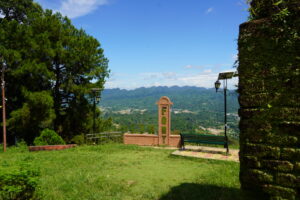
Another issue is the lack of on-site management and public awareness. In the past, authorities attempted to station guards and charge a nominal entry ticket at the Southern Gate, but locals resisted and even scuffled with guards, leading to the ticket system being discontinued. At present the site is freely accessible and largely unsupervised. This has unfortunately led to instances of vandalism and misuse – for example, youths treating the monument as a hangout spot and littering the area with bottles and trash. Such activity not only mars the site’s dignity but also poses a risk of further damage to the fragile ruins. Officials and historians have raised alarms that if this destructive trend continues, Ita Fort could deteriorate to the point of vanishing entirely, surviving only in records and memories. In summary, the fort’s preservation status is precarious: it stands as a protected monument in law, but in practice it struggles against natural decay, limited conservation support, and human neglect. Safeguarding this landmark for the future will require a much more concerted effort in terms of restoration work, site security, and public education about its value.
Role in Tourism and Visitor Accessibility
Despite its condition, Ita Fort features prominently in Arunachal Pradesh’s tourism narrative as a must-see historic site in Itanagar. Its central location – atop a hill in the heart of the capital city – makes it easily accessible to visitors. Roads lead close to the Southern and Western gate areas, and one can reach the fort within minutes from downtown Itanagar. The Incredible India tourism campaign highlights Ita Fort’s “majestic” aura and invites travelers to wander its ancient ramparts and gateways. The site is open to the public during the day (roughly from 8:00 AM to 4:00 PM), and no entry fee is charged for admission. Visitors are free to explore the ruins at their own pace. The Southern Gate, being the most intact, is the focal point for tourists – one can literally walk through this gateway and imagine the sightlines ancient guards would have had. Informational signboards provide a brief history, and nearby, the Jawaharlal Nehru State Museum contains an archaeological gallery with artifacts recovered from the fort, adding context to the onsite experience.
However, the tourism potential of Ita Fort is not fully realized. Facilities at the site are minimal – there are no guided tours or audio-visual shows yet, and amenities like rest areas or a dedicated interpretation center are lacking. Given the fort’s historical significance, experts have suggested initiatives like a light-and-sound show retelling its legend, which could greatly enhance visitor engagement (as of now, this remains a proposal). Accessibility is generally good (the approach roads are decent and the climb to the gates is moderate), but parts of the ruins are overgrown or uneven, so a degree of caution and fitness is advised for explorers. The fort does, nonetheless, draw a steady stream of visitors: history enthusiasts, school groups, and curious tourists often make a stop to ponder the mossy brick walls and enjoy panoramic views of Itanagar from the hill. For Arunachal’s tourism, Ita Fort serves as a key cultural attraction that differentiates the capital city – it’s not just an administrative hub but also a place with deep historical roots. With improved preservation and visitor infrastructure, Ita Fort’s role in tourism could expand significantly, offering an even richer window into the region’s past.
Legends, Historical Figures, and Notable Events
Ita Fort is enveloped in local legend and folklore, which adds a layer of mystique to its stones. The most famous tale associated with the fort is the tragic saga of King Mayamatta and his son Arimatta. According to oral tradition recorded by early historians, Mayamatta was a refugee prince from Assam who sought shelter in these hills and built a fort on a hill called “Ita.” He left his pregnant queen in the plains, where she gave birth to a son, Arimatta, unbeknownst to the father. Arimatta grew up to be a mighty king in the Brahmaputra valley. Warned by his mother never to venture north (where his father’s domain lay), Arimatta nonetheless marched his army up into the hills to challenge the unknown ruler. He besieged Ita Fort and, after a fierce battle, forced his way in. In the confrontation that followed, the fort’s king Mayamatta could not be slain by conventional means. As the legend goes, Mayamatta cryptically told the invader, “You shall not kill me unless you pierce my heart with your fingers.” Arimatta, in a blind rage, did exactly that – only to realize he had killed his own father when the dying Mayamatta revealed his identity. Horrified and guilt-ridden, Arimatta tried to atone for this act of patricide. He is said to have buried his father’s treasures in the nearby Goruchuntia hills (which locals whisper are still haunted by those restless riches). Ultimately, unable to wash off the bloodstains of his sin, Arimatta immolated himself in the Brahmaputra River’s flames, thus ending the sorrowful tale. This legend of Ita Fort has been passed down through generations, giving the site a romantic and tragic reputation. It not only humanizes the ruins with emotional history but also links them to broader Assamese folklore (Arimatta is sometimes associated with historical figures in Assam’s medieval chronicles).
In historical records, several figures emerge in connection with Ita Fort, often overlapping with the legend. The name Ramachandra is frequently mentioned – likely referring to the same individual as Mayamatta or a related king. Ramachandra of Mayapur is credited in some chronicles as the fort’s builder, and one account even speculated that Ita Fort was the legendary city of Pratappur (Pratappura) where Ramachandra ruled. Modern scholarship, however, found that Pratappur was elsewhere (near Biswanath, in Assam), suggesting that the fort in Itanagar was a different stronghold of the Chutiya domain. Another historical thread links to the Ahom dynasty: after the Chutiya kingdom fell in the early 1500s, the Ahoms took over much of their territory. Some historians propose that an Ahom king (possibly Chakradhwaj Singha in the late 17th century) refurbished or built on the remains of Ita Fort during an expedition, which if true, would be a significant event tying the fort into the Ahom-Mughal conflicts era. This theory remains under debate, as noted earlier.
Aside from these, the fort itself does not have recorded battles or events in mainstream history – likely because the region was sparsely chronicled. By the time the British came into Northeast India, Ita Fort was already an overgrown relic, meriting only a few lines in early 20th-century gazetteers. Its “events” since then have been the moments of rediscovery: the 1970s excavation, the state capital formation in 1974 (when the fort’s legacy helped cement Itanagar’s selection), and recent conservation efforts. Each of these is a chapter in the fort’s modern story. Together, the legends, historical figures, and events associated with Ita Fort enrich its significance. They transform a pile of bricks into a bridge between myth and history – from the poignant legend of a son’s remorse to the real political significance of a brick carried to state meetings. Ita Fort thus stands not only as a physical monument but also as a vessel of collective memory, carrying the echoes of kings and battles, both real and imagined, into the present day.
Current and Future Tourism Initiatives
The Government of Arunachal Pradesh has launched a new tourism policy and branding initiative to establish the state as a world-class tourism destination, with the slogan “Arunachal: Beyond Myths and Mountains.” The objective of this policy is to promote experiential tourism in various sectors such as adventure, eco, tribal, and border tourism.
Under this initiative, the government aims to improve tourism infrastructure and accessibility, including better road and air connectivity, enhanced transport facilities, and improved tourist signage. In addition, the policy targets doubling the number of domestic tourists and increasing the number of international tourists tenfold.
This initiative could help attract more attention and investment to historical sites like Ita Fort, thereby increasing opportunities for their conservation and development.