
How did Churchill Caused the Bengal Famine?
The Anatomy of a Man-Made Catastrophe
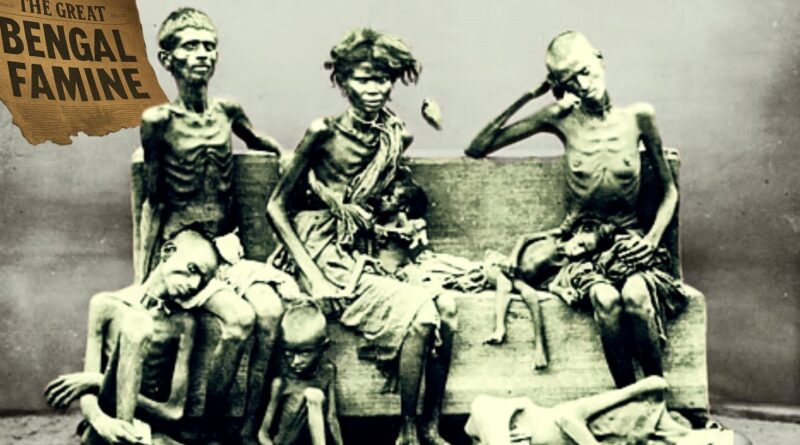
The Bengal Famine of 1943–44 stands as one of the most severe humanitarian crises of the 20th century, resulting in the catastrophic loss of an estimated 3 million lives across British India’s eastern province . Known in Bengali vernacular sources as Panchasher Manwantar (the famine of the Bengali year 1350) , this disaster was not merely a consequence of resource scarcity but a complex systemic outcome rooted in the disruptive forces of World War II, ecological shock, economic collapse, and crucial colonial administrative failures . The event profoundly destabilized Bengal’s economic, political, and social structures, leaving millions more citizens uprooted and permanently impoverished [1, 4]. Analyzing the 1943 famine requires a nuanced, multi-causal framework that assesses the lethal interplay between environment, market dynamics, and imperial policy decisions.
Watch Full Video on Youtube: https://youtu.be/BdyNkCwiaBQ

Delayed Response and the Politics of Silencing
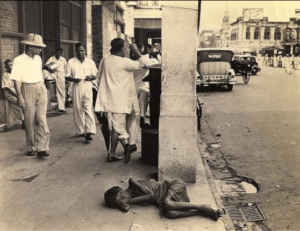
Despite the immense scale of suffering and the urgent need for a concerted effort to save lives, organized relief reached the affected areas with considerable and fatal delay The initial signs of starvation manifested as early as late 1942, yet the colonial government did not launch a meaningful relief mission to render food and medical care until November 1943, nearly a full year later This delay was fundamentally driven by the colonial authorities’ conscious efforts to “silence the crisis,” prioritizing military necessities and security concerns associated with the war effort over the free circulation of humanitarian information
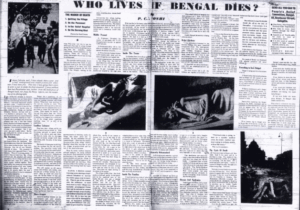
The political mechanism for this suppression was the Defence of India Act, promulgated by the colonial regime in 1939 [4, 7]. This act provided a vital legal instrument enabling the authorities to ban print material perceived as harmful to the war effort, thereby restricting the press’s ability to report the escalating tragedy [4, 7]. This strategic censorship removed the necessary political catalyst for intervention; historically, previous famines in India had often been curtailed when graphic accounts of suffering entered the mainstream press, generating public pressure in Britain and India that forced the state to act [4]. By weaponizing wartime legislation to enforce a politics of silence, the colonial administration eliminated this critical feedback loop. The subsequent widespread outrage that finally challenged the official narrative gained significant momentum only after graphic accounts from “the Empire’s Second City” (Calcutta) began to enter the press in late August 1943 in Bengal and the following month in Britain. The delay in international media response, strikingly contrasted with reactions to previous famines, confirms that administrative action in 1943 was fatally obstructed by the central government’s institutional commitment to secrecy and military priority.
The Convergence of Wartime Pressures and Environmental Shock
The catastrophic conditions of 1943 were forged by a rapid succession of strategic military shocks and environmental disasters that overwhelmed Bengal’s fragile economy and food distribution network.
The Strategic Shock of Burma and Refugee Influx
The geopolitical consequences of the war front in Southeast Asia placed immediate and profound stress on Bengal. The Japanese campaign resulted in the fall of Rangoon in March 1942, which immediately cut off the critical import of Burmese rice into India and Ceylon (now Sri Lanka) [8]. Burma had supplied over 20 percent of the rice previously imported into Bengal, and the sudden cessation of this supply placed the region in a precarious food deficit [2]. Moreover, Bengal bore the brunt of the resultant human migration, as the war zone spurred an exodus of over half a million Indians fleeing Burma for India [8]. This influx, coupled with the increased military presence in Bengal, significantly raised local food needs [8]. Despite the apparent food crisis and the severe loss of Burmese imports, Bengal’s food supplies continued to be exported to Ceylon for months afterward, exacerbating the tightening local supply.
Environmental Triggers: Cyclone and Pathogen
Unlike the major famines of the late 19th century, the Bengal famine of 1943 was unique in modern Indian history because it was not primarily caused by a serious, widespread drought [9]. The environmental stressors were instead highly localized and sudden. The region was first struck by a major cyclone and associated flooding in October 1942, classified by the Famine Inquiry Commission as serious and unavoidable natural calamities.
Watch Full Video on Youtube: https://youtu.be/BdyNkCwiaBQ
Crucially, the resulting warm, damp conditions fostered a devastating outbreak of Helminthosporium oryzae, commonly known as brown spot disease [2]. This plant pathogen severely diminished rice yields, particularly the main aman crop harvest at the end of 1942. In certain areas of Bengal, such as Bankura and Chinsurah, reported losses ranged from 10 to 90 percent for different rice varieties. This combination of a localized meteorological event (the cyclone) and a biological shock (the fungal epidemic) created a sudden, acute supply shock that was structurally distinct from the traditional drought-induced harvest failures that the colonial Famine Codes were designed to manage. This biological calamity ensured that even if administrative logistics had been perfect, there was a substantial and verifiable reduction in regional output entering 1943, complicating the subsequent economic analysis of scarcity.
The “Denial Policy” and Local Economic Destruction
Compounding the natural and strategic shocks was the British “denial policy,” a strategic military measure implemented in coastal areas of Bengal [9]. This policy was designed to prevent Japanese forces, in the event of an invasion, from accessing essential resources [9]. To this end, huge supplies of rice were confiscated or destroyed, and thousands of local boats were seized and rendered unusable.
While rationalized as a wartime necessity, this policy was a targeted destruction of local economic entitlements. The confiscation of boats and rice stocks immediately crippled local trade and transport, disproportionately impacting vulnerable coastal communities, especially fishermen [10]. By crippling the infrastructure necessary for both fishing livelihoods and internal distribution, the denial policy ensured that food supplies, even if available further inland, could not reach the heavily populated coastal districts. This structural destruction of assets pushed vulnerable groups into entitlement failure long before general market prices reached their peak, demonstrating that colonial policy acted not merely as an exacerbating factor but as a direct precipitant of regional starvation.
Imperial Policy, Political Triage, and Administrative Incompetence
The scale of the famine’s mortality was not solely dictated by environmental and military shocks, but by the determined inaction and profound administrative deficiencies of the colonial government at both the provincial and imperial levels.
Watch Full Video on Youtube: https://youtu.be/BdyNkCwiaBQ
Prioritization of War Over Welfare
The highest level of British government, led by Prime Minister Winston Churchill, has received intense scrutiny for its role in the catastrophe [12]. Critics charge that Churchill’s prioritization of the overall war effort, coupled with his refusal to divert food supplies and shipping to Bengal,

significantly worsened the situation, sometimes diverting available stocks to Allies in the Mediterranean or for military stockpiling instead. Evidence suggests a severe institutional indifference, further highlighted by quotes attributed to Churchill, who reportedly blamed the famine on Indian overpopulation, claiming that Indians were “breeding like rabbits” [9]. This demonstrated a clear geopolitical trade-off in which Indian lives were deemed expendable collateral in the prosecution of the global war effort. The decision to export food and restrict imports, even as the crisis mounted, cemented the political prioritization of imperial strategy over the humanitarian welfare of colonial subjects.
Institutional Failures in Food Movement
The administrative breakdown was compounded by systemic institutional barriers designed to manage—or mismanage—inter-provincial trade. The British system of administration worsened the food shortage in Bengal by restricting the free flow of food grains among the provinces of India [2]. This created inter-provincial trade barriers on the movement of food grains, preventing surplus regions from sending relief to deficit Bengal [8]. Furthermore, the Government of India was responsible for a significant delay in establishing a planned system for the movement of essential food supplies to the province.
Findings of the Famine Inquiry Commission (Woodhead Commission)
The Famine Inquiry Commission (also known as the Woodhead Commission), tasked with investigating the causes of the shortage, delivered damning conclusions regarding the role of governance. The Commission determined that the famine, in the form it occurred, was preventable and could have been averted by “resolute action at the right time to ensure the equitable distribution of available supplies” .
The Commission cataloged severe administrative failures. The Government of Bengal was found to have failed fundamentally in securing control over supply and distribution, allowing food prices to soar to five or six times the levels prevailing in early 1942 [10]. The measures taken were deemed “inadequate and, in some instances wrong in principle” [10]. A key policy failure was the decision in March 1943 to favor “de-control” over the existing, albeit weak, regulatory attempts. The Commission concluded that maintaining control was “essential” given the prevailing crisis, and the abandonment of regulation “meant disaster” [10]. This mistake stemmed from an ideological rigidity favoring laissez-faire economics even in the face of mass starvation [14]. By refusing to establish a functional procurement organization or to use its powers to requisition supplies from large producers or traders, the government actively enabled hoarding and speculation, turning a localized shortage into a price-induced mass mortality event [10]. The Commission was clear that by August 1943, when “Deaths and mass migration on a large scale were occurring,” the Government of India “must share with the Provincial Government the responsibility for saving lives”
The Great Economic Debate: Entitlement Failure vs. Food Availability Decline
The Bengal Famine of 1943 became the subject of intense and enduring academic debate, fundamentally shifting the study of poverty and starvation globally. This intellectual conflict centers on whether the famine was primarily caused by a physical lack of food or by the poor’s inability to afford the food that was present.
Watch Full Video on Youtube: https://youtu.be/BdyNkCwiaBQ
Amartya Sen’s Entitlement Failure Hypothesis (E-F)
The Indian economist Amartya Sen pioneered a major reorientation in famine studies by challenging the classical Food Availability Decline (FAD) hypothesis, which posited that famines are caused by a shortfall in total food production. Sen argued that the Bengal famine was a canonical example of “entitlement failure,” a situation where individuals lose their effective command over food even if aggregate supplies remain relatively stable.
Sen’s analysis demonstrated that while food production did fall slightly in 1943, the aggregate food available was still 13 percent higher than in 1941, a non-famine year. The mechanism of death was not absolute scarcity but hyperinflation, a common wartime phenomenon. Between 1939 and 1943, food grain prices rose by over 300 percent, outstripping the general rate of inflation . Crucially, the wages of the most vulnerable group—agricultural labourers—rose by only 30 percent in the same period [5]. This disparity meant that their purchasing power collapsed; their “entitlements” of food failed because their wages could no longer secure them enough sustenance, regardless of physical availability in the market [5]. Furthermore, the crisis exhibited stark geographic disparity: the capital city of Calcutta was largely protected, while rural Bengal was ravaged, reinforcing the argument that the disaster was one of economic access and distribution, not pervasive physical lack.
Historiographical Challenges and the Reassertion of FAD
Sen’s influential conclusion that there was no significant FAD has been subjected to rigorous scholarly critique by economic historians such as Mark Tauger and Cormac Ó Gráda [6, 11, 15]. Critics argue that Sen’s reliance on official colonial production statistics was problematic because the data itself was weak and unreliable [11]. The Famine Inquiry Commission acknowledged that official rice output figures were often based on pre-harvest “crop forecasts”—estimates made before the harvest—and a Royal Commission on Agriculture in 1928 had previously labeled Bengal’s crop statistics as “merely guesses and not infrequently absurd guesses”.
Evidence supporting an acute supply shock suggests a decline in food availability did occur. Detailed information from rice research stations confirms “massive losses” in yields for 1942 due to the brown spot epidemic. Furthermore, when existing acreage figures are revised for comparability, analysis suggests that the per capita availability of rice and wheat in 1943 was actually 4 percent lower than in 1941, indicating that while the decline may not have been “dramatic,” it was likely still a decline. Scholars like Ó Gráda and Peter Bowbrick have concluded that, apart from the flawed production statistics, “all evidence… points to the fact that (a) there was a short crop and (b) there was a shortage”.
Watch Full Video on Youtube: https://youtu.be/BdyNkCwiaBQ
The critique also extends to Sen’s use of demographic data. His analysis suggested that mortality did not return to 1942 levels until the end of the decade, but critics point out that the statistics used were compromised by the difficult task of compiling data for West Bengal from records of the undivided province [11]. This highlights a recurrent challenge in analyzing colonial disasters: the reliance on inherently defective and often politically motivated statistical infrastructure.
Synthesis of the Causal Framework
The extensive historiographical discussion necessitates a synthesized conclusion: the Bengal Famine of 1943 was a Price-Inflationary Famine acutely triggered by a localized, severe supply shock. The combined effects of the loss of Burmese imports, the Denial Policy, and the devastating brown spot epidemic provided the real-world shortage necessary to ignite hyper-speculation and hoarding [3, 14]. These actions, in turn, drove the extreme price increases that created the Entitlement Failure for the poor, who were already near the margin of subsistence. The ultimate responsibility lies with the colonial administration for failing to interrupt this chain by exercising its coercive powers to requisition supplies or enforce price controls, thereby allowing market profiteering to become the primary mechanism of mass death.
| Theory | Primary Cause | Mechanism of Starvation | Key Supporting Data |
| Food Availability Decline (FAD) | Acute, localized decline in aman rice production (disease/cyclone) coupled with loss of Burmese imports. | Insufficient physical quantity of food in the localized market, contributing to panic hoarding and price pressure. | Evidence of brown spot disease losses (10-90% yields) [2, 11]; revised per capita supply figures showing a deficit compared to 1941 [11]. |
| Entitlement Failure (Sen) | Failure of purchasing power due to market dynamics and policy inaction. | Food grain prices rose by >300%, while agricultural wages rose only 30% [5], making existing food unaffordable for the landless labor class. | Hyperinflation data and stagnant wage correlation [5]; stark geographic disparity (rural versus Calcutta) [5]. |
- The Breakdown of Governance and Public Morality
The tragedy extended beyond failures of economic policy and logistics into a deep moral and social collapse, highlighted explicitly in the findings of the Famine Inquiry Commission.
Profiteering and Moral Collapse
The Famine Commission concluded that the circumstances surrounding the disaster represented a fundamental failure of society to protect its weaker members, characterizing the tragedy as a “moral and social breakdown, as well as an administrative breakdown” [10]. The absence of control created an “atmosphere of fear and greed” that was a key cause of the rapid rise in price levels [10]. This environment enabled a class of unscrupulous businessmen to make “enormous profits” through black-marketing and hoarding, often by taking advantage of the inability of the government to requisition supplies. The Commission noted with gravity that “profits for some meant death for others,” concluding that “a large part of the community lived in plenty while others starved, and there was much indifference in face of suffering,” coupled with widespread corruption [10]. This profound failure to intervene against hoarders confirmed that the ruling structure valued market stability and the profits of the mercantile class over the sanctity of human life.
Failure of Relief Logistics
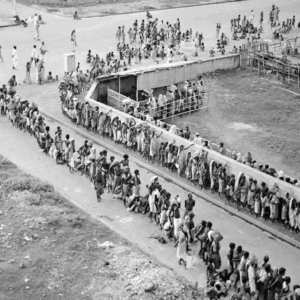
Even after the colonial authorities launched their delayed relief effort in late 1943, the logistical infrastructure proved inadequate [10]. The arrangements established for receiving, storing, and distributing the food supplies sent to Bengal from other parts of India were described as “thoroughly inadequate” [10]. As a consequence, a significant proportion of the supplies received during the height of the famine were not effectively distributed to the needy in the rural districts where the food was most critically required. The lack of political will and logistical competence fatally compounded the economic failure, ensuring that even donated or diverted food could not save lives, leading the Commission to conclude that better distribution arrangements “would have saved many lives”..
Geographic Disparity and Urban Prioritization
The colonial response exhibited a distinct administrative bias toward protecting the strategic capital. The government prioritized urban centers, particularly Calcutta, which remained relatively secure in terms of food availability throughout the crisis. While famine-related deaths occurred in Calcutta, these primarily involved migrants who had fled the villages in search of food and alms [5]. This prioritization ensured that the most acute suffering and highest mortality rates were concentrated in rural Bengal, home to approximately 95 percent of the province’s population. This administrative triage demonstrated a calculated indifference to the agrarian population, ensuring that the burden of the crisis was borne overwhelmingly by the poor, rural class segments already suffering from asset destruction and entitlement failure.
Socio-Economic and Political Aftermath
The Bengal Famine inflicted severe long-term trauma, fundamentally reshaping the socio-economic and political landscape of the region in the years leading to independence.
Watch Full Video on Youtube: https://youtu.be/BdyNkCwiaBQ
Demographic and Health Catastrophe
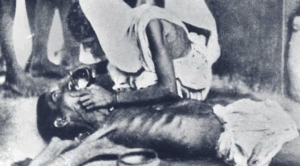
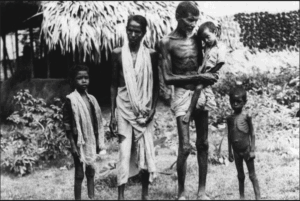
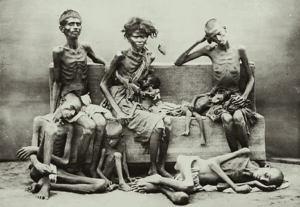
The immediate demographic consequence was the estimated loss of 3 million lives due to starvation and subsequent epidemics [1]. The widespread malnutrition that afflicted millions of survivors created ideal conditions for secondary diseases. The famine led to epidemic outbreaks of malaria, cholera, dysentery, smallpox, and fever [3]. A critical lack of doctors, nurses, and medicine ensured high rates of mortality from these diseases, amplifying the initial death toll. The collective memory of mass starvation and economic disaster created a permanent trauma within the Bengali nation.
Structural Land Displacement
The famine functioned as a powerful, violent mechanism for the rapid redistribution of assets. In their desperation, vast segments of the population were forced into distress sales of property. Approximately 6 percent of the total population was compelled to sell all their property, and an additional 11 percent sold part of their land [3]. This land was quickly acquired by a rising class of village landlords and moneylenders who had profited from the crisis, buying up assets at artificially depressed, distress prices. Landless agricultural laborers were the most severely affected group, experiencing the highest death tolls and asset loss.
End of the Aristocracy and Rise of New Elites
The structural displacement of assets marked a significant turning point in Bengal’s social history: the effective end of the traditional land-based aristocracy. The old elite were financially weakened by the disruption, while their place was rapidly taken by the newly enriched, money-centered class of unscrupulous businessmen, black-marketers, and hoarders [3]. This new class, having profited enormously from the crisis, gained decisive social and economic influence that would persist into the post-independence era [3]. The famine thus served as a rapid, traumatic engine of class replacement, converting transient wartime profits into permanent capital holdings.
Catalyst for Political Mobilization
The overwhelming administrative failure and the enormous death toll galvanized intense anger and frustration among the populace against the British government [3]. The famine became a central focus of nationalist criticism, highlighting the brutality of colonial neglect, the rejection of food aid requests, and the non-adherence to existing Famine Codes [3]. By failing utterly in the fundamental duty of the state—preserving the lives of its subjects—the British administration forfeited its moral and political legitimacy in India. This catastrophe provided crucial momentum to the nationalist movement and served as a direct catalyst for subsequent agrarian unrest, notably the Tebhaga Movement in 1946, which aimed to address the gross economic inequities exposed by the years of starvation and land displacement.
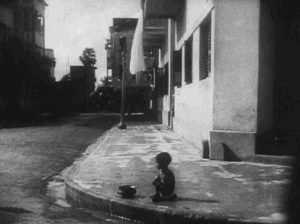
Table of Key Socio-Economic and Political Consequences of the 1943 Famine
| Category | Specific Impact | Quantified Data/Details |
| Demographic Trauma | Total Mortality (Estimated) | Approximately 3 million deaths [1, 4] |
| Property Displacement | Forced Land Sales | 6% of population sold all property; 11% sold part of land [3] |
| Social Change | Class Replacement | Decline of land-based aristocracy; rise of new money-centered class through hoarding and black-marketing [3] |
| Health Crisis | Epidemic Spread | Widespread outbreaks of malaria, cholera, dysentery, and smallpox [3] |
| Political Impact | Anti-Colonial Sentiment & Mobilization | Famine fueled intense anger, accelerating the nationalist movement and catalyzing the 1946 Tebhaga Peasant Movement [3] |
A Synthesis of Systemic Failure
The Bengal Famine of 1943 was a uniquely tragic event, distinguishable from earlier colonial famines by its specific blend of wartime pressures and institutionalized indifference. It emerged from the interaction of a geopolitical supply shock (loss of Burma), a destructive military policy (the Denial Policy), and a unique ecological disaster (the brown spot epidemic and cyclone).
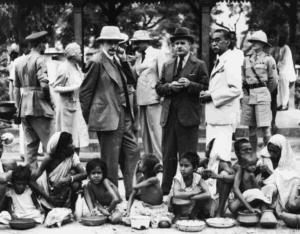
The ultimate scale of the mortality—the death of an estimated 3 million people—was not a function of absolute scarcity alone but of the collapse of purchasing power driven by hyperinflation [5]. This economic mechanism was permitted by catastrophic administrative inertia: the stubborn adherence to laissez-faire economics, the refusal to requisition supplies from profiteers, the severe restrictions on inter-provincial food movement, and the prioritization of the metropolitan center (Calcutta) over the dying rural population . At the imperial level, the refusal to divert food supplies, driven by Winston Churchill’s war priorities and apparent disdain for Indian lives, compounded the local administrative breakdown, elevating the famine from a regional crisis to a calculated act of imperial triage.
The 1943 famine stands as a critical watershed moment. Its legacy includes the profound socio-economic restructuring of Bengal—the violent displacement of millions from their land and the ascent of a new profiteering elite. Most significantly, the famine definitively exposed the colonial regime’s institutionalized indifference and lack of commitment to the welfare of its subjects, irrevocably shattering the moral and political legitimacy of British rule and providing crucial impetus for the rapid growth of the Indian nationalist movement .
Watch Full Videos on Youtube: https://youtu.be/BdyNkCwiaBQ
The British killed our 30L people and there was no Sorrow. Not sure what they are proud of Killing people?