
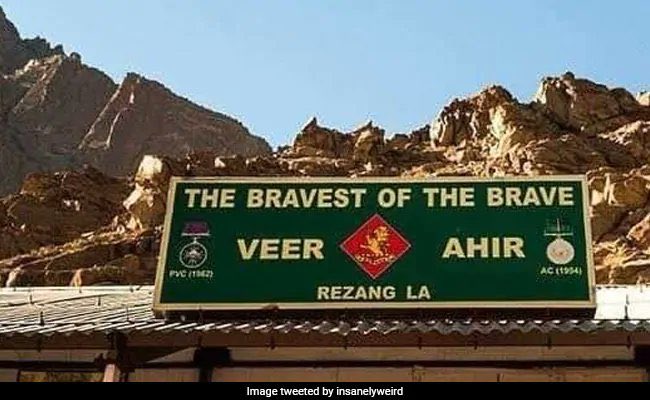
Major Shaitan Singh & the Bravehearts of Rezang La: A Story of Unmatched Courage
Geopolitical Background of the Sino-Indian War (1962)
In 1962, long-simmering border disputes between India and China erupted into open conflict. Chinese forces launched a multi-pronged offensive in October 1962, attacking Indian positions in both the eastern sector (the North-East Frontier Agency, present-day Arunachal Pradesh) and the western sector (Ladakh, including Aksai Chin). The Indian Army was under-prepared, ill-equipped, and often not acclimatized for high-altitude warfare, yet it was tasked with defending these Himalayan frontiers.
By November 1962, fierce battles raged across the mountains. The Chinese had made rapid gains in some areas, but key points in Ladakh, such as the Chushul sector, remained vital to India’s defense. It was here, in the windswept heights of Ladakh, that a small company of Indian soldiers would make a historic last stand.
Strategic Importance of Rezang La Pass
Rezang La is a mountain pass situated on the southeastern approach to Chushul Valley in Ladakh, on India’s border with China. At an altitude of approximately 16,000 feet (about 4,800 meters), this barren pass became a crucial defensive position during the war because it guarded the Chushul airstrip – a vital landing ground and supply lifeline in the region. Control of Rezang La meant control of the gateway to Chushul.
The surrounding terrain is harsh and exposed: high ridgelines, rocky valleys, and thin air. An intervening mountain feature meant Indian defenders at Rezang La had no effective artillery cover from their base – they would be on their own if attacked. Despite these challenges, the Indian Army chose Rezang La as a forward post to block any Chinese advance toward Chushul.
A satellite image of southeastern Ladakh shows the Chushul Valley and the surrounding features. Rezang La is located on the ridge guarding the approaches to Chushul, with Pangong Tso lake visible nearby.
By mid-November 1962, Rezang La was held by a lone infantry company of the Indian Army, facing the prospect of a major Chinese assault. The geographic significance of this pass meant that these soldiers – vastly outnumbered and cut off from substantial support – were the last barrier between the Chinese PLA and the Chushul sector. The stage was set for a confrontation at 16,000 feet, in freezing temperatures and against daunting odds.
Charlie Company of 13 Kumaon – Major Shaitan Singh’s Command
Defending Rezang La was Charlie Company (also known as “C Company”) of the 13th Battalion, Kumaon Regiment. This company consisted of about 120 soldiers, largely drawn from the Ahir community of Haryana, and was commanded by Major Shaitan Singh Bhati. Major Shaitan Singh, a battle-hardened officer and a World War II veteran, had assumed command of Charlie Company and earned the complete trust of his men.
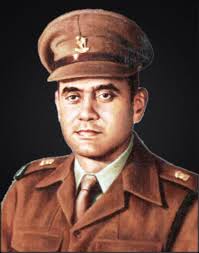
The Kumaonis of Charlie Company were hardy and determined, but they were severely undersupplied for a winter war. They had no tanks or artillery support on site, only a few mortar teams, and were armed mainly with World War II–era rifles and light machine guns. Many lacked proper winter clothing despite the sub-zero temperatures at Rezang La.
What the company did have was courage and cohesion. The men were bonded by their regimental pride and their faith in their commander. On taking position at Rezang La in early November, Major Shaitan Singh reportedly assured his commanders that his Ahir soldiers would fight “to the last man and the last round” – a promise the company was destined to keep. Their battle cry, “Jai Dada Kishan!” (Hail Dada Kishan), echoed across the heights as a reflection of their resolve and heritage.
Unbeknownst to them, Charlie Company was about to earn the unwelcome distinction of being one of the most heroically decorated – and bloodied – units in Indian military history.
Buildup to the Battle and Defensive Preparations
Charlie Company moved into Rezang La on 6 November 1962, relieving a Gurkha unit that had been holding the pass. The company’s position was on the forward slopes of a spur overlooking a broad, barren plain. About 19 miles (30 km) south of Chushul village, Rezang La guarded the southeastern approaches to Chushul Valley. The pass itself sat at 16,420 feet elevation, with an average surrounding height of roughly 16,000 feet.
Intelligence assessments indicated that if the Chinese attacked, they would likely come through a depression to the northwest dubbed “Valley West” – a natural corridor leading toward the pass. Major Shaitan Singh accordingly deployed his platoons to cover all likely approaches and to support each other in overlapping fields of fire.
The layout of the defense was as follows: No. 7 Platoon under Jemadar Surja Ram held the northern flank; No. 8 Platoon under Jemadar Hari Ram was positioned near the center, covering the pass itself; No. 9 Platoon under Jemadar Ram Chander defended the southern flank and center alongside the company command post. A section of 3-inch mortars led by Naik Ram Kumar Yadav was placed behind the crest, about 150 yards to the west of the company HQ on the reverse slope.
The men dug shallow trenches and stone sangars in the rocky soil. They knew they had no option of quick reinforcement or retreat – the nearest Indian brigade was miles away at Chushul, and Rezang La’s guns had limited reach. By the evening of 17 November, Chinese artillery shelling had cut the field telephone line connecting Charlie Company to its battalion headquarters, isolating them completely.
Despite the isolation, Major Shaitan Singh and his men steeled themselves to stand and fight. Retreat was not in their minds. On the eve of battle, one platoon commander, Jemadar Ram Chander, who also acted as second-in-command of the company, reportedly told the Major in rustic Hindi:
“Sahab ji, withdraw karan ki bilkul mat sochiyo, ek bhi Ahir peechhe nahin hatega.”
(“Sir, don’t even think of withdrawing; not a single Ahir will step back.”)
Shaitan Singh nodded – they would hold their ground. The night of 17 November 1962 was bitterly cold. The Kumaonis kept low, peering into the darkness, unaware that by dawn, their courage would be tested like never before.
The Battle of Rezang La – 18 November 1962
Pre-Dawn Encounter and First Assaults
Before first light on 18 November 1962, Chinese troops mounted their attack on Rezang La. At approximately 03:30 hours, sentries of Charlie Company detected movement in the darkness. Naik Hukum Chand, the second-in-command of 8 Platoon, was out on a forward patrol when he spotted a large column of Chinese soldiers stealthily approaching the Indian positions. Reacting swiftly, he rushed back to alert his platoon commander and fired a Very signal flare into the sky. The red flare burst overhead, briefly illuminating a chilling sight – hundreds of Chinese infantrymen were crawling and duckwalking forward, trying to surround Rezang La. Immediately, the Indians opened fire. All along the line, the crack of rifles and the stutter of Bren light machine guns shattered the silence as 7 Platoon, 8 Platoon, and 9 Platoon all engaged the enemy. Caught in the open, the lead Chinese wave took heavy casualties and hugged the ground for cover.
The first Chinese assault had been foiled, but it was only the beginning. Within minutes, bugles and shouts signaled fresh waves of attackers coming on. Around 04:00–05:00 hours, as dawn approached, the Chinese launched a full-scale attack in multiple waves. They advanced from three sides – south, west, and northeast – using the “human wave” tactics of massed infantry charges. Charlie Company’s 120 defenders faced an enemy force that was thousands strong. The Indians concentrated their fire and managed to repel the first wave with disciplined volleys, mowing down dozens of charging PLA soldiers at close range.
After the initial repulse, the Chinese regrouped. They laid down an intense mortar and artillery bombardment on the Rezang La ridge, pounding the Indian trenches. Explosions rocked the hillsides, and communications were completely severed. Amid this barrage, a second wave of Chinese troops swarmed up the slopes. The Indians again held their fire until the enemy was within about 50 yards. According to accounts, when the Chinese were nearly at grenade-throwing distance, Naik Hukum Chand shouted “Fire!”, and the ridge erupted with lethal effect. Many Chinese fell, but more kept coming. Every man in Charlie Company knew this fight was to the finish – there were no orders to retreat.
Waves of Attack and Stubborn Defense
What unfolded over the next several hours was combat at its rawest. Wave after wave of Chinese infantry assaulted Rezang La, and the Kumaonis, vastly outnumbered, beat them back each time. The enemy, armed with modern 7.62mm rifles and burp guns, expected to overrun the single Indian company quickly. Instead, they met ferocious resistance. The defenders, firing old bolt-action rifles, Bren guns, and the few available mortars, exacted a deadly toll on each Chinese charge. The snowy ground in front of Rezang La was soon littered with Chinese casualties. But the attackers kept coming in greater numbers, reinforced by fresh platoons from their reserve. It was an unequal contest – the Charlie Company men were fighting almost an entire PLA battalion (or more) by themselves.
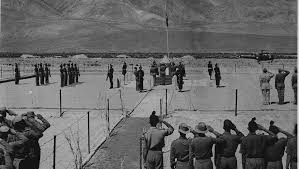
Major Shaitan Singh moved from post to post amid the hellfire, embodying calm and courage. He personally repositioned light machine guns to cover gaps, shouted encouragement to his Ahir boys, and even organized a few men for a counter-charge when one flank was in danger. At one point, Shaitan Singh was hit by enemy fire – a bullet tore into him, wounding him severely. Undeterred, he kept directing his men. Two soldiers grabbed the Major, attempting to pull him to cover, but he refused to be evacuated. He ordered them to put him down and rejoin the fight, lest his absence sap the men’s morale. Mortally wounded and unable to move, Major Shaitan Singh continued firing at the enemy with his carbine, exhorting his company to fight on to the last. His leadership under fire would later become the stuff of legend.
All along Rezang La, similar acts of extraordinary valor were taking place. At some positions, Chinese troops managed to reach the Indian trenches, only to be met with point-blank gunfire and bayonets. Naik Hukum Chand, who had first raised the alarm, fought until his ammunition was spent. As Chinese soldiers clambered into his bunker, Hukum Chand leapt out with his khukri (a curved knife) and engaged in ferocious hand-to-hand combat. He killed several enemies before being overpowered and shot dead, fighting literally to his last breath.
On another flank, the mortar section under Naik Ram Kumar Yadav kept supporting the defense even as the battle became dire. Ram Kumar and his men lowered their 3-inch mortar’s range to minimum, lobbing shells almost on top of their own position to break up close assaults. Eventually, a grenade explosion and bullets tore into Naik Ram Kumar, grievously wounding him. Nearly everyone around him had fallen. Remarkably, despite severe injuries, Ram Kumar survived – he was taken prisoner briefly but managed to escape in the chaos of the battle’s end. On 19 November, bloody and exhausted, he reached the battalion headquarters to recount the epic fight at Rezang La. His survival with multiple bullet wounds was one of the few miraculous stories from that day.
Elsewhere, a Chinese medium machine gun emplacement began pinning down 7 Platoon. Sensing the danger, Naik Gulab Singh and Lance Naik Singh Ram crawled towards the enemy gun through rifle and shell fire. With a final burst of courage, they charged the machine gun, taking its crew by surprise. In a matter of moments, they silenced the Chinese MMG – but both brave NCOs were mowed down, collapsing just feet from the gun they had eliminated. Their sacrifice ensured the rest of 7 Platoon could continue fighting a bit longer. Jemadar Surja Ram, commander of 7 Platoon, and his remaining men held their ground to the very end; Surja Ram was last seen firing at the enemy before he too fell among his comrades.
In the center, Jemadar Hari Ram of 8 Platoon refused to stay under cover. Amidst intense shelling and machine-gun fire, he moved trench to trench, yelling encouragement: “Keep fighting, don’t give up!” His leadership kept his platoon rallying until a Chinese bullet struck him down, mortally wounding him. On the southern flank, Jemadar Ram Chander of 9 Platoon found most of his men dead or incapacitated. Yet he continued to man his light machine gun alone, firing at the oncoming Chinese until he was hit and lost consciousness. (Ram Chander’s wounds were so severe that the attackers left him for dead; miraculously, he too survived his injuries and lived to tell the tale later, one of the very few who did.)
Amid the chaos, the company’s medical orderly, Sepoy Dharam Pal Singh Dahiya, performed his duty with selfless gallantry. He crawled out of his aid post repeatedly to bring water and first aid to the wounded lying in exposed positions. He was seen bandaging a comrade’s wounds even as bullets and shrapnel flew around. Dharam Pal met a soldier’s end – he was found lifeless, still clutching a syringe of morphine and a roll of bandage, a final act of compassion amid the carnage.
The battle only grew more desperate as hours passed. The Chinese launched a third and fourth wave, throwing fresh troops into the fray around daybreak and then later in the morning. The men of 13 Kumaon were now running critically low on ammunition. Some switched to captured Chinese rifles when their own rifles went dry. Others waited in silence for the enemy to come within arm’s reach. Naik Singh Ram (a soldier from 7 Platoon) exemplified the ferocity of the last stand. When his light machine gun fell silent for lack of rounds, a group of Chinese charged at his bunker. Singh Ram – a tall, muscular man – jumped out with a roar and grappled with them hand-to-hand. Stunned by the sudden attack, the first few Chinese soldiers hesitated as this lone Indian soldier swung his rifle butt and fists at them. In those final moments, comrades Sepoy Ram Swaroop and others provided covering fire, picking off enemy soldiers trying to shoot Singh Ram as he wrestled and hurled aside attackers in a primal contest. According to later accounts, within minutes several Chinese lay dead around him. But the unequal fight soon claimed Singh Ram’s life as well. His effort, however, had bought a few more precious moments for his brothers-in-arms.
Throughout the morning, Major Shaitan Singh continued to inspire his men, even as two of his three platoons were virtually wiped out. At one stage, he radioed his battalion commander that the enemy was attacking in force. The static-laden message ended with the resolve that his company was “holding out” and would do its duty to the last. When communications went dark, no one at the base knew Charlie Company’s fate until later. Eyewitnesses recall one poignant exchange on the battlefield: Seeing the situation grow dire, Major Shaitan Singh told Naib Subedar (Jemadar) Surja Ram and the others that they must not let Rezang La fall. Surja Ram, even as his position was under overwhelming pressure, responded: “Sir, not a single one of us will step back. Our ammunition is running low, but after it’s finished we will fight with bayonets if we have to. We will not yield an inch.” This promise was kept. The company fought on with rifles, then grenades, then bayonets, and finally with bare hands and cold steel once ammunition was exhausted. Not a single Indian soldier raised the white flag; no one attempted to flee. It was do or die – and they chose to do, until they died.
Final Stand and the Aftermath of Battle
By noon on 18 November, the Battle of Rezang La was essentially a close-quarters brawl in the last few trenches held by Charlie Company. So many waves of attackers had been beaten back that Chinese commanders grew frustrated and brought in even more reinforcements, including reserves that had been held for exploiting a breakthrough. The sky was clear and blue by midday, offering a grim view of the battlefield: the approach paths to Rezang La were strewn with Chinese dead and wounded.
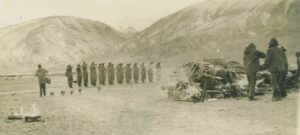
Yet, the end was inevitable given the imbalance of numbers. By early afternoon, two out of the three Indian platoon positions had been overrun. Only a handful of defenders were still fighting, clustered around the last surviving machine gun post and a few rifle pits. These Kumaonis kept the fight going as long as light and life lasted. It was around this time that Major Shaitan Singh, already badly injured, was hit by another burst of enemy machine-gun fire. He collapsed for the final time. The men near him watched their commander – the man who had stood with them in the face of impossible odds – breathe his last. Major Shaitan Singh died on the battlefield, amid the bodies of his comrades, still holding his weapon.
As dusk fell on 18 November, Rezang La fell silent. Charlie Company had been virtually annihilated, but not before exacting a terrifying price on the enemy. Later accounts from the Chinese side (and the testimony of the few Indian survivors) indicate that the battle lasted about five hours of sustained fighting. When it was over, the entire pass was littered with bodies. The defenders of Rezang La had truly fought to the last man and last round.
Out of 120 Indian soldiers, an estimated 114 were killed in action. The handful who survived were mostly those knocked unconscious or grievously wounded, left for dead among the fallen. A few, like Naik Ram Kumar Yadav and Jemadar Ram Chander, lived to recount the battle despite severe injuries. On the Chinese side, casualty estimates vary – China did not disclose exact figures – but Indian sources at the time claimed that well over 1,000 Chinese soldiers were killed by the valiant defense. In fact, the initial report by Charlie Company’s survivors of “hundreds of Chinese dead” was met with disbelief by some Indian commanders, but later evidence would support these claims.
Tactically, the Chinese forces did manage to capture Rezang La by the next day (19 November) by sheer weight of numbers. They also seized a nearby feature called Gurung Hill. However, this local success proved hollow. The 13 Kumaon’s sacrificial stand gave the Indian Army precious time to regroup and strengthen defenses closer to Chushul. Chinese columns that tried to push forward beyond Rezang La on 19–20 November were met with fresh Indian artillery fire and newly positioned units on adjoining heights (such as Gurung Hill’s neighboring ridges and at the crucial Spanggur Gap). Having bled hard at Rezang La, the Chinese advance in Ladakh slowed down dramatically.
Ultimately, on 21 November 1962, China declared a unilateral ceasefire and halted its offensives on all fronts. The invaders withdrew from some occupied areas (though they retained Aksai Chin elsewhere), and the feared drive toward Chushul never materialized. In a very real sense, the men of Charlie Company had prevented a deeper Chinese thrust into Ladakh. Their last stand, though a tactical defeat (since the position was lost), proved to be a strategic stalemate – Chushul remained in Indian hands when the guns fell silent.
Casualties and Valor in Perspective
The Battle of Rezang La was one of the costliest small-unit actions of the 1962 Sino-Indian War. On the Indian side, 114 out of 120 soldiers of Charlie Company were killed in action. The company was virtually wiped out, with only a few men surviving — some sources say six survivors, others up to ten, including those who were severely wounded or temporarily captured and later escaped.
The Chinese People’s Liberation Army, despite ultimately overrunning the position, suffered horrific losses. Contemporary Indian reports — later backed by letters and records — estimated that between 1,300 and 1,400 Chinese soldiers died at Rezang La, and many more were wounded. Chinese sources have never confirmed such numbers, but even conservative accounts concede that the casualties at Rezang La were unusually high. Indian Army officers later recalled that “nobody believed we had killed so many Chinese” — until evidence proved it.
The valor displayed by the defenders earned even the enemy’s respect. In a rare gesture, the attacking Chinese troops are said to have shown honor to the fallen Indians on the battlefield. After the fighting ceased, Chinese soldiers reportedly covered the bodies of the Indian martyrs with warm blankets and lined up their personal weapons (bayonets fixed to rifles) as makeshift markers over the corpses. This act was acknowledged later as an extraordinary soldierly salute — an acknowledgment by the adversary of how tenaciously and bravely Charlie Company had fought. Such respect from a victorious enemy was virtually unheard of in 20th-century warfare. It symbolized the mutual recognition of courage beyond politics.
When news of the battle filtered out, Rezang La immediately entered Indian military lore as a near-mythical last stand. The outcome of the 1962 war as a whole was a defeat for India, but the story of Rezang La stood out as a beacon of heroism amidst the loss. As one analysis later put it, Rezang La was a “tactical victory” in the midst of a strategic setback — the Chinese won the ground, but the Indians won the glory.
The battle demonstrated that with clever use of terrain, unyielding resolve, and leadership by example, a small force could hold off an enemy dozens of times larger for crucial hours. The 13 Kumaon’s stand, though coming at a terrible cost, thwarted China’s plans to advance swiftly in that sector. In the end, the broader war was halted before Chushul could fall, and the bravery of Rezang La became a rallying point for the Indian Armed Forces in later years.
Post-Battle Discovery and Acknowledgment of Bravery
In the immediate aftermath of the battle, there was considerable confusion about what had happened at Rezang La. With communications cut and virtually no survivors returning initially, Indian commanders at Chushul could only guess at Charlie Company’s fate. It was only after the ceasefire, when a few wounded soldiers like Naik Ram Kumar staggered back, that the incredible tale began to emerge.
Even then, the first-hand accounts sounded almost unbelievable — a single company fighting off an estimated brigade-strength enemy and inflicting over a thousand casualties. Some higher officers were skeptical — it was a scale of fighting unheard of in recent memory. But soon, evidence would lay all doubts to rest.
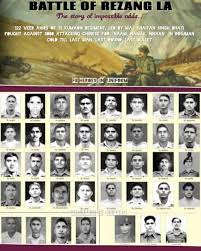
Winter 1963: The Ladakh winter had set in right after the battle, covering Rezang La in snow and ice. The area remained under de facto Chinese control until the ceasefire and was largely inaccessible. In January 1963, even as some disengagement occurred, Indian patrols still could not reach the remote battlefield due to weather.
Finally, in February 1963, nature herself revealed the truth of Rezang La. A Ladakhi shepherd wandering in the area stumbled upon a ghastly yet awe-inspiring sight: the frozen bodies of Indian soldiers lying where they fell, perfectly preserved by the extreme cold. He alerted the nearest Indian outpost, and a search party was quickly organized.
On 10 February 1963, Brigadier T. N. Raina — the very brigade commander whose sector included Rezang La — led a team to the battleground. What he and his men witnessed left them speechless.
Strewn across the rocky slopes were the bodies of Major Shaitan Singh’s men, “frozen in their battle positions.” Many soldiers still held their weapons, fingers curled around triggers, facing the direction from which enemy waves had come. Some had bayonets fixed, others clutched empty rifles or broken blades — grim proof that they had indeed fought to the last bullet and beyond.
In one spot lay a cluster of fallen men surrounding a pile of spent rifle cartridges; in another, a soldier in a foxhole had his hands stiffened around a grenade. The scene was so poignant and surreal that the seasoned Brigadier and his hardy Ladakhi guides were moved to tears.
The body of Major Shaitan Singh was found at the position his men had described — a short distance behind what had been 9 Platoon’s post, on a slight slope where he had continued firing until his death. He was identified by his rank insignia and a few personal effects.
Right there, on the snowy battlefield of Rezang La, Brigadier Raina ordered that proper last rites be performed for the heroes who had died in November and remained unburied. In a solemn ceremony, soldiers of the brigade gathered wood and fuel to cremate the bodies, as per Hindu rites, on the battleground itself — many of the men were Hindus from Haryana.
Brigadier Raina himself lit the funeral pyres of the Charlie Company martyrs, an extraordinary gesture by a commanding officer paying homage to his fallen troops. As the flames crackled and Vedic mantras were chanted in that desolate pass, everyone present understood the magnitude of what Charlie Company had done. The doubts of skeptics were utterly dispelled — the frozen tableau at Rezang La was incontrovertible evidence of the gallantry and sacrifice of those 120 men.
Major Shaitan Singh’s body was carried down from Rezang La with great reverence. The Army ensured that his remains were flown to his home city of Jodhpur in Rajasthan, where he was cremated with full state and military honors. His funeral was attended by grieving family, comrades, and dignitaries. He had become a national hero.
The men of Charlie Company were universally hailed for their actions once the story became known.
The Government of India quickly moved to recognize the gallantry of Rezang La’s defenders. Major Shaitan Singh Bhati was posthumously awarded the Param Vir Chakra (PVC) — India’s highest military decoration for valor in the face of the enemy. His citation lauded his inspirational leadership and self-sacrifice.
But Major Shaitan Singh was not the only hero of Rezang La. In fact, Charlie Company of 13 Kumaon became the highest decorated single company of the Indian Army. Along with the Param Vir Chakra to the Major, a staggering 8 Vir Chakras were awarded to other individuals of the company for their bravery — most of them posthumously. Additionally, 4 Sena Medals were conferred for gallantry.
Never before had a single company earned so many honors in one battle — a testament to the collective valor of the unit. Notably, 11 out of the 13 gallantry award recipients were Ahir soldiers from Haryana, reflecting the composition of the company. One member of the company was also Mentioned-in-Despatches for bravery that didn’t fall within formal awards.
The broader army also shared in the honors. The 13th Kumaon Regiment was officially granted the Battle Honour “Rezang La” for the 1962 war — a rare distinction commemorating the significance of the engagement. They also received the Theatre Honour “Ladakh 1962.” Charlie Company itself was re-raised after the war (since it had to be rebuilt from new recruits) and, in tribute to its legacy, it was renamed “Rezang La Company.”
This ensured that the memory of the battle would live on within the regiment’s lineage. Major Shaitan Singh’s Param Vir Chakra was presented to his father by the President of India in a ceremonial parade the following year.
Even Chinese commanders reportedly acknowledged that the Indian unit at Rezang La had fought until virtually all were killed. In the annals of military history, Rezang La would be remembered alongside epic last stands — distinguished by the incredible ratio of enemy casualties to the defender’s strength.
Legacy of Valor and Commemoration
The saga of Rezang La has since become a byword for extraordinary courage in the face of impossible odds. In Indian military history, it is cited as one of the most heroic last stands ever recorded. The battle exemplified how discipline, strategic positioning, and raw bravery can compensate for lack of numbers and firepower.
Over the years, the story of the “120 against 3000” at Rezang La has been taught in military academies and has inspired generations of soldiers. It remains a shining symbol of Indian resolve and sacrifice, often invoked to bolster morale in later conflicts. As one historian put it, “Rezang La was not a large battle by duration or troop count, but it was a defining one,” underlining that even in defeat, it delivered a moral victory for India.
To honor the fallen, memorials were erected soon after the war. In 1963, the Indian Army built a Rezang La War Memorial at Chushul, near the foothills of the pass. This memorial was constructed on the spot where the 13 Kumaon Battalion’s headquarters stood during the battle — effectively at the base of the pass on the Indian side.
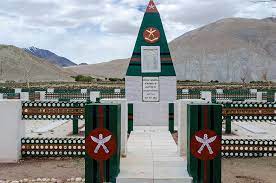
At an altitude of over 15,000 feet, and right by the Line of Actual Control (the de facto border), the Rezang La Memorial stands as a poignant reminder amid the stark Ladakhi landscape. It was initially a simple stone monument, carrying the names of the martyrs of Charlie Company inscribed in marble.
The memorial also bears an immortal epitaph — the last lines of a poem by Lord Macaulay that captures the spirit of the sacrifice:
“How can a man die better than facing fearful odds,
For the ashes of his fathers and the temples of his gods.”
These lines, evoking the defense of one’s homeland and honor, are engraved on the Rezang La memorial and have come to be permanently associated with the battle’s legacy. The same inscription appears on a Rezang La memorial in Rewari, Haryana, the home region of many of the soldiers.
Memorials and commemorations of Rezang La have not been limited to Ladakh. Veterans and local citizens in Haryana took the initiative to create monuments in honor of Charlie Company men in their native villages, ensuring that the community remembers its sons. Each year on 18 November, the Indian Army and grateful citizens pay homage at these memorials.
On the 50th anniversary of the battle in 2012, veterans, military historians, and family members of the Rezang La heroes gathered at memorial sites to honor their memory. Ceremonies were held in Ladakh and Rewari with wreath-laying, patriotic songs, and recollections of the battle. The tale of Rezang La continues to be studied as a classic in mountain warfare — a case study in how a well-led company defended a difficult position against overwhelming odds. It serves as a lesson in leadership, fortification, and the undying spirit of the soldier.
The Rezang La War Memorial in Ladakh, standing tall at over 4,500 m altitude, honors the bravery of 13 Kumaon Regiment’s Charlie Company in the 1962 war. First built in 1963, this monument preserves the memory of the fallen heroes of Rezang La.
In recent years, the legacy of Rezang La saw renewed public attention, especially in light of contemporary India–China border tensions. To mark the significance of the battle and improve facilities for visitors, the memorial was renovated and expanded in 2021.
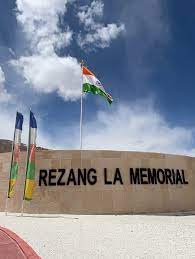
On 18 November 2021, exactly 59 years after the battle, India’s Defence Minister Rajnath Singh traveled to Chushul to inaugurate the revamped memorial at a solemn ceremony. The original structure was preserved and enhanced with a new complex, including a double-storied museum and a small auditorium to screen a documentary about the battle.
The upgraded site also features a larger precinct with flagpoles and narrative plaques, transforming it into a national-level monument. At the inauguration, the Defence Minister laid a wreath and declared the memorial an “epitome of the passion, determination and fearless spirit” of India’s bravehearts.
Surviving veterans of 13 Kumaon and relatives of Major Shaitan Singh (including his son) attended the ceremony, bridging the past with the present. In his speech, the Defence Minister recounted how Major Shaitan Singh and his 113 comrades defended the Ladakh frontier to their last breath, calling their stand one of the world’s rarest examples of a “last man, last bullet” battle.
The government’s decision to upgrade the memorial in 2021 — amid a broader remembrance of the 1962 war — was also seen as a message of resolve: that India remembers its heroes and will stand just as firmly to protect its sovereignty today.
The Rezang La War Memorial today stands not only as a tribute to the past but as an inspiration for future generations. Each name etched in its stone and each story told in its museum serves to educate visitors about the values of courage, sacrifice, and patriotism.
The heroic defense of Rezang La has been immortalized in numerous books, articles, documentaries, and planned films, ensuring that the legend lives on in popular consciousness. For the Indian Army, 18 November is a date of pride and remembrance. Ceremonial gatherings at Rezang La and at regimental centers commemorate the battle annually.
In every such tribute, the message resonates:
“No one had thought they could hold out — but they did.”
The men of Charlie Company, 13 Kumaon, proved that valor can overcome seemingly insurmountable odds. Their last stand at Rezang La, 1962, remains one of the finest chapters of bravery inscribed in the pages of India’s history.