
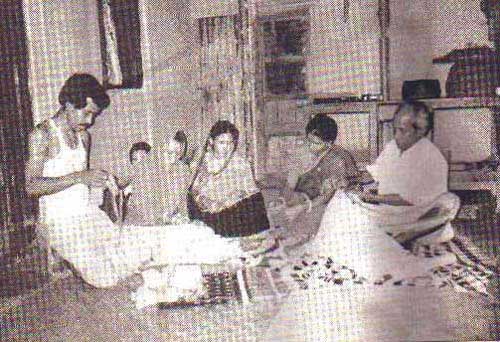
The Bishnupriya Manipuris: The History, Culture, and Exodus of the Khalachais
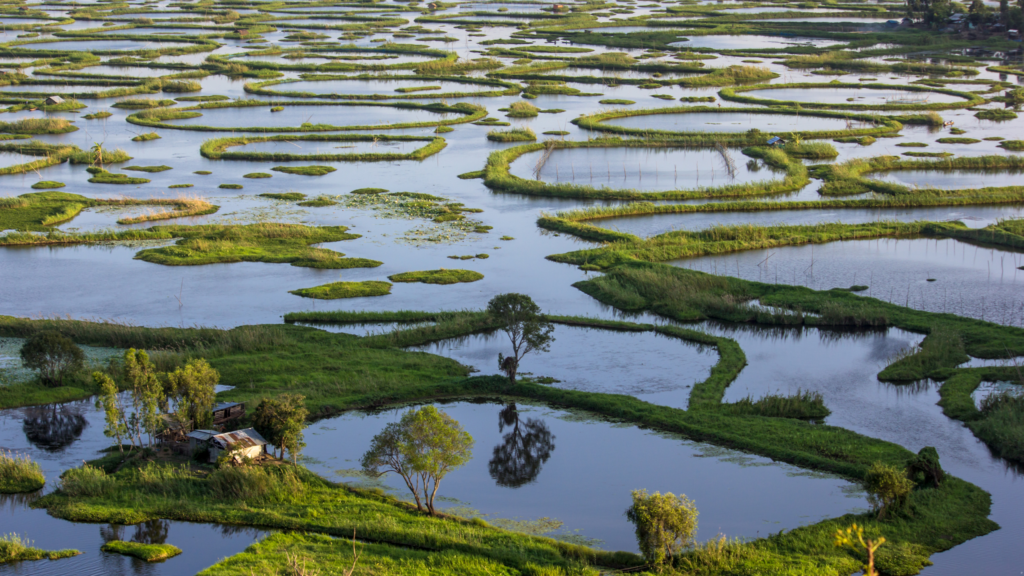
The historical origin of the Bishnupriya Manipuri community, an Indo-Aryan ethno-linguistic group situated in the northeastern frontier of the Indian subcontinent and eastern Bangladesh, is a subject of profound academic inquiry and mythological significance. Historically known as the Khalachais, the community’s ethnonym provides an initial clue into their ancestral geography. The term “Khalachai” is traditionally traced back to a southern Chinese dialect, wherein Kha signifies a lake, La denotes wide or expansive, and Chai means children; collectively, this translates to “Children of the Wide Lake,” a direct reference to their early habitation around the shores of Lake Loktak in the Manipur Valley. This etymological connection suggests a historical presence that predates the major Tibeto-Burman migrations into the region, positioning the Khalachais as one of the earliest cultured populations in the valley.
The distant history of this region remains veiled in enigma, yet scholarly indicators point toward a highly developed civilization during ancient times that may have been overlooked by larger Aryan migrations moving toward Burma and the Far East. While most Aryan groups followed more accessible routes, a specific group identified as the ancestors of the Bishnupriya Manipuris traversed the Manipur region, eventually establishing settlements that would later be influenced by the religious and cultural shifts of the Indian heartland. These early settlers brought with them an Indo-Aryan linguistic framework that would serve as the skeleton for the modern Bishnupriya language.
The internal traditional narrative of the community, however, diverges from purely linguistic or archaeological theories, rooting their existence in the epic traditions of the Mahabharata. Orthodox Bishnupriya beliefs hold that their lineage is inextricably linked to Babhruvahana, the son of the Pandava prince Arjuna and the Manipuri princess Chitrangada. According to the Khumal Purana, Babhruvahana led a group of emigrants from the historic cities of Hastinapura and Dwaraka following the Great Kurukshetra War. Central to this legend is the installation of a sacred image of Lord Vishnu at a location in the valley that subsequently became known as Bishnupur. This mythological foundation provided the community with its current nomenclature; “Bishnupuriya” literally denotes the inhabitants of Bishnupur, while “Bishnupriya” is a contracted form signifying those who are “beloved of Vishnu”.
Scholarly scrutiny of these origins reveals a complex process of ethnic formation. While some theories suggest the community arrived from the western direction—specifically from regions like Bengal or even as far as Dwaraka—the unique hybridity of their language and culture indicates a localized evolution within the Manipur Valley. The presence of about 50,000 people still residing in the Manipur Valley who speak Meitei but identify as Bishnupriya further complicates the demographic history, suggesting a period of intense cultural exchange and assimilation between Indo-Aryan and Tibeto-Burman groups.
| Historical Theory | Origin Point | Key Evidence/Tradition |
| Mahabharata Theory | Hastinapura/Dwaraka | Lineage of Babhruvahana; installation of Vishnu image in Bishnupur. |
| Chinese Etymology | Southern China (Linguistic) | Etymology of “Khalachai” meaning “Children of the Wide Lake”. |
| Western Migration | West Bengal/Bishnupur (Bankura) | Linguistic affinity with Magadhi Prakrit; migration starting 15th century. |
| Indigenous Development | Manipur Valley (Local) | Prolonged contact with Meitei; retention of archaic Meitei phonetic elements. |
The interaction between the Bishnupriyas and the Meiteis (the dominant Tibeto-Burman group of Manipur) has been a defining feature of their historical identity. Historical chronicles like the Cheitharol Kumbaba refer to the community as “Mayangs,” a term that has evolved over time. Originally used to describe the Bishnupriya community, the term “Mayang” is now used in modern Meitei in a more general, often deprecatory sense to refer to outsiders or westerners, including Hindus and Muslims from outside the state. This shift in terminology mirrors the hardening of ethnic boundaries that occurred as a result of political upheavals in the 18th and 19th centuries.
The Catalysts of Displacement: Internal Conflicts and Burmese Invasions
The modern distribution of the Bishnupriya Manipuri population across Assam, Tripura, and Bangladesh is the direct result of catastrophic events that disrupted the social fabric of the Manipur Kingdom. During the 18th century, the region was plagued by internal conflicts among the various princes of Manipur, which weakened the state’s defenses. However, the most significant catalyst for mass migration was the continual threat of Burmese invasion, particularly the period between 1819 and 1826 known as the Chahi Taret Khuntakpa or the “Seven Years Devastation”.
Faced with the choice of subjection to Burmese rule or flight, a vast majority of the Bishnupriya community chose to migrate south and west to preserve their ethnic identity, language, and orthodox religious practices. They moved through the Jiribam region of Manipur, eventually settling in the Surma Valley of what is now Bangladesh, the Barak Valley of Assam, and the plains of Tripura. This exodus turned the community into a diasporic people, living in disadvantaged positions without a contiguous homeland of their own.
The demographic impact of this migration was profound. By the mid-20th century, census reports indicated that while the community was thriving in areas like Cachar (Assam) and Sylhet (Bangladesh), their presence in the original Manipur Valley had dwindled significantly. This spatial dispersion created a unique sociolinguistic environment where the community had to navigate the pressures of dominant local languages such as Bengali and Assamese while struggling to maintain their distinct “Manipuri” identity in the face of growing Meitei nationalism.
Linguistic Architecture: An Indo-Aryan Skeleton with Tibeto-Burman Flesh
The Bishnupriya Manipuri language (ISO: bpy) stands as a unique linguistic phenomenon, categorized as an Indo-Aryan language that has undergone extensive creolization through prolonged contact with the Tibeto-Burman Meitei language. It is classified within the Bengali-Assamese sub-branch of the Eastern Indo-Aryan language family, tracing its genetic roots back to Magadhi Prakrit. Despite this classification, the language is so heavily influenced by Meitei both grammatically and phonetically that it is often described as a “mongrel form” or a mixed language.
The Creole Debate and Genetic Affiliation
Linguists have long debated the exact nature of Bishnupriya Manipuri. Early descriptions, such as those by George Abraham Grierson in the Linguistic Survey of India (1903), characterized it as a dialect of Assamese. Other scholars, including Suniti Kumar Chatterjee, viewed it as a form of Bengali that had acquired significant Meitei traits. Modern research suggests a more complex history of multiple contacts among diverse linguistic and cultural groups.
According to American scholar William Frawley and others, Bishnupriya represents a creole language that emerged in the Manipur Valley, retaining pre-Bengali features that have since been lost in other Eastern Indo-Aryan languages. This hybridity is evidenced by the lexical distribution: while the core structure and about 70-80% of the lexicon (especially abstract and technical terms) are Indo-Aryan, a massive corpus of approximately 4,000 root words is borrowed directly from Meitei.
| Linguistic Component | Sources/Influences | Key Features |
| Phonology | Magadhi Prakrit; Archaic Meitei | Retention of old 18 sounds of Meitei; absence of later Meitei phonetic shifts. |
| Morphology | Indo-Aryan | Complete T’o form for future tense; distinct pronominal forms (Mi for I, Ti for You). |
| Syntax | Indo-Aryan; Meitei influence | Bengali-Assamese structure with reduced morphology and Meitei-influenced word order. |
| Lexicon | Sanskrit (Tatsama); Meitei (Loanwords) | 10,000 Sanskrit roots; 4,000 Meitei roots; 2,000 unique indigenous roots. |
One of the most remarkable features of the language is its role as a “linguistic time capsule” for the Meitei language. Because the Bishnupriyas left Manipur in the early 19th century, their language preserves the “old” 18 sounds of Meitei, including three vowels ($a, i, u$) and thirteen consonants ($p, t, k, pʰ, tʰ, kʰ, c, m, n, ŋ, l, s, h$) along with two semi-vowels ($w, j$). Since their departure, the Meitei language has added nine more sounds and undergone significant phonetic evolution, making the Bishnupriya variety a critical resource for historical Tibeto-Burman linguistics.
Phonological and Grammatical Distinctiveness
Bishnupriya Manipuri exhibits several phonological traits that distinguish it from Bengali and Assamese. For instance, the sibilants $ś, ş$, and $s$ are typically pronounced as a single $ś$ or, in many cases, are elided or transformed into an $h$ sound. Examples include the word for “month” (masa) becoming maha, and the word for “all” (sarvani) becoming habi.
The grammatical structure also reveals unique developments. Unlike Bengali, Bishnupriya has developed verbal forms that vary according to both gender and number.
- Gender Markers: In the phrase “He goes,” the verb is jarga (Ta jarga), while for “She goes,” it becomes jeiriga (Tei jeiriga).
- Number Markers: “I am going” is expressed as Mi Jauriga, whereas “We are going” is Ami Jiarga.
- Case Affixes: The language possesses distinct case affixes not found in its neighbor languages, such as the 3rd case ending -Lo (with), the 5th case ending -Rangto (from), and the 7th case ending -Rang (in).
The language is divided into two primary dialects: Rajar Gang (King’s Village) and Madai Gang (Queen’s Village). These dialects are mutually intelligible but show varying degrees of external influence. The Madai Gang dialect, in particular, is noted for having a higher concentration of Tibeto-Burman (Meitei) loanwords compared to Rajar Gang. Interestingly, these dialects are no longer tied to specific localities in the diaspora but are maintained by different families living in the same areas, serving as a social rather than geographic marker of identity.
Evolution of the Writing System
Historically, the orthodox Bishnupriya community claims to have used the Devanagari script to write their language in its early years. However, with the introduction of modern education during the British colonial period—which was largely facilitated through the Bengali language—Bishnupriya writers began to adopt the Eastern Nagari (Bengali-Assamese) script. Over the last half-century, this script has become the standard for Bishnupriya Manipuri literature.
Despite this adoption, the use of the Bengali script is sometimes viewed as a survival mechanism in a sociopolitical environment where the community’s “Manipuri” identity is frequently contested. Efforts to revive or maintain a distinct linguistic identity are often tied to the preservation of this script, even as the community faces pressure to assimilate into the broader Bengali-speaking cultures of Sylhet and Cachar.
Cultural Synthesis: Gaudiya Vaishnavism and the Arts
The cultural identity of the Bishnupriya Manipuri is profoundly anchored in Gaudiya Vaishnavism, a devotional movement within Hinduism that emphasizes the worship of Radha and Krishna. This religious framework, popularized in the Manipur Valley during the 18th century, transformed every aspect of Bishnupriya life, from their classical dance forms to their daily social rituals.
The Spiritual Architecture of Manipuri Dance
Manipuri dance, specifically the Raas Leela (known in Meitei as Jagoi Raas), is one of the eight primary classical dance forms of India and serves as the highest spiritual expression of the community. Originating from the state of Manipur, the dance is a confluence of four ritualistic traditions: Lai Haraoba (pre-Hindu animism), Huyen Langlon (martial arts), Meitei Nata Sankirtana, and the Raas Leela itself.
For the Bishnupriya community, the dance is not merely performance but a “living prayer” and a “sonic architecture of devotion”. The classical forms were systematized by King Rajarshi Bhagyachandra (Ching Thang Khomba), who adopted Gaudiya Vaishnavism as the state religion and is credited with composing three of the five primary Raas Leelas: Kunja Ras, Basanta Ras, and Maha Ras.
| Dance Form | Focus and Theme | Key Elements |
| Raas Leela | Divine love of Radha and Krishna | Gentle eyes, soft body movements (lasya), Potloi costumes. |
| Nata Sankirtana | Community prayer and storytelling | Men singing and dancing with drums (Pung) and cymbals (Kartal). |
| Pung Cholom | Rhythmic drumming and acrobatics | Tandava (masculine) style; drummers dancing while playing the Pung. |
| Thang-ta | Integration of dance and martial arts | Use of swords and spears in graceful, fluid movements. |
The costumes used in these dances are iconic. Female dancers wear the Potloi, a brilliant design conceived in a dream by King Bhagyachandra, consisting of a barrel-shaped skirt (Kumil) stiffened at the bottom and decorated with mirrors, gold and silver embroidery, and prints of lotus and orchids. This attire is designed specifically to avoid “unhealthy stimulus” in the audience, emphasizing the Bhakti Rasa or the emotion of pure devotion.
Nata Sankirtana: The Foundation of Ritual Life
Nata Sankirtana is perhaps the most significant communal performing art for the Bishnupriya Manipuris. Recognized by UNESCO as an Intangible Cultural Heritage of Humanity in 2013, it is performed in temple courtyards or mandapas to celebrate social occasions such as births, marriages, ear-piercings, and funerals.
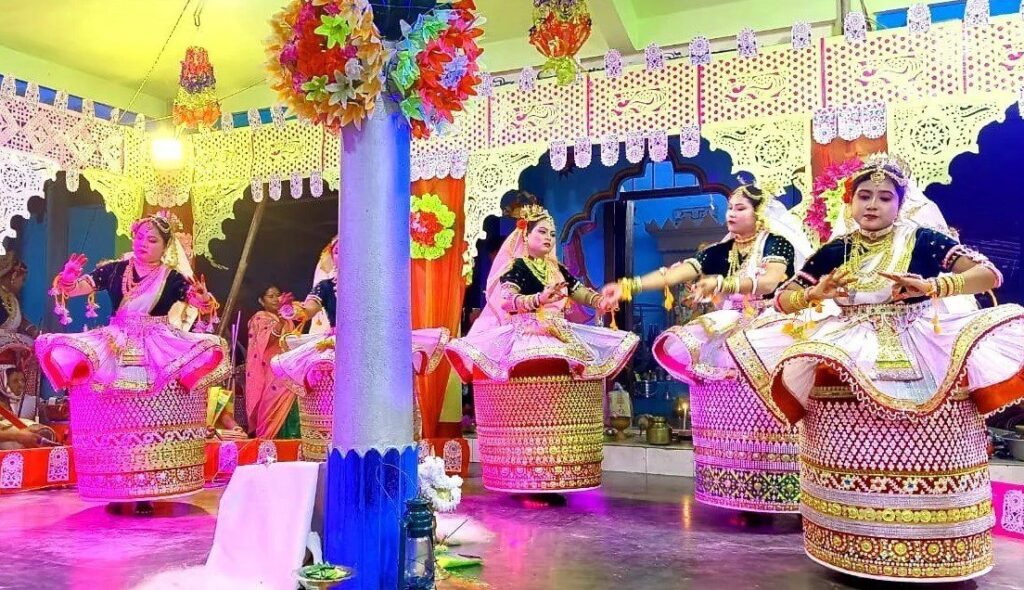
A standard Nata Sankirtana performance involves a group of male artists who sing and dance in tightly choreographed patterns. The music is driven by the Pung (traditional drum) and the Kartal (large cymbals), with the performers often entering a trance-like state of “devotional ecstasy”. Every beat, vocal inflection, and movement is codified, ensuring that the performance remains a sacred offering rather than mere entertainment.
The Persistence of Ancestral Veneration: Aapokpa Worship
While Gaudiya Vaishnavism provides the public religious framework, the Bishnupriya community maintains a deeply personal and orthodox practice of ancestral worship centered on the deity Aapokpa. Aapokpa is regarded as the “Kuldevta” or clan deity, representing the collective spirit of the community’s ancestors.
Unlike standard Hindu rituals for the deceased (Shraddh), Aapokpa worship is performed within the home, specifically in the granary or the place where rice grains are stored. This practice reflects the community’s agrarian roots and the belief that the ancestors continue to provide for and protect the family’s sustenance. When a family offers prayers during a marriage or other significant life event, the first offering is invariably made to Aapokpa, seeking the blessing of the sixth generation of ancestors traced back to the mythological figure Babhruvahana.
The Ritual Calendar: Harvest, Devotion, and Rebirth
The life of a Bishnupriya Manipuri is punctuated by a series of festivals that harmonize with the seasonal cycles of the Northeast. These festivals are not only religious in nature but serve as vital mechanisms for preserving the community’s unique identity in a diasporic setting.
Bishu: The Gateway to the New Year
The festival of Bishu is arguably the most important non-sectarian celebration for the community. Identical in timing to the Meitei Cheiraoba and the Assamese Bihu, it marks the arrival of the Manipuri month of Sajibu (March/April) and the start of a new agricultural year.
Bishu is celebrated over seven days, beginning on the last day of the old year. The first day is dedicated to Laamor Baat, a ritual where families offer specially cooked food—primarily different kinds of dhal and vegetables—to their ancestors. These offerings are placed on banana leaves at the front gate (Aarang) of the house. Following the offering, families exchange these dishes with neighbors and relatives, a practice that reinforces social cohesion. The evenings are spent making various types of Pithas (rice cakes) and participating in traditional games such as Nokon and Gilla.
Pous Sankranti and the Harvest Rites
Pous Sankranti (or Makar Sankranti) is celebrated mid-January and marks the winter solstice and the start of the Uttarayan period. For the Bishnupriyas, this is a harvest festival of gratitude. The day is characterized by taking holy baths in rivers and preparing traditional sweets made of sesame and jaggery.
A central feature of this festival is the preparation of khichdi, a dish made by combining freshly harvested rice, pulses, and seasonal vegetables in a single vessel. In Ayurvedic tradition, this symbolizes unity and the process of life regeneration. In many Bishnupriya households, at least 21 vegetarian delicacies containing up to 108 different ingredients are prepared for these offerings, showcasing the community’s culinary complexity and devotion to the land’s bounty.
Kartika and the “Leirik-Thikorani” Tradition
The month of Kartik is a period of intense devotional activity. Throughout the month, from the full moon of Laxmi Purnima to the Rasa Purnima, temples hold daily Aratis in the morning, forenoon, and evening. These rituals are accompanied by Bhajans played with the Pung, Kartal, and Moibung (conch shell).
A unique cultural practice during this month is Leirik-Thikorani, where religious texts like the Mahabharata and Ramayana are recited and explained in public gatherings. This tradition has played a critical role in propagating Vaishnavite literature while simultaneously developing the folk and ancient literature of the Bishnupriya Manipuri language. The month culminates in the Kartikar Phanna or “Rivalry of Kartika,” where villages compete in traditional drumming and dance performances.
Yaosang: The Manipuri Holi
Yaosang is the five-day Manipuri version of Holi, though its observance differs significantly from the North Indian festival. For the Bishnupriyas, it is often called Phaguwa and serves as a commemoration of the birth of Chaitanya Mahaprabhu.
On the first day of the full moon, communities build a small hut or shed called a Yaosang out of bamboo and thatch. An image of Chaitanya is placed inside, and offerings are made. In the evening, the hut is set on fire, and the ashes are smeared on the foreheads of the participants, symbolizing the destruction of winter and the “farewell to cold”. From the second to the fourth day, people participate in Vikkha, going from house to house collecting rice and money while chanting “Hori Bola E Hori”.
Literary Evolution: From Oral Traditions to Modernity
The literary history of the Bishnupriya Manipuri community is characterized by a transition from ancient folk-oral traditions to a modern period marked by social reform and ethnic assertion. Much of the ancient written documentation was lost during historical periods of conflict, forcing the community to rely on oral transmission for centuries.
Ancient Folk Roots
The “Ancient” period of literature (16th century to early 20th century) is represented primarily by folk stories, songs, proverbs, and rhymes. The most critical artifacts from this era are:
- Boron-ddhanir Ela: A rain-invoking song, composed in the mid-16th century, which serves as a nucleus of the language’s poetic heritage.
- Madai Soralel Ela: A narrative song concerning the conjugal life of the deities Madai and Soralel.
These works are replete with witticisms, poetic ornaments, and complex meters, indicating a high level of linguistic sophistication among the early Khalachais.
The Early Modern Period (1925–1950)
Modern literature was effectively “launched” with the publication of the literary magazine Jagaran in 1925. This period was dominated by four primary writers who focused on devotional themes and the love of the Manipuri homeland :
- Leikhomsena Singha: Author of the drama Manipur Bijoy.
- Madan Mohan Sharma: Known for kirtana-type works like Harischandra and Sudama Bipra.
- Amusena Sinha: Focused on Ramayana-based kirtanas such as Taranisen Badh.
- Gokulananda Gitiswami: A highly popular figure who composed songs relating to social reformation (Jagoroni Ela) and dramas like Matrimangal Gatabhinay.
The Golden Period and Research (1950–Present)
The late 1950s and 1960s are considered the “Golden Period” of Bishnupriya literature, catalyzed by the magazine Fagu. This era saw the emergence of serious scholarly research into the language. Dr. Kali Prasad Sinha’s An Etymological Dictionary of Bishnupriya Manipuri (1982) provided the community with its first rigorous linguistic foundation.
In the contemporary era, writers such as Brojendra Kumar Sinha and Smriti Kumar Sinha have expanded the literary horizons to include novels, short stories, and translations of global classics like Antigone. This evolution reflects a community that is no longer content with being seen as a “mongrel” group but is asserting a professional, standardized literary presence.
The Socio-Political Movement: Identity, Names, and Rights
The contemporary reality for the Bishnupriya Manipuri is defined by an ongoing socio-political struggle to secure official recognition and protect their identity from assimilation or erasure. This movement is primarily focused on three fronts: nomenclature, the Eighth Schedule of the Indian Constitution, and state-level language rights.
The Battle for “Manipuri”
The most contentious issue involves the community’s right to use the suffix “Manipuri.” For the Meiteis (the majority community of Manipur), “Manipuri” is synonymous exclusively with the Meitei language and people. They view the Bishnupriya claim to the name as a “misrepresentation of facts” and have contested it in various legal and political forums.
For the Bishnupriyas, the nomenclature “Bishnupriya Manipuri” is essential to their identity as one of the original inhabitant groups of the Manipur Valley. They point to historical records like Grierson’s survey and the 1961 Census as evidence that “Manipuri” was once an umbrella term for both groups. The tension reached a peak following the 1968 Language Bill in Manipur, which made Meiteilon synonymous with “Manipuri,” effectively stripping the Bishnupriyas of their official link to their homeland’s name.
Constitutional and State Recognition
The community has been engaged in a decades-long movement for the inclusion of the Bishnupriya Manipuri language in the Eighth Schedule of the Indian Constitution. While Meitei was included in 1992, Bishnupriya remains excluded as of 2025. This exclusion limits the language’s eligibility for federal funding, its use in competitive examinations (like UPSC), and its status in official communications.
| Policy/Status Event | Year | Region | Impact |
| 8th Schedule Inclusion (Meitei) | 1992 | India (National) | Meitei recognized as official; Bishnupriya excluded. |
| OBC Recognition | 1995/1999 | Assam/Tripura | Community granted backward class status for education/jobs. |
| Primary School Intro | 2001 | Assam | Bishnupriya introduced as a subject in 52 of 149 schools. |
| Associate Language Bill | 2024 | Assam | Manipuri (Meitei) made associate official; Bishnupriya excluded due to Schedule status. |
| World Endangered Language Day | 2025 | Assam (Silchar) | March 16 designated to honor Sudeshna Sinha. |
In August 2024, the Assam Assembly passed a bill making Manipuri an associate official language in four districts (Cachar, Karimganj, Hailakandi, and Hojai). During the debate, calls to include Bishnupriya Manipuri were rebuffed by the Chief Minister, who stated that only languages listed in the Eighth Schedule could be considered for such status. This further incentivized the community’s push for constitutional expansion.
Endangerment and Preservation
Currently, UNESCO classifies Bishnupriya Manipuri as a “vulnerable” language. With a population of roughly 120,000 spread across multiple countries, the language faces severe pressure from Bengali and Assamese. In Bangladesh, the community remains a vulnerable minority in the Sylhet Division, with no official status for their language in the national curriculum.
Preservation efforts have turned increasingly toward digital platforms and symbolic commemorations. March 16, 2025, marked the first “World Endangered Language Day,” held in Silchar, Assam, to honor Sudeshna Sinha, who died in police firing during a 1996 language movement. Activists like Uttam Singha have worked with organizations like the Endangered Language Alliance to document the language and develop digital dictionaries and news portals (Pouri International) to ensure its survival in the modern age.
Conclusions: The Future of a “Civilization in Syllables”
The Bishnupriya Manipuri represent a resilient example of ethnic and linguistic persistence. Their history is a journey from the shores of Lake Loktak through the fires of the “Seven Years Devastation” to a sprawling diaspora in South Asia and beyond. They have successfully maintained a unique identity that is neither purely Indo-Aryan nor purely Tibeto-Burman, but a “third way” that reflects the complex meeting ground of civilizations in the Northeast.
The future of the community rests on its ability to navigate the legal and political frameworks of the modern state while continuing to nurture its distinctive ritual and artistic life. Whether through the inclusion in the Eighth Schedule or through grassroots digital preservation, the Bishnupriya Manipuri are determined to ensure that their “Civilization in Syllables” does not fade into the margins of history but remains a vibrant part of the global cultural tapestry.