
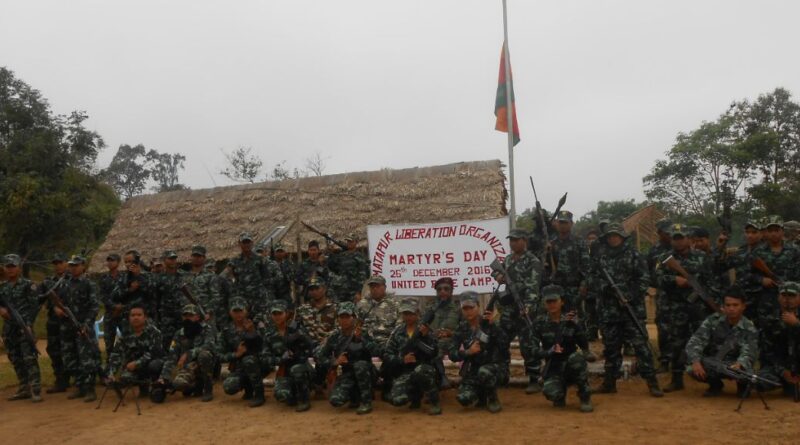
Kamtapur Liberation Organisation: History, Goals, and the Ongoing Peace Process
Origins and Historical Context
The Kamtapur Liberation Organisation (KLO) emerged in the mid-1990s as an armed response to the longstanding grievances of the Koch-Rajbongshi community in North Bengal and adjoining areas of Assam. Its roots lie within the All Kamtapur Students’ Union (AKSU) — a Rajbanshi youth organization that had grown increasingly disillusioned with political marginalization and the lack of cultural recognition.
By 1995, a faction within AKSU concluded that only armed struggle could achieve their dream of a separate homeland. They approached the insurgent United Liberation Front of Asom (ULFA) for training and support. ULFA, which was seeking safe passage routes through North Bengal and strategic access to Bhutan, found the alliance mutually beneficial. With ULFA’s backing, the KLO was formally founded on December 28, 1995, with an initial cadre of around 60 trained fighters.
The idea of “Kamtapur” was deeply rooted in historical identity and a sense of lost sovereignty. It drew from the legacy of the medieval Kamata kingdom and the princely state of Cooch Behar, both of which were once ruled by Koch-Rajbongshi kings. After India’s independence and the 1949 merger of Cooch Behar into West Bengal, many in the Rajbanshi community began to feel culturally alienated and politically sidelined.
By the 1990s, this sense of historical injustice had intensified, fueled by land alienation, economic neglect, and the non-recognition of the Kamtapuri (Rajbanshi) language. While some segments of the movement chose peaceful democratic avenues — such as the formation of the Kamtapur People’s Party (KPP) in 1996 — the KLO emerged as its militant wing, committed to achieving a “Kamtapur nation” through armed revolution if necessary.
Objectives and Ideology
The Kamtapur Liberation Organisation (KLO) has a singular, defining goal: the creation of a separate Kamtapur state for the Koch-Rajbongshi ethnic community. This proposed state would encompass a significant portion of North Bengal and western Assam — originally envisioned to include six districts of West Bengal (Cooch Behar, Darjeeling, Jalpaiguri, North Dinajpur, South Dinajpur, and Malda) and four contiguous districts of lower Assam (Kokrajhar, Bongaigaon, Dhubri, and Goalpara). With the later formation of Alipurduar and Kalimpong districts, the proposed Kamtapur state would now span all eight districts of North Bengal along with the four districts in Assam.
The KLO justifies this territorial claim by asserting that these regions represent the ancestral homeland of the Koch-Rajbongshi people. Over time, they argue, this community has been marginalized and reduced to a minority due to state neglect, influx of migrants, and lack of political and cultural representation. The demand for Kamtapur is framed not just as a territorial claim but as a restoration of historical identity and sovereignty.
Ideologically, the KLO blends ethnic nationalism with secessionist tendencies. Initially, the organization demanded statehood within the Indian Union, aligning itself with political groups like the Kamtapur People’s Party (KPP). However, over time, the militant wing of the KLO adopted a more radical approach, advocating for full independence — the formation of a sovereign Kamtapur nation, separate from India.
This ideological stance is rooted in what the KLO describes as deep-seated grievances: widespread unemployment among Rajbongshi youth, land dispossession by outsiders, loss of linguistic and cultural identity, and the non-recognition of the Kamtapuri (Rajbanshi) language. The KLO has also pushed for constitutional reforms, such as the inclusion of Kamtapuri in the Eighth Schedule of the Indian Constitution and the granting of Scheduled Tribe (ST) status to the Koch-Rajbongshi community — a long-pending demand in both West Bengal and Assam.
Unlike many other insurgent groups in Northeast India, the KLO’s ideology is not influenced by Marxist, Maoist, or religious doctrines. Instead, it is rooted in ethno-regional nationalism, portraying its movement as a response to “historic injustice” and “internal colonialism” imposed by successive Indian governments.
Regions of Operation and Support Base
Geographical Theater:
The Kamtapur Liberation Organisation (KLO) has historically operated across a contiguous Koch-Rajbongshi-inhabited belt spanning the northern districts of West Bengal and the western fringes of Assam. In West Bengal, its operational footprint covered all six traditional districts of North Bengal — Darjeeling (including Kalimpong), Jalpaiguri (including Alipurduar), Cooch Behar, North Dinajpur, South Dinajpur, and Malda. In Assam, the KLO was particularly active in the Bodoland and Goalpara regions, including Kokrajhar, Bongaigaon, Dhubri, and Goalpara districts.
The outfit’s influence was especially visible in sensitive transit corridors like the Jalpaiguri–Alipurduar belt and the Siliguri subdivision, located near the highly strategic “Chicken’s Neck” — the narrow Siliguri Corridor that connects mainland India with the northeastern states. These routes served as vital channels for the movement of insurgents, weapons, and supplies between Northeast India, Nepal, and Bhutan.
Camps and Safe Havens:
In its early years, the KLO established several training and logistical camps in the dense jungles of southern Bhutan, often sharing infrastructure with the United Liberation Front of Asom (ULFA). Prominent camp locations included Samdrup Jhonkar, Gelephu, and Kalikhola, situated along the Bhutanese border. These sites not only provided safe refuge but also served as transit points for arms and personnel.
This network was decisively dismantled during Operation All Clear in late 2003, a joint military operation led by the Royal Bhutan Army in coordination with Indian forces. The offensive forced the KLO and other insurgent outfits to abandon their Bhutanese sanctuaries. Surviving KLO elements scattered, with some finding temporary refuge in Bangladesh, often aided by sympathetic groups. However, the bulk of the remaining cadre eventually regrouped in Myanmar’s Sagaing Division, where they were hosted by ULFA (Independent). By the 2010s, this remote forested area in Myanmar had become the KLO’s last significant operational base, bringing them into close proximity with other Northeast insurgent outfits also operating from the Myanmar frontier.
Recruitment Base:
The KLO’s recruitment and support have always been ethnically rooted, drawing almost exclusively from the Koch-Rajbongshi community in both North Bengal and western Assam. Its recruits have traditionally come from rural, unemployed youth and student activists, particularly those influenced by the All Kamtapur Students’ Union (AKSU) and the Kamtapur People’s Party (KPP) — organizations that promoted Rajbanshi identity, pride, and self-determination.
Notably, the KLO also formed a women’s wing, reflecting the group’s broader community engagement. For example, Bharati Das, reportedly the chairperson of this wing, was arrested in 2002, indicating the involvement of women in its operations.
The strength of the KLO’s armed cadre has fluctuated over time. From a modest beginning with a few dozen fighters, the organization peaked in the early 2000s with an estimated 300 active members. However, years of sustained counter-insurgency pressure, internal splits, and declining public support significantly reduced its strength. By the 2010s, the KLO had dwindled into a small remnant force, kept alive primarily by a handful of hardcore loyalists and occasional teenage recruits attempting to revive the cause.
Founding Members and Leadership Evolution
The leadership of the Kamtapur Liberation Organisation (KLO) originated from the All Kamtapur Students’ Union (AKSU) during the mid-1990s, a time when frustration among Koch-Rajbongshi youth had reached a boiling point. Central to the group’s formation was Tamir Das, more widely known by his nom de guerre Jibon Singha (or Jeevan Singha). A postgraduate student-turned-militant, Jibon Singha became the founder, chairman, and military commander of the KLO, emerging as both its ideological visionary and strategic planner.
In October 1999, he was arrested by Assam Police during an attempt at surrender negotiations. However, the talks collapsed, and his release — widely criticized as a strategic blunder — allowed him to return underground, where he quickly reasserted control over the KLO. Under his command, the organization adopted a hierarchical structure, with dedicated wings for military operations, logistics, recruitment, and political outreach.
Early Command Structure:
During the KLO’s peak in the late 1990s and early 2000s, several key figures formed the group’s inner circle:
- Milton Barman (alias Mihir Das): Deputy chief and Jibon’s most trusted lieutenant.
- Tom Adhikary (alias Joydeb Roy): Commander of the elite armed wing, known as the “crack squad.”
- Suresh Roy: Chief of operations, who later surrendered in 2002.
- Hiten Roy, Ravi Rajbongshi, Rahul Roy, and Kajal Roy: Other key commanders, many of whom shared surnames, suggesting a clan-based and regionally rooted leadership drawn from the Rajbongshi community.
The KLO also formed a Women’s Wing, reportedly led by Bharati Das until her capture in 2002 — indicating an early attempt at social mobilization beyond male youth networks. Most leaders were from North Bengal and western Assam, further emphasizing the group’s ethno-regional composition.
Leadership Setbacks and Structural Collapse:
The most devastating blow to KLO leadership came during Operation All Clear in December 2003, when the Royal Bhutan Army — in coordination with Indian security forces — dismantled insurgent camps across southern Bhutan. Several top KLO figures, including Milton Barman and Tom Adhikary, were captured during this offensive. Jibon Singha narrowly escaped, reportedly taking refuge in Bangladesh.
With most senior leaders killed or arrested, the KLO’s command structure collapsed into disarray. For much of the mid-2000s, the group existed as a weakened underground force, with Jibon Singha serving as its symbolic leader from hiding, trying to regroup and regain operational strength.
Emergence of New Leadership (2010s–2020s):
Despite the setbacks, new leaders gradually surfaced in the 2010s, leading to a partial revival:
- Kailash Koch: Frequently described as the KLO’s second-most important figure. He and his wife Jogli surrendered in 2022, signaling a willingness to pursue peace and dialogue.
- D. L. Koch (Diasar or Darsar Langkam Koch): Emerged as a prominent commander and later formed a breakaway faction of the group.
In 2023, when Jibon Singha announced willingness to engage in peace talks with the Indian government, D.L. Koch initially opposed the move and launched a dissident faction called KLO–Koch Nationalism (KLO-KN), vowing to continue the armed struggle.
However, this internal rift did not last long. By mid-2024, D.L. Koch and the KLO-KN faction rejoined the peace process, leading to a reunified KLO. Under the newly restored structure, Jibon Singha resumed his position as overall chief (often referred to as “President”), and D.L. Koch became part of the official negotiation team.
Timeline of Key Events – Kamtapur Liberation Organisation (KLO)
1993–1995
- Formation of AKSU: Rajbongshi student activists in North Bengal form the All Kamtapur Students’ Union (AKSU) to demand a separate Kamtapur state.
- Alliance with ULFA: AKSU reaches out to ULFA for training and support.
- December 28, 1995: KLO is officially founded with an initial cadre trained in ULFA camps.
1996–1999
- Base-building in Bhutan: KLO establishes camps in the dense southern forests of Bhutan.
- Gradual Militarization: Recruitment and weapons training pick up pace.
- October 1999: KLO chief Jibon Singha is arrested by Assam Police but later released in a failed surrender deal.
2000–2001
- Escalation of Violence: KLO begins extortion and joint militant operations with ULFA and NDFB.
- March 6, 2000: First major attack — KLO militants kill two civilians in Assam.
- By 2001: Estimated cadre strength grows to nearly 300.
2002
- Security Crackdown: Multiple raids; several leaders surrender or are arrested.
- January 24, 2002: Operations chief Suresh Roy surrenders.
- Retaliation: KLO carries out sporadic bombings in retaliation.
Late 2003 – Operation All Clear
- Massive Military Offensive: The Royal Bhutan Army clears all insurgent camps.
- Leadership Hit: Top leaders including Milton Barman and Tom Adhikary are arrested.
- Collapse: Cadres flee or are killed; organizational strength is crippled.
2004–2005
- Regrouping Phase: Surviving members disperse to Bangladesh and Myanmar.
- Low Activity: Occasional extortion threats surface, but major operations halt.
November 20, 2006
- Belakoba Train Blast (West Bengal): KLO and ULFA suspected in bombing that kills 10 civilians — KLO’s deadliest attack.
2007–2008
- Scattered Attacks: Bombings and shootings continue sporadically.
- December 2008: Arrest of a KLO leader in Dhaka reveals presence in Bangladesh.
2009
- Decline in Activity: Armed operations decline.
- Rise in Political Movements: Peaceful statehood and language movements gain traction.
2011–2012
- Political Gesture: West Bengal government releases several jailed KLO leaders.
- August 2012: Tom Adhikary and others go underground again, attempting revival.
2012–2013
- Rebuilding Camps: KLO tries to regroup along Assam–Bhutan border.
- January 2014: KLO commits its last known civilian killing — a businessman in Assam.
November 12, 2014
- KLO Banned: Government of India officially bans the KLO under the Unlawful Activities (Prevention) Act.
2015–2016
- Joins Militant Alliance: KLO aligns with UNLFW — an umbrella group of Northeast insurgents.
- March 4, 2016: Deputy chief Dibankar Barman killed in an encounter with Assam Police.
2017–2020
- Sharp Decline: Insurgency wanes. Occasional statements issued, but no major activity.
- 2020: Assam government announces creation of Kamatapur Autonomous Council for Koch-Rajbongshi representation.
December 2021
- Peace Initiative: KLO sends a letter signaling willingness for peace talks.
- Political Response: Assam CM invites the group to the negotiation table.
August 2022
- Surrender: Senior leader Kailash Koch and wife Jogli surrender, marking a shift toward peace.
January 13, 2023
- Major Breakthrough: KLO chief Jibon Singha surrenders with 9 cadres at the Nagaland–Myanmar border; flown to Delhi for talks.
January 2023
- Formal Peace Process Begins: KLO declares a ceasefire and joins peace negotiations; a joint committee is formed with civil society groups.
October–November 2023
- Internal Rift: D.L. Koch breaks away, forming KLO–Koch Nationalism (KLO-KN), opposing peace talks.
- Threat of Renewed Violence: Rising tensions but no militant action resumes.
June 18, 2024
- Reunification: D.L. Koch rejoins the peace process, reuniting factions under a single leadership.
July 2024
- Negotiation Milestone: Both government and KLO confirm that peace dialogue is in its final stages; draft accord awaits announcement.
March 23, 2025
- Public Rally: Ex-militants and Kamtapur State Demand Committee (KSDC) leaders hold a public rally in Assam, urging the central government to finalize the peace deal — with demands for statehood, language recognition, or Union Territory status.
Current Status and Conclusion (As of 2025)
By mid-2025, the Kamtapur Liberation Organisation (KLO) stands at the edge of a historic transformation — from an armed insurgent outfit to a political negotiating body. The once-feared group that carried out bombings and coordinated guerrilla attacks across North Bengal and western Assam is now largely inactive militarily, having observed a formal ceasefire since early 2023. Virtually all of its top commanders, including its founder and president Jibon Singha (Tamir Das), are either in government-supervised camps or actively engaged in the ongoing peace process.
The leadership, once organized around militant cells, now functions more as a political delegation representing the Koch-Rajbongshi community’s long-standing demands — including recognition of the Kamtapuri language, Scheduled Tribe status, and socio-economic upliftment. The group’s original goal of a separate Kamtapur state, however, remains a sticking point, especially given West Bengal’s staunch opposition to any territorial reorganization. Instead, discussions have leaned toward alternative solutions, such as regional development boards, language protections, and greater local autonomy — especially in Assam, where the Kamatapur Autonomous Council already exists.
The inclusion of the breakaway KLO–Koch Nationalism (KLO-KN) faction in the peace talks since 2024 has helped consolidate the movement under a single umbrella, minimizing the threat of renewed violence. Reports suggest that a draft peace accord is ready, with only a few sensitive points left to negotiate. Still, analysts warn that delays in finalizing the agreement could lead to frustration among former cadres and supporters, potentially reviving militancy — especially given the volatile ethnic climate in the region, as seen recently in nearby Manipur.
In practical terms, the KLO as a militant force has ceased to exist. Its cadre strength is reduced to a handful of individuals, many of whom are in rehabilitation programs. The insurgency, born in the jungles of Bhutan and hardened through decades of conflict, is now poised to end not on the battlefield, but at the negotiation table.
If the peace accord is successfully concluded, the legacy of the KLO will shift from one of rebellion to one of reconciliation — marking the end of an armed struggle and the beginning of a democratic journey for Koch-Rajbongshi aspirations within the Indian Union. The coming months will determine whether this transition becomes a model for resolving other lingering insurgencies in Northeast India or another lost opportunity in the region’s complex history.